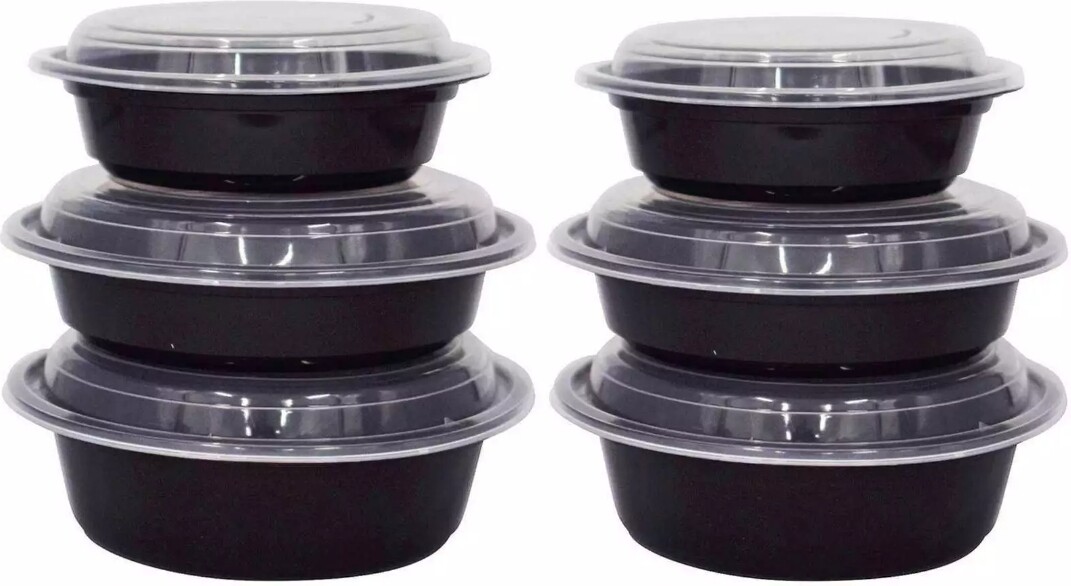
Choosing food packaging is not simply a matter of finding a suitable size and placing an order. The containers need to match the food product, storage conditions, transportation requirements, and applicable packaging standards.
Before working with a Disposable Plastic Food Container Manufacturer, buyers should ask detailed questions about materials, production, quality control, customization, pricing, and delivery. LRpacking is one supplier in the disposable food packaging sector, but the same evaluation process can be applied to any potential manufacturer.
What Material Is Used for the Containers?
The first question should concern the type and grade of plastic used. Different materials have different characteristics, including heat resistance, rigidity, transparency, and resistance to moisture or grease.
Ask the manufacturer to identify the material and explain whether it is suitable for your intended food application. If necessary, request relevant material specifications or supporting documentation.
Are the Containers Suitable for Hot or Cold Foods?
Not every disposable container is designed for the same temperature conditions. A container intended for chilled foods may have different performance characteristics from one used for hot meals.
Explain how the packaging will be used and ask about the manufacturer’s recommended temperature range. This can help prevent problems such as warping, cracking, or loss of structural integrity.
What Sizes and Designs Are Available?
Container dimensions should correspond with your portion sizes and operational requirements. Ask about available capacities, shapes, depths, and lid configurations.
If you use multiple food products, determine whether the manufacturer offers a range of compatible sizes. Standardizing container and lid formats can also simplify inventory management.
Can You Provide Samples?
Samples allow buyers to assess a product before committing to a larger order. A sample can be checked for dimensions, appearance, rigidity, lid fit, and general usability.
Whenever possible, test the container with the actual food products and conditions in which it will be used. This can reveal practical issues that may not appear in a product specification sheet.
What Quality-Control Procedures Are Used?
Ask how the manufacturer checks products during and after production. Quality-control procedures may cover raw materials, dimensions, wall thickness, weight, appearance, strength, and lid compatibility.
It is also useful to understand how the manufacturer handles defective products or quality concerns discovered after production.
Can You Provide Food-Contact Documentation?
Packaging intended for food applications may need to meet specific regulatory or food-contact requirements depending on the destination market.
Ask what documentation is available for the material and finished product. Relevant records may include test reports, material declarations, or other compliance documents applicable to the intended market.
What Is the Minimum Order Quantity?
Minimum order quantities can vary significantly between manufacturers and products. Standard containers may have different requirements from customized designs.
Understanding the minimum order before requesting a quotation helps determine whether the supplier’s production model fits your purchasing volume and storage capacity.
How Long Does Production Take?
Lead time is particularly important when containers are needed for regular business operations. Ask how long production normally takes after order confirmation and whether the timeline changes for customized products.
Also clarify whether the quoted lead time includes sample approval, tooling, packaging, and other preparation stages.
Can the Containers Be Customized?
If standard packaging does not meet your requirements, ask about customization options. These may include dimensions, shapes, colors, printing, or other design features.
For customized products, confirm:
- Available customization methods
- Tooling requirements
- Development costs
- Minimum order quantities
- Sample approval procedures
- Expected production time
Having these details in writing can reduce misunderstandings during production.
How Is Pricing Calculated?
Do not ask only for the unit price. Request a complete quotation that explains the costs associated with the order.
Depending on the project, the total price may be affected by material selection, container size, production volume, customization, tooling, packaging, and shipping.
A clear quotation makes it easier to compare different suppliers on an equivalent basis.
What Are the Packaging and Shipping Arrangements?
Ask how finished containers are packed for transportation and whether products are supplied in cartons, bags, or on pallets.
You should also clarify shipping responsibilities, estimated delivery times, and any minimum shipment requirements. Proper packaging during transit is important because lightweight plastic containers can be damaged or deformed if handled incorrectly.
Can You Handle Repeat or Larger Orders?
A supplier that meets your initial order requirements should also be able to support future demand if your business grows.
Ask about production capacity and how the manufacturer handles recurring orders. For businesses with predictable demand, discuss whether advance forecasts can help with production planning.
How Are Specifications Confirmed?
Before production begins, all important product details should be clearly documented. This may include dimensions, material, color, weight, container capacity, lid type, printing, and packaging requirements.
Ask the manufacturer how specifications are approved and whether a physical sample or technical drawing is provided for confirmation.
What Happens if There Is a Quality Problem?
Even with established quality procedures, buyers should understand how quality issues are handled.
Ask whether there is a formal process for reporting defects, inspecting disputed batches, replacing affected products, or addressing recurring manufacturing problems. Clear procedures can make problem resolution more efficient.
Can the Manufacturer Support Your Target Market?
Packaging requirements can differ between countries and regions. If you are importing containers or selling packaged food internationally, confirm that the manufacturer can provide documentation relevant to your market.
It is better to clarify these requirements before production than to discover a documentation or compliance issue after the shipment has been completed.
A Practical Pre-Order Checklist
Before placing an order, make sure you have clear answers to the most important questions:
- What material is being used?
- Is the container suitable for the intended food and temperature?
- Are the dimensions and lid specifications correct?
- Can samples be provided?
- What quality checks are performed?
- What compliance documentation is available?
- What is the minimum order quantity?
- What are the production and delivery lead times?
- Are customization options available?
- What is included in the quoted price?
- How are products packaged for shipping?
- How are quality issues handled?
Final Thoughts
Asking the right questions before ordering can help businesses avoid unsuitable products, unexpected costs, and supply delays. A manufacturer’s answers can also provide useful insight into its production capabilities and approach to quality management.
Rather than evaluating a supplier on price alone, consider the complete purchasing process. Materials, product performance, documentation, production capacity, customization, delivery, and after-sales procedures all deserve attention before a bulk order is confirmed.