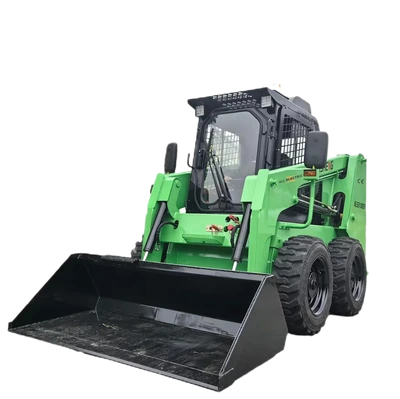
Choosing an electric skid steer loader involves more than evaluating its lifting capacity, battery performance, and purchase price. Buyers must also consider delivery arrangements, warranty coverage, spare-parts availability, technical assistance, and long-term maintenance. These factors can significantly influence equipment reliability, operating costs, and project schedules.
Working with a dependable Electric Skid Steer Loaders Supplier can help businesses prepare for these responsibilities before placing an order. Whether you operate a construction company, landscaping business, warehouse, or equipment rental service, reviewing the supplier’s commitments in advance can prevent misunderstandings and reduce the risk of unexpected expenses. This checklist covers the essential points to verify before purchasing and accepting delivery of an electric skid steer loader.
1. Delivery Checklist: What to Confirm Before Ordering
Delivery planning is an important part of equipment procurement, particularly when machinery is shipped across regions or imported from another country. Unclear delivery terms can create additional costs, delays, and disagreements about responsibility.
Before confirming an order, ask the supplier to provide a written delivery plan.
Verify the Delivery Schedule
Confirm the estimated manufacturing, preparation, dispatch, and arrival dates. If the machine is being built to order, ask whether production time is included in the quoted delivery estimate.
You should also clarify what happens if the supplier cannot meet the agreed schedule. For construction businesses working against project deadlines, even a short delay can affect labor planning and equipment availability.
Review Shipping and Transportation Costs
Ask whether the quotation includes freight, insurance, packaging, loading, and transportation to the final destination. For imported equipment, clarify responsibility for customs clearance, import duties, taxes, and port handling charges.
If the supplier uses international shipping terms such as Incoterms, confirm the named delivery location and the specific rule included in the contract. This helps establish which party handles transportation, insurance, and associated responsibilities.
Confirm Required Documentation
Depending on the destination and transaction, documentation may include:
- Commercial invoice
- Packing list
- Shipping documents
- Certificate of origin, where applicable
- Product manuals and technical specifications
- Relevant conformity or compliance documentation
- Warranty information and purchase records
Check local import requirements before shipment rather than assuming the supplier’s standard documentation will satisfy every authority.
Inspect the Machine Upon Arrival
Establish an inspection process before the equipment reaches your site. Check the machine for visible transport damage, missing accessories, incorrect specifications, and discrepancies between the delivered equipment and the purchase order.
Document any damage with photographs and notify the appropriate party within the contractual reporting period. Do not sign an unconditional acceptance if there are unresolved discrepancies that should be recorded.
2. Service Checklist: Evaluate Maintenance and Repair Support
An electric skid steer loader requires routine maintenance even though it does not use a conventional combustion engine. Battery systems, hydraulic components, tires, electrical controls, and attachments all need appropriate inspection and servicing.
Before purchasing, determine whether the supplier can support the machine throughout its expected service life.
Ask for a Maintenance Schedule
Request the manufacturer’s recommended maintenance schedule, including inspection intervals and service requirements based on operating hours or elapsed time.
The documentation should explain which tasks operators can perform and which require trained technicians. Depending on the model, maintenance may include checking hydraulic connections, inspecting tires, monitoring battery condition, cleaning cooling passages, and examining electrical components.
Follow the manufacturer’s instructions for battery charging, storage, and inspection. High-voltage components should only be serviced by appropriately trained personnel using the prescribed safety procedures.
Check Technician Availability
Ask whether the supplier provides on-site repairs, workshop servicing, remote troubleshooting, or support through authorized service partners.
For imported machinery, confirm whether technicians are available in your country or whether repairs must be coordinated with an overseas service team.
Useful questions include:
- How can customers report a technical problem?
- What is the typical response time?
- Are diagnostic tools and trained technicians available?
- Can routine servicing be arranged locally?
- What happens if a critical component fails during a project?
A clear service process can reduce uncertainty when the machine needs attention.
Verify Spare-Parts Availability
Spare-parts access can determine how quickly a loader returns to work after a repair. Ask which components are held in stock and which must be ordered.
Important parts to discuss include filters, hydraulic hoses, seals, electrical connectors, sensors, control components, tires, and other model-specific items.
Request realistic shipping estimates and pricing for common replacement parts. If the machine will be used intensively, consider keeping selected consumables on site.
3. Warranty Checklist: Understand What Is Covered
Warranty coverage can help protect your investment against certain manufacturing defects and component failures. However, warranty terms vary, so buyers should review the written conditions before making a payment.
Confirm Warranty Duration and Scope
Ask how long the warranty lasts and whether it is limited by operating hours. The complete machine and individual components may have different coverage periods.
Check the terms for:
- Battery pack and battery management system
- Electric motor and controller
- Charger and related electrical components
- Hydraulic pumps, cylinders, and valves
- Structural components
- Other specified machine parts
Do not assume that all components receive identical coverage. Request the complete warranty document and clarify any differences.
Understand Exclusions
A warranty may exclude damage resulting from misuse, overloading, unauthorized modifications, improper charging, failure to follow maintenance instructions, or normal wear.
Ask the supplier to explain these exclusions in practical terms. For example, clarify how battery degradation is assessed and whether coverage depends on maintaining a specified capacity level.
You should also ask whether repairs must be performed by an authorized technician to preserve coverage.
Review the Claims Process
Find out how warranty claims are submitted, which records are required, and who determines whether a failure qualifies for coverage.
Confirm whether parts, labor, transportation, and diagnostic fees are included. Also ask how defective components are returned and whether replacement equipment is available during an extended repair.
Keep copies of the invoice, serial number, warranty certificate, service records, and communications with the supplier. Good documentation can make future claims easier to manage.
4. Technical Support Checklist: Prepare for Everyday Operations
Technical support is especially important for electric equipment because troubleshooting may involve electronic controls, battery management systems, charging equipment, and hydraulic functions.
A supplier should be able to explain how customers obtain technical information and assistance after delivery.
Confirm Access to Technical Documentation
Before accepting the machine, request the documents needed for safe operation and routine maintenance.
These may include:
- Operator’s manual
- Maintenance instructions
- Parts catalog
- Charging and battery safety guidance
- Technical specifications
- Troubleshooting procedures
- Relevant safety and compliance documents
Verify that the documents correspond to the exact model and configuration being delivered.
Ask About Remote Troubleshooting
Remote assistance may help identify certain problems without requiring an immediate service visit. Ask whether the supplier can interpret diagnostic codes, guide basic checks, or arrange replacement parts after identifying a fault.
Clarify the limits of remote support. Electrical repairs, battery-system servicing, and safety-critical work may require a qualified technician rather than instructions provided over the phone.
Check Training Availability
Operator training can improve productivity and reduce avoidable damage. Ask whether the supplier provides training on machine controls, load limits, attachment changes, charging procedures, inspections, and emergency responses.
If several employees will operate the machine, develop a consistent training and authorization process. Training should reflect the manufacturer’s instructions and the safety requirements applicable to your workplace.
5. Battery and Charging Support Checklist
Battery support deserves special attention because it affects equipment availability and long-term operating costs.
Before purchasing, confirm that the supplier can explain the battery’s specifications, charging requirements, operating limitations, and maintenance recommendations.
| Item to verify | Questions to ask |
|---|---|
| Battery capacity | What are the rated and usable energy capacities? |
| Operating runtime | What workload and conditions support the quoted runtime? |
| Charging time | How long does charging take with the supplied equipment? |
| Electrical requirements | What voltage, current, and installation arrangements are required? |
| Battery warranty | What conditions apply to capacity loss or battery failure? |
| Replacement availability | Can a compatible replacement battery be supplied in the future? |
| Technical diagnosis | Who can assess battery or charging-system faults? |
| Storage requirements | How should the machine be stored during extended periods of inactivity? |
Actual runtime depends on load, terrain, attachment usage, temperature, and operator behavior. Ask for realistic performance information rather than relying exclusively on maximum advertised figures.
Also confirm that your facility or job site has an appropriate charging setup. Electrical installation should be checked by a qualified professional, and charging should follow the manufacturer’s instructions.
6. Spare-Parts and Long-Term Availability Checklist
A machine can become difficult to maintain if critical components are unavailable or discontinued. This is particularly important for businesses that plan to operate the loader for many years.
Ask the supplier about parts availability throughout the expected ownership period. While future availability cannot always be guaranteed, the supplier should explain its parts-ordering process and support arrangements.
Verify the following:
- Availability of common wear parts
- Ordering procedures for model-specific components
- Estimated delivery times for less common parts
- Availability of battery and electrical-system components
- Access to updated technical documentation
- Procedures for identifying parts using the machine’s serial number
For businesses operating several loaders, ask whether the supplier can help establish a recommended inventory of critical spare parts. This may reduce downtime when commonly used components need replacement.
7. Delivery, Service, Warranty, and Support Comparison Table
If you are comparing several suppliers, use the same checklist for each company. This helps you evaluate the complete service package rather than relying on the purchase price alone.
| Evaluation area | What a dependable supplier should clarify |
|---|---|
| Delivery | Written schedule, shipping responsibilities, costs, and required documents |
| Machine inspection | Pre-delivery checks and procedures for reporting transport damage |
| Maintenance | Service schedule, maintenance documentation, and trained personnel |
| Repairs | Support channels, technician access, and realistic response expectations |
| Warranty | Written coverage, exclusions, claim procedures, and component-specific terms |
| Battery support | Charging guidance, warranty conditions, diagnosis, and replacement options |
| Spare parts | Availability, ordering process, pricing, and shipping estimates |
| Training | Operator instruction, safety guidance, and maintenance education |
| Technical documents | Manuals, specifications, parts information, and applicable compliance records |
| Long-term support | Parts continuity, service arrangements, and technical assistance after warranty expiry |
Request written responses wherever possible. If a supplier makes a specific commitment about delivery, warranty handling, or service response, ensure that it is reflected in the quotation, contract, or relevant support agreement.
8. Warning Signs to Watch for Before Signing a Contract
Certain warning signs indicate that a supplier’s delivery and support arrangements may need closer scrutiny.
Unclear delivery commitments: The supplier cannot provide a realistic delivery estimate or explain which shipping costs are included.
Incomplete warranty documentation: Warranty promises are made verbally, but the written terms are unavailable or difficult to understand.
Limited parts information: The supplier cannot explain how customers obtain replacement components or provide reasonable delivery estimates.
Unsupported technical claims: The supplier promises immediate repairs or guaranteed runtime without explaining the conditions or limitations.
Missing manuals: Essential operating, maintenance, or charging instructions are not available for the machine being offered.
Unclear responsibility for repairs: The supplier cannot explain who handles diagnosis, labor, replacement parts, or transportation during a warranty claim.
One missing item does not automatically establish that a supplier is unreliable. Some services may be handled by separate authorized partners. The important question is whether responsibilities are clear, verifiable, and documented.
9. A Practical Checklist Before Placing Your Order
Use this checklist during supplier discussions and before finalizing the purchase.
{@body const tasks = [
“Receive a detailed quotation and machine specification sheet.”,
“Confirm the delivery schedule, shipping terms, and additional charges.”,
“Verify which accessories and attachments are included.”,
“Identify applicable import and compliance requirements.”,
“Request the operator manual and maintenance schedule.”,
“Review written warranty terms for the machine and battery.”,
“Confirm service access and technical support arrangements.”,
“Check spare-parts availability and delivery estimates.”,
“Verify battery charging requirements and site electrical readiness.”,
“Agree on the inspection process for delivered equipment.”,
“Clarify operator training and commissioning arrangements.”,
“Keep copies of the purchase order, invoice, serial number, and warranty documents.”
]}
{@body const [checked, setChecked] = DIL.useState([])}
<box border radius=”lg” padding={4} gap={3}>
<row align=”center” justify=”between”>
<title size=”md”>Pre-purchase checklist</title>
<text color=”secondary” size=”sm”>{checked.length} of {tasks.length} completed</text>
</row>
<box background=”surface-tertiary” radius=”full” height=”6px” clip>
<box background=”surface-inverted” radius=”full” height=”6px” width={${checked.length / tasks.length * 100}%} />
</box>
{#each tasks as task, i}
<checkbox key={task} checked={checked.includes(i)} onChange={(v) => setChecked(old => v ? […old, i] : old.filter(n => n !== i))}>{task}</checkbox>
{/each}
<row justify=”end”>
<button variant=”outline” color=”secondary” onClick={() => setChecked([])}>Reset checklist</button>
</row>
</box>
Completing these checks before payment and shipment can help you identify gaps while there is still time to resolve them.
Final Thoughts
Selecting an electric skid steer loader supplier involves evaluating the entire ownership experience, from delivery and initial inspection to warranty claims, routine maintenance, and long-term technical support. A competitive purchase price is valuable, but it should be supported by clear commercial terms and a practical plan for keeping the equipment operational.
Before committing to an order, confirm delivery responsibilities, obtain written warranty conditions, verify spare-parts availability, and understand how technical problems will be handled. Make sure the machine’s documentation, charging requirements, and training arrangements are appropriate for your operation.
By using a structured checklist and documenting the supplier’s commitments, businesses can reduce purchasing risks, plan for maintenance more effectively, and make a better-informed investment in electric skid steer equipment.