Choosing a diamond for a personalized ring involves more than selecting an attractive shape or size. Buyers also need to understand the characteristics that determine a diamond’s appearance, quality, and overall value. The 4Cs—cut, color, clarity, and carat weight—provide a standardized framework for evaluating diamonds and comparing different options.
When designing a Custom Lab Grown Diamond Ring, understanding these four characteristics helps buyers make informed decisions about the center stone. Each factor contributes differently to the diamond’s appearance, and finding the right balance can help create a beautiful ring that matches personal preferences and budget.
What Are the 4Cs of Lab Grown Diamonds?
The 4Cs are four important characteristics used to evaluate diamond quality:
- Cut: Describes how well the diamond’s facets interact with light.
- Color: Measures the presence or absence of visible color in the diamond.
- Clarity: Evaluates internal inclusions and external blemishes.
- Carat: Measures the diamond’s weight.
These characteristics are used to assess both natural and laboratory-grown diamonds. Although lab grown diamonds are produced using advanced technology rather than geological processes, they have essentially the same chemical composition, crystal structure, and optical properties as natural diamonds.
Understanding the 4Cs is particularly useful when comparing stones with different specifications.
1. Cut: The Key to Diamond Brilliance
Cut is often considered one of the most important characteristics because it has a significant influence on how a diamond reflects and refracts light.
A diamond’s cut quality depends on factors such as proportions, symmetry, and polish. When these elements are well balanced, light can interact with the stone effectively, creating attractive brightness and sparkle.
Understanding Diamond Cut Grades
For standard round brilliant diamonds, commonly used grading categories include:
- Excellent: Provides outstanding light performance and carefully balanced proportions.
- Very Good: Offers strong brilliance with minor differences from the highest grade.
- Good: Generally provides attractive light performance, although some light may not be reflected as effectively.
- Fair: May show reduced brilliance because of less favorable proportions.
- Poor: Often displays noticeable limitations in light performance.
These categories should not be applied automatically to every fancy diamond shape. Oval, pear, emerald, and other fancy shapes may require additional visual evaluation because standardized cut grading is not always available in the same way.
Why Cut Matters in Custom Ring Design
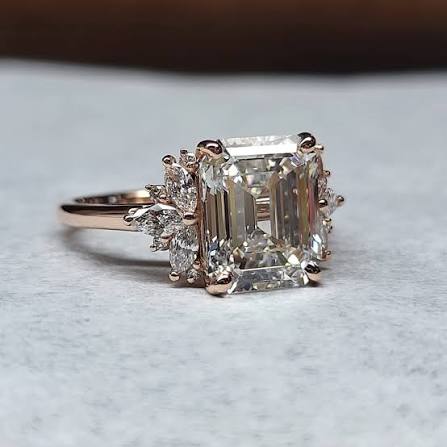
The cut should complement the selected diamond shape and setting. For example, a round brilliant diamond benefits from carefully optimized proportions, while an emerald-cut diamond is valued for its broad, reflective step facets.
Buyers should prioritize attractive light performance rather than choosing a diamond based only on carat weight.
2. Color: Understanding Diamond Color Grades
Diamond color grading evaluates how much visible body color is present in a stone. The widely used grading scale ranges from D to Z.
D represents the colorless category, while progressively lower grades may show increasing amounts of yellow or brown coloration.
Main Diamond Color Categories
| Color Grade | Category | General Appearance |
|---|---|---|
| D–F | Colorless | Little or no noticeable color |
| G–J | Near Colorless | Slight warmth that may be difficult to notice |
| K–M | Faint Color | More visible warm tones |
| N–R | Very Light | Noticeable yellow or brown tint |
| S–Z | Light | More apparent body color |
The appearance of color can vary depending on lighting conditions, diamond shape, and surrounding metal.
Choosing the Right Color for Your Ring
The metal used in the ring can influence how the diamond’s color is perceived.
For example:
- White gold and platinum: Often complement diamonds in colorless and near-colorless grades.
- Yellow gold: Can work well with slightly warmer diamond tones.
- Rose gold: Creates a warm appearance that can complement different diamond color grades.
Not every buyer needs the highest color grade. Selecting a stone that looks attractive in the intended setting can be a more practical approach.
3. Clarity: Evaluating Diamond Inclusions and Blemishes
Clarity refers to the presence of internal and external characteristics within a diamond. Internal features are called inclusions, while external imperfections are known as blemishes.
These characteristics develop during the diamond formation process and may influence its visual appearance and grading.
Common Diamond Clarity Grades
The clarity grading scale generally includes the following categories:
| Grade | Meaning | Description |
|---|---|---|
| FL | Flawless | No inclusions or blemishes visible under standard grading conditions |
| IF | Internally Flawless | No internal inclusions, although minor surface blemishes may be present |
| VVS1–VVS2 | Very, Very Slightly Included | Extremely small inclusions that are difficult to detect |
| VS1–VS2 | Very Slightly Included | Minor inclusions that are difficult to see under magnification |
| SI1–SI2 | Slightly Included | Noticeable inclusions under magnification |
| I1–I3 | Included | Inclusions that may affect transparency, appearance, or durability |
How to Choose the Right Clarity Grade
The best clarity grade depends on the diamond’s shape, size, and inclusion characteristics.
Some diamonds with VS or SI clarity grades may appear clean to the naked eye. However, this depends on the number, location, size, and type of inclusions.
For step-cut shapes such as emerald and Asscher diamonds, clarity deserves particular attention because their open facets can make imperfections easier to notice.
Rather than automatically selecting the highest clarity grade, buyers should examine the individual stone and determine whether its characteristics are visible without magnification.
4. Carat Weight: Choosing the Right Diamond Size
Carat measures a diamond’s weight, not its physical dimensions. One carat is equal to 200 milligrams.
As carat weight increases, diamond prices generally rise, although the relationship is not always linear. Two diamonds with identical carat weights may also have different face-up appearances because of their shapes and proportions.
Understanding Different Carat Weights
The following are common diamond weight categories:
- 0.25 carat: Suitable for delicate jewelry and smaller accent stones.
- 0.50 carat: Offers a noticeable appearance while maintaining a relatively modest size.
- 0.75 carat: Provides a balanced option for many engagement ring designs.
- 1.00 carat: A popular center-stone weight for engagement jewelry.
- 1.50 carats: Creates a more prominent visual presence.
- 2.00 carats and above: Suitable for designs featuring larger center diamonds.
These are general examples rather than strict recommendations. The ideal carat weight depends on budget, personal preference, and the proportions of the finished ring.
How Shape Influences Perceived Size
Diamond shape also affects how large a stone appears from above.
Oval, pear, and marquise diamonds have elongated outlines that may create a larger face-up appearance than some other shapes of the same carat weight.
Round and cushion diamonds generally have more compact outlines, while emerald cuts emphasize their length and broad surface.
When comparing diamonds, examine their actual measurements instead of relying exclusively on carat weight.
How to Balance the 4Cs When Designing a Custom Ring
The four characteristics work together, but they do not need to receive equal priority in every design.
A buyer may prefer a diamond with excellent cut quality and slightly lower clarity rather than paying more for a flawless stone with less impressive light performance.
The right balance depends on the intended appearance and available budget.
Prioritize What Matters Most
Consider these practical approaches:
For maximum brilliance: Focus on cut quality, particularly when selecting a round brilliant diamond.
For a larger appearance: Compare different shapes and face-up measurements rather than increasing carat weight automatically.
For a colorless look: Consider D–F color grades, while also comparing near-colorless options.
For step-cut diamonds: Pay particular attention to clarity and the visibility of inclusions.
For budget flexibility: Compare different combinations of the 4Cs to identify stones that meet your visual expectations without unnecessary spending.
How the 4Cs Affect the Overall Price of a Lab Grown Diamond
Each of the 4Cs can influence diamond pricing, but their impact varies according to market conditions, availability, shape, and other characteristics.
| Diamond Characteristic | Potential Price Influence |
|---|---|
| Cut | Higher-quality cutting may increase value |
| Color | Higher color grades generally cost more |
| Clarity | Higher clarity grades generally cost more |
| Carat | Larger stones generally have higher prices |
Lab grown diamonds are generally less expensive than comparable natural diamonds. However, their prices can still vary considerably depending on specifications and suppliers.
Buyers should compare diamonds with similar characteristics and review their grading documentation before making a decision.
Understanding Diamond Grading Reports
A diamond grading report provides information about the stone’s characteristics and helps buyers compare different options.
Organizations such as the Gemological Institute of America (GIA) and the International Gemological Institute (IGI) provide laboratory-grown diamond identification and grading services.
A grading report may include:
- Diamond identification and origin.
- Carat weight.
- Color grade.
- Clarity grade.
- Measurements.
- Proportion and finish information, where applicable.
- Report identification number.
Buyers should verify the report details through the issuing organization’s official resources and ensure that the documented stone matches the diamond being purchased.
It is also useful to examine the diamond visually because grading information alone cannot fully communicate its appearance.
Common Mistakes to Avoid When Evaluating the 4Cs
Understanding the 4Cs can prevent unnecessary spending and help buyers avoid unsuitable diamond selections.
Some common mistakes include:
Choosing Carat Weight Over Everything Else
A larger diamond does not automatically look better. Cut quality, proportions, and shape can have a greater influence on its visual appeal.
Paying for Clarity Grades That Are Not Visually Necessary
Some inclusions are difficult to see without magnification. Buyers should consider the diamond’s actual appearance rather than selecting the highest clarity grade by default.
Ignoring the Diamond Shape
Different shapes interact with light differently and may require different evaluation methods. Comparing diamonds of different shapes based only on their grading numbers can be misleading.
Selecting Color Without Considering the Metal
The ring’s metal can influence how the diamond appears. A suitable combination can create a balanced and attractive design.
Skipping the Grading Report
Without reliable documentation, it can be difficult to verify a diamond’s stated characteristics. Buyers should review available grading information before confirming a purchase.
Additional Factors to Consider Beyond the 4Cs
Although the 4Cs are essential, they do not describe every aspect of a finished engagement ring.
Other design considerations include:
- Ring setting: Determines how the center diamond is secured and displayed.
- Metal selection: Influences appearance, durability, and maintenance.
- Band width: Affects the ring’s proportions and comfort.
- Diamond symmetry: Particularly important for fancy-shaped stones.
- Craftsmanship: Influences the overall quality and durability of the jewelry.
A carefully selected diamond should work harmoniously with these elements rather than being evaluated as an isolated component.
Conclusion
Understanding the 4Cs is an important step when selecting a lab grown diamond for personalized jewelry. Cut influences brilliance, color affects visual appearance, clarity describes internal and external characteristics, and carat weight determines the diamond’s weight.
When designing a custom lab grown diamond ring, buyers should consider how these factors work together instead of focusing on a single grading characteristic. Comparing different specifications, reviewing grading reports, and evaluating the stone in its intended setting can help create a ring that balances beauty, quality, and budget. With careful planning, the right diamond can become the centerpiece of a meaningful piece of jewelry designed to suit individual preferences.