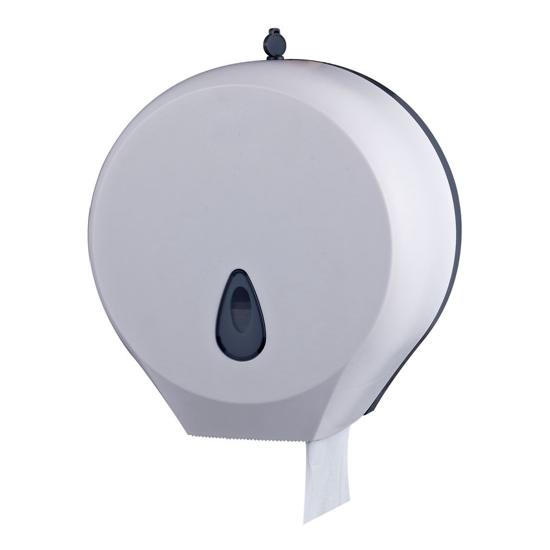
Over the past decade, bathroom hygiene standards have shifted a lot. That shift is visible throughout the components which are installed in modern bathrooms, including the most ordinary ones like a paper dispenser. As most of the commercial buildings, healthcare facilities, and airports are moving towards lower-touch environments, the China paper dispenser is becoming an important case study in the way this relatively ordinary product category adapts to shifting demands around automation, material sustainability, and aesthetics.
From Manual Pull to Touch-Free Operation
Paper dispenser has largely been a completely mechanical fixture for most of their history. Using it required a manual pull or lever mechanism involving direct contact to release every sheet. Though one is able to see many flaws in the conventional design, it has served the purpose for many decades. With growing awareness of surface transmission in shared spaces, facilities are pushing towards sensor-activated alternatives. As a result, a touch-free dispenser that uses an infrared or motion sensor to release a pre-set length of paper is becoming popular where no direct contact is required by the user’s hand. This is not a small thing because the clever design combines with tech in order to reduce one more contact point in modern bathrooms.
The process to manufacture this type of unit requires a whole different engineering approach than a manual dispenser because it involves everything from a small motor, precise sensor calibration, battery or mains power integration, along with a mechanical paper-feed system.
Material Choices Are Changing Too
The shift is not limited to mechanics only because the material choices used in manufacturing dispenser housings have evolved as well. One of the most common choices is still ABS plastic because it leads to lower production costs. But a significant portion of manufacturers are now coming up with housings that incorporate antimicrobial additives, especially designed to inhibit bacterial growth on the surfaces that are frequently touched. In addition, recycled or partly recycled plastics are becoming very common as well because many clients are really serious about sustainability credentials. The good news is, a made-in-China paper dispenser right now has evolved into a noticeably different product as compared to what was commonly used in the market a few years back.
Compatibility with Existing Paper Stock
Roll or stock compatibility is one of the most overlooked aspects during the early sourcing conversations, and it turns out as one of the biggest issues later on. Some dispensers in the market right now are built around universal cores, hence accepting paper from multiple manufacturers, while others rely on proprietary core sizes or folding formats that end up locking the facility into a single paper supplier. Choosing the right one matters much more than what initially appears. In case the dispenser hardware is not designed with flexibility in mind, the facility manager will face serious challenges in the future when they want to switch paper suppliers. Hence, it is one of those details that must be raised with the manufacturer upfront.
Capacity is a related consideration that most buyers don’t care about. Choosing one with the right capacity is very important. Dispensers installed in high-traffic areas must have a bit higher capacity in order to prevent interruptions, while the ones with lower foot traffic can rely on compact designs.
A Category That Is Still Evolving
A Stainless Steel Paper Dispenser is something that is less likely to look the way it is looking right now. With more and more facilities prioritizing touch-free hygiene, smart building integration, and sustainability credentials, a made in China paper dispenser is adapting pretty quickly to the shifting needs. Whether it be manual units for smaller facilities or larger and more advanced ones for extremely busy areas, Chinese manufacturers are coming up with the best solution for every case.