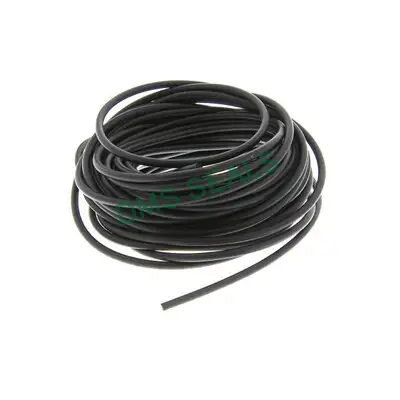
Selecting an O-ring supplier is an important purchasing decision for businesses that depend on reliable sealing components. Whether used in hydraulic machinery, automotive systems, industrial equipment, or fluid-handling applications, O-rings must meet specific performance requirements to prevent leaks and maintain efficient operation. Choosing a supplier based on price alone can create problems if product quality, material suitability, or delivery consistency falls short.
A dependable O Ring Seal Supplier should offer more than a range of products. Buyers should evaluate quality standards, pricing structures, stock availability, and technical support before placing an order. Understanding these factors makes it easier to find a supplier that can meet both immediate requirements and long-term purchasing needs.
1. Evaluate Product Quality and Manufacturing Standards
Quality should be the starting point when comparing potential suppliers. An O-ring that does not meet the required dimensions or material specifications may lose its sealing effectiveness, resulting in leakage, equipment wear, or unexpected maintenance.
Before choosing a supplier, consider the following quality factors:
- Material consistency: The elastomer should have properties suitable for the intended operating environment.
- Dimensional accuracy: Inner diameter and cross-sectional thickness must match the equipment specifications.
- Surface condition: Products should be free from visible defects that could affect sealing performance.
- Inspection procedures: The supplier should have processes for checking product dimensions and quality.
- Technical documentation: Material specifications, test information, and relevant compliance documents should be available when required.
It is also worth asking whether the supplier follows recognized quality management practices, such as ISO 9001. Certification can indicate an established quality management system, although buyers should still verify that the actual products meet their application requirements.
2. Compare Material Options and Product Range
O-rings are manufactured from different elastomers because no single material is suitable for every application. Temperature, pressure, chemical exposure, and contact with operating fluids all influence material selection.
Common options include:
| Material | Typical characteristics | Common applications |
|---|---|---|
| Nitrile (NBR) | Good resistance to many oils and fuels | Hydraulic and automotive systems |
| Fluorocarbon (FKM) | Suitable for many high-temperature and chemical-exposure environments | Industrial and chemical equipment |
| EPDM | Good resistance to water, weathering, and ozone | Water systems and outdoor equipment |
| Silicone | Flexible across a broad temperature range | Specialized industrial and equipment applications |
| Neoprene | Useful resistance to weathering and ozone | Selected industrial and outdoor applications |
When comparing suppliers, check whether they offer the materials and sizes your equipment requires. A broad product range can simplify procurement, particularly when your business uses several types of sealing components.
3. Understand Pricing Beyond the Unit Cost
Price is naturally an important consideration, especially when purchasing O-rings in large quantities. However, the cheapest quotation may not provide the best overall value if the products have inconsistent dimensions, unsuitable materials, or limited service life.
A thorough price comparison should account for:
- Unit cost and bulk-order discounts
- Minimum order quantities
- Custom manufacturing or tooling charges
- Packaging and shipping expenses
- Payment terms and applicable taxes
- Costs associated with returns or replacement orders
It is also useful to compare quotations based on identical specifications. Two suppliers may offer different prices because their products use different compounds, tolerances, or manufacturing processes.
Evaluating total purchasing cost rather than unit price alone helps businesses make decisions that consider both budget and performance.
4. Check Product Availability and Delivery Reliability
Even a supplier with excellent products may not be suitable if it cannot deliver them within your required timeframe. Delays in receiving replacement seals can interrupt maintenance schedules and affect production operations.
Ask potential suppliers whether commonly used sizes are available from stock or manufactured after an order is placed. You should also confirm estimated lead times, shipping arrangements, and their ability to handle urgent requirements.
For businesses with recurring demand, consider suppliers that can support:
- Regular replenishment orders
- Bulk purchasing
- Planned delivery schedules
- Repeat orders with consistent specifications
- Clear communication about stock changes
Reliable availability is particularly important when O-rings are essential maintenance items or when production depends on uninterrupted equipment operation.
5. Assess Customization and Technical Support
Some applications require non-standard dimensions, specialized compounds, or specific sealing characteristics. In these situations, a supplier’s technical capabilities become an important part of the selection process.
Find out whether the supplier can work from engineering drawings, physical samples, or detailed measurements. Ask about custom production capabilities, sample approval, minimum quantities, and development timelines.
Technical support is equally valuable. A knowledgeable supplier should be able to discuss material compatibility, operating conditions, and relevant product specifications. This assistance can help buyers avoid ordering seals that are unsuitable for their equipment.
6. Review Communication and Customer Service
Clear communication can make a significant difference throughout the purchasing process. Suppliers should be able to answer questions about product specifications, provide accurate quotations, and communicate changes to delivery schedules.
Consider how effectively a supplier responds to technical inquiries and handles problems such as incorrect deliveries or product replacements. Responsive service can save time when urgent requirements arise.
A supplier that maintains clear records of previous orders and product specifications can also make repeat purchasing more straightforward.
A Practical Supplier Comparison Checklist
Before making a final decision, compare potential suppliers using consistent criteria.
| Selection factor | What to verify |
|---|---|
| Product quality | Inspection procedures and dimensional consistency |
| Material range | Availability of suitable elastomers |
| Pricing | Competitive quotations and transparent charges |
| Stock availability | Inventory levels and manufacturing lead times |
| Customization | Ability to meet non-standard requirements |
| Technical support | Guidance on materials and application suitability |
| Customer service | Communication and issue-resolution processes |
This approach helps purchasing teams assess suppliers objectively instead of relying on a single factor, such as price or product range.
Conclusion
Choosing the right O-ring supplier requires a balanced assessment of quality standards, pricing, product availability, and technical capabilities. A supplier that meets your specifications while offering consistent service can help reduce purchasing risks and support reliable equipment operation.
Before placing an order, compare product documentation, confirm material and dimensional requirements, review delivery commitments, and clarify the full cost of the purchase. These steps can help establish a dependable supplier relationship and ensure that the O-rings you receive are appropriate for their intended applications.