Buying screws in bulk should make life easier. Fewer repeat orders, better stock levels and less chance of a job stopping because somebody used the last box without telling anyone.
It can also leave you with thousands of screws that are the wrong length, wrong thread or completely unsuitable for the material being fixed.
Before you buy bulk screws online in the UK, spend a few minutes checking exactly what the team needs. It is far easier than arranging the return of a pallet while everyone argues about who placed the order.
Buy in bulk when the work justifies it
Bulk ordering makes sense for businesses that use the same fixings regularly. Dry lining contractors may get through large quantities of drywall screws, while carpenters and joiners often keep several timber screw sizes in stock. Window installers, roofing teams, maintenance companies and commercial fit out contractors may have their own regular lines.
The same applies to a confirmed project. If the schedule includes hundreds of boards, panels or components, ordering enough fixings in advance can reduce interruptions and delivery charges.
Buying large quantities of an unusual size is another matter. A low price per box means very little if the remaining boxes sit in the storeroom for five years.
Look at previous orders before buying. They will normally give you a better idea of genuine usage than asking somebody to remember what the team used six months ago.
Work backwards from the material
The first question should not be “How many boxes do we want?” It should be “What are we fixing, and what are we fixing it to?”
Timber, plasterboard, masonry, sheet metal and light gauge framing all place different demands on a screw. The thread, point, head and coating may change even when two products look nearly identical.
Take drywall screws as an example. Coarse thread versions are generally used when plasterboard is fixed to timber studs. Fine thread screws are normally selected for light gauge metal framing. Ordering either type simply because the box says “drywall” may leave the installers struggling on site.
Window fabrication, decking, roofing and structural timber work bring other requirements. Check the product description against the project specification rather than choosing the closest looking photograph.
If the work has been designed or specified by somebody else, do not swap the fixing for a cheaper product without confirming that it is acceptable. Fifty boxes of “nearly the same” is still fifty boxes of the wrong thing.
A screw size contains more than one number
Screw measurements look straightforward until several similar boxes arrive at once.
Check the diameter as well as the length. Two screws can be the same length but have different threads, head styles and intended uses. The correct size will depend on the material being fixed, what sits behind it, how many layers are involved and how much penetration the fixing needs.
Longer is not automatically better. An unnecessarily long screw may be slower to drive and can increase the risk of reaching concealed cables, pipes or other services.
If you are ordering an unfamiliar product, buy a smaller quantity and test it before committing to the bulk order. One trial box costs less than returning fifty, assuming the return is accepted at all.
Match the head and drive to the job
The screw head controls how the fixing sits against the material.
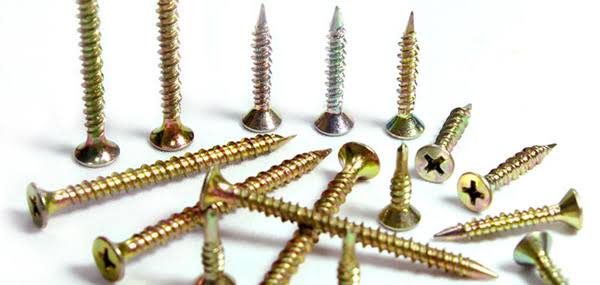
Countersunk heads are designed to sit flush in suitable materials. Pan and wafer heads provide a broader bearing surface, while drywall screws commonly use a bugle shaped head that creates a shallow recess without cutting straight through the plasterboard paper.
The drive type matters too. Phillips, Pozi and Torx style drives need the matching bit. A bit that almost fits may drive the first few screws, but it is also likely to damage heads, wear quickly and test the patience of whoever is using it.
Before changing drive type to save a small amount on the order, check which tools and bits are already in the vans and workshop. Saving money on screws only to buy new bits for every installer is inventive accounting.
Check where the screws will be used
An indoor screw may not have the corrosion protection needed for an external or damp location.
Before ordering, think about moisture, weather exposure, treated timber, chemicals and the expected life of the installation. A screw used inside a dry office faces very different conditions from one installed in external cladding or on an exposed roof.
Do not judge suitability by the colour of the coating. Check what the manufacturer says about the material, finish and intended environment.
For structural or regulated work, follow the project requirements and product guidance. The fixing may form part of a tested system, so changing one component can affect more than the price.
Order enough, but not enough to open your own screw shop
Start with the actual work. Count the boards, panels, lengths or components, then check the required fixing centres and number of fixing points.
Add a reasonable allowance for dropped screws, damaged heads, design changes and snagging. There will always be a few fixings that vanish into insulation, roll beneath a workbench or end up in somebody else’s van.
For recurring work, set a minimum stock level for regularly used sizes. Reorder when stock reaches that point, not when the final box is already open on site.
If several teams share stock, give somebody responsibility for checking it. Otherwise, one person assumes another has ordered, another assumes there are boxes in the workshop and everyone finds out the truth at 7am on Monday.
Compare what the full order will cost
Box price tells only part of the story.
Check how many screws each box contains and compare the cost per screw or per thousand. One supplier’s cheaper box may simply contain fewer fixings.
VAT, delivery charges and free delivery thresholds can also change the final total. If the order requires compatible bits, setting tools or specialist equipment, include those costs too.
Returns terms deserve a look before placing a large order. Find out whether unopened boxes can be returned, whether a restocking charge applies and who pays for the collection.
Product performance matters as well. Screws that snap, strip or drive poorly waste labour and bits. A small saving disappears quickly when installers spend the day removing damaged fixings.
Give the stock somewhere sensible to live
Bulk buying only works if people can find the products after they arrive.
Keep screws dry and, where possible, in their original labelled boxes. Separate similar lengths and thread types instead of tipping everything into one container.
Record the product code, size, pack quantity and storage position. If stock is split between vans, a workshop and several sites, note where it has gone.
Labels should be readable without opening every box. Nobody wants to measure loose screws before breakfast because the 40mm and 50mm stock has been mixed together.
A basic stock record can also show which products move quickly and which ones do not. That makes the next order more accurate.
Use a supplier that understands trade quantities
A trade buyer needs clear measurements, sensible pack sizes and delivery information that is easy to find.
Screw Point supplies screws, fasteners, fixings and other trade products from its base in Luton, Bedfordshire. Its screw categories cover timber construction, dry lining, metal construction and window fabrication.
The company’s website advertises more than 8,000 products, next working day delivery on qualifying orders placed before 3pm and free delivery above the stated order value. Check the current availability and delivery terms before placing an urgent or high volume order.
If the product or quantity you need is not shown, contact the supplier before substituting another screw. A short conversation may prevent a costly mistake.
Five minutes now can save a difficult delivery later
Before paying, read the order back as if you were checking somebody else’s work.
Confirm the material, application, diameter, length, thread, head and drive. Check the coating, pack quantity, VAT, delivery charge and expected arrival date.
Then check it once more.
That may sound excessive, but it is still quicker than opening the delivery and discovering every screw is 10mm too short.
Browse bulk screws online from Screw Point or contact the team about trade quantities and product alternatives.