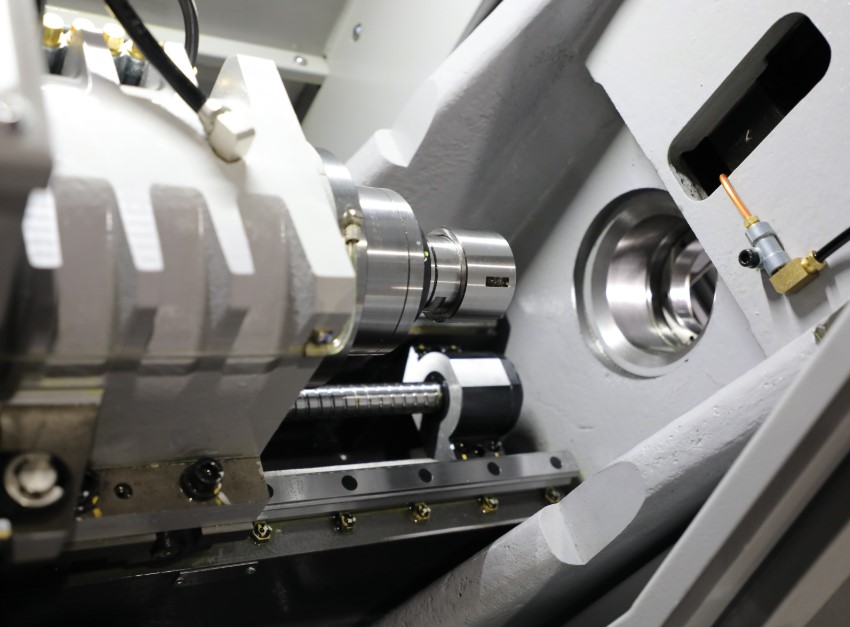
Production volume plays an important role when deciding whether to invest in advanced CNC equipment. A machine designed for high-speed, repeatable production may offer major benefits when the same or similar components run regularly.
For manufacturers considering a swiss type automatic lathe machine, volume should not serve as the only deciding factor. Part complexity, material, tolerances, cycle time, labor requirements, and the number of operations also influence the investment decision.
Why Production Volume Matters
High production volumes allow manufacturers to spread machine setup and programming costs across more parts. Once a process reaches stable production, automation can help maintain consistent output over extended runs.
A Swiss-type machine often delivers the most value when manufacturers need repeatable precision and efficient processing of small, complex components.
Low-volume work may still justify the technology when each part requires multiple operations that would otherwise involve several machines or setups.
What Counts As High Production Volume?
There is no universal production quantity that automatically makes a Swiss lathe worthwhile. A shop producing 5,000 parts per month may have different requirements from another manufacturer producing 50,000 parts.
The right threshold depends on cycle time, part value, labor costs, machine utilization, and the complexity of the component.
For example, a simple component with a short cycle time may require much higher volumes to justify dedicated automation. A complex precision part may justify advanced equipment at a lower quantity because the machine combines several operations.
Low-Volume Production
Low-volume production typically involves smaller batches and frequent changes between different part numbers. Manufacturers may prioritize flexibility and quick setup over maximum automation.
A Swiss-type machine can still make sense when the parts require:
- Tight dimensional tolerances
- Multiple machining operations
- Small diameters
- Precise drilling or threading
- Front and rear-end features
The key question involves how much machining time and handling each part requires rather than simply counting annual units.
Medium-Volume Production
Medium-volume production often provides a strong case for Swiss-type machining. Manufacturers can reuse established programs and tooling setups across recurring orders.
Once the process stabilizes, the machine can produce batches with less manual intervention. This helps reduce the time operators spend on repetitive machining tasks.
Medium-volume work also provides an opportunity to improve the process gradually. Tooling, cutting parameters, coolant delivery, and workholding can all receive optimization based on production data.
High-Volume Production
High-volume production represents one of the strongest applications for Swiss-type automatic machining.
When thousands or millions of similar components require production, small improvements in cycle time can create substantial capacity gains.
A machine that reduces several separate operations into one coordinated process may also reduce handling, work-in-process inventory, and transfer time between machines.
Look Beyond Part Quantity
Production volume alone does not determine the value of a Swiss-type machine. A manufacturer should also examine how difficult each component proves to manufacture.
A part that requires turning, drilling, milling, threading, and cutoff operations may benefit from a machine that handles these processes in one setup.
This approach can reduce the number of times an operator moves the workpiece between machines and helps maintain feature alignment.
How Cycle Time Changes The Calculation
Cycle time provides a useful way to evaluate production requirements. Consider two jobs that each require 20,000 parts per year.
One part may take only 20 seconds to produce, while another requires two minutes. The second job demands far more machine capacity despite having the same annual quantity.
Manufacturers should calculate expected annual machining hours based on actual cycle times. This figure provides a better foundation for evaluating machine utilization and capacity needs.
Setup Time Also Matters
Batch size becomes more important when setup time represents a significant portion of total production time.
A small order may not justify extensive tooling preparation when the machine requires frequent changes. Larger recurring batches allow setup costs to spread across more finished components.
Manufacturers should compare setup time, machining time, inspection time, and material handling when reviewing production economics.
When Automation Creates More Value
Automation becomes increasingly valuable as production volume grows. Bar feeding, automatic part transfer, and coordinated machining can help maintain production with fewer manual interventions.
For repetitive components, automation may allow operators to oversee multiple machines or focus on inspection, tooling adjustments, and process control.
JSWAY develops CNC solutions for precision manufacturing applications where production efficiency and repeatability matter. Manufacturers should evaluate automation according to their actual workload rather than selecting features that remain unused.
Consider Annual Machine Utilization
A machine may provide limited financial value when it remains idle for long periods. Manufacturers should estimate how many hours each year the equipment will actually run.
Consider factors such as:
- Number of production shifts
- Working days per year
- Average cycle time
- Planned maintenance
- Setup frequency
- Expected machine utilization
- Annual demand
A realistic utilization estimate helps determine whether the equipment will generate enough productive output.
When Lower Volumes Can Still Justify Swiss Machining
Some manufacturers assume that Swiss-type technology only suits extremely high production volumes. That assumption does not always hold.
A lower-volume job may justify the equipment when the machine eliminates several secondary operations. Combining machining steps can reduce handling, improve consistency, and shorten the overall production route.
Part value also matters. High-value precision components may justify a more capable machine even when annual quantities remain moderate.
Compare The Cost Per Finished Part
A useful evaluation focuses on the total cost of producing a finished component.
Manufacturers should consider:
- Machine investment
- Tooling expenses
- Programming and setup
- Operator labor
- Material consumption
- Secondary machining
- Inspection
- Maintenance
- Scrap and rework
- Machine utilization
This broader calculation provides a clearer picture than comparing machine purchase prices alone.
How Part Variety Affects The Decision
High production volume does not always mean one part runs continuously. Many manufacturers produce several related components in recurring batches.
A flexible Swiss-type machine may support these production environments when tooling and programming changes remain manageable.
The ideal setup should provide enough flexibility for the shop’s product mix without sacrificing the automation needed for repeat orders.
Matching Machine Capacity To Demand
Manufacturers should avoid buying equipment that significantly exceeds their expected production requirements. Excess capacity can increase capital costs without producing proportional benefits.
At the same time, insufficient capacity may create bottlenecks when orders increase.
A practical approach involves reviewing current demand, expected growth, part families, cycle times, and available production shifts before choosing machine capacity.
How JSWAY Fits Into Production Planning
Selecting a Swiss-type CNC machine requires more than looking at maximum spindle speed or the number of axes. The machine configuration should match the parts and production targets.
JSWAY provides CNC machining solutions designed for precision component manufacturing. Evaluating machine capabilities alongside tooling, automation, cycle time, and expected utilization can help manufacturers make a more informed investment decision.
A Simple Rule For Evaluating Production Volume
There is no single annual quantity that guarantees a Swiss-type machine will deliver a positive return. Instead, manufacturers should ask whether the equipment can lower the total cost and production time per finished part.
The investment becomes more attractive when recurring demand combines with complex machining requirements, tight tolerances, multiple operations, and a need for consistent output.
Final Thoughts
Production volume provides an important starting point, but it should not determine the machine decision on its own. Medium and high-volume production often provide strong opportunities for Swiss-type automation, especially when parts require several precision operations.
Lower-volume work can also justify the technology when one machine eliminates multiple setups or secondary processes. By analyzing cycle time, setup costs, labor, part complexity, machine utilization, and future demand, manufacturers can determine whether the investment fits their production strategy.