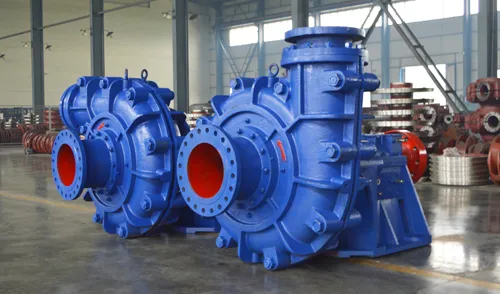
Pump liners are important components in slurry pumping systems because they protect the pump casing from the abrasive effects of solid particles. As slurry continuously passes through the pump, the liner helps absorb much of the wear that would otherwise affect the main casing.
In a centrifugal slurry pump, liner design, material, thickness, and fit can all influence operating reliability. Selecting the appropriate liner for the application can help extend service intervals and maintain consistent hydraulic performance.
What Is a Pump Liner?
A pump liner is a replaceable internal component positioned inside the pump casing. It creates a protective surface between the casing and the pumped slurry.
Because the liner is exposed directly to the slurry, it is designed to withstand abrasion and, depending on the application, corrosion. When wear becomes excessive, the liner can be replaced without necessarily replacing the entire casing.
Why Are Liners Important?
Slurry contains solid particles that can be significantly more abrasive than the liquids handled by conventional pumps. Continuous contact with these particles can gradually erode internal surfaces.
A suitable liner helps reduce this damage by providing a wear-resistant barrier. This can offer several practical benefits:
- Protection of the pump casing
- Longer service life of major components
- Easier maintenance
- More predictable wear
- Reduced maintenance downtime
- Better control of long-term operating costs
The actual benefits depend on slurry characteristics and operating conditions.
Common Liner Materials
The most suitable liner material depends on the type of slurry being pumped. Common options include hard metals and elastomers, with each offering different performance characteristics.
Hard Metal Liners
Hard metal liners are commonly considered for applications involving highly abrasive solids. They can provide strong resistance to erosion caused by hard particles.
Their suitability depends on factors such as particle size, hardness, slurry concentration, and operating velocity.
Elastomer Liners
Elastomer liners can be suitable for certain applications involving fine particles and corrosive conditions. Their flexibility can also provide advantages when handling specific slurry compositions.
However, elastomers have temperature and particle-size limitations, so they should be selected according to the actual operating environment.
How Liners Reduce Wear
When abrasive slurry enters the pump, solid particles move through the suction passage, impeller, casing, and discharge area. These particles can impact internal surfaces and create gradual erosion.
The liner provides a replaceable wear surface in areas exposed to this action. Instead of allowing the casing itself to deteriorate rapidly, the liner takes much of the abrasive contact.
This design makes maintenance more practical because the worn component can be replaced at an appropriate service interval.
Liner Design and Hydraulic Performance
A liner does more than protect the casing. Its internal shape contributes to the hydraulic passage through the pump.
If a liner becomes significantly worn, the internal geometry can change. Increased clearances, surface erosion, or damaged areas may affect flow patterns and hydraulic efficiency.
For this reason, liners should not be treated only as protective parts. Their condition can also influence overall pump performance.
Signs of Liner Wear
Liner wear develops gradually, but certain changes can indicate that inspection is needed.
Common signs include:
- Reduced flow or discharge pressure
- Increased vibration
- Changes in pump noise
- Higher power consumption
- Visible liner damage during inspection
- Increasing maintenance frequency
These symptoms can have other causes, so liner wear should be evaluated together with the pump’s operating conditions and other components.
Factors That Affect Liner Life
Liner service life varies significantly between applications. Several factors can accelerate wear.
Slurry Concentration
Higher concentrations of solids generally increase the amount of abrasive material passing through the pump. This can shorten liner life.
Particle Size and Hardness
Large and hard particles can cause more severe erosion than fine or relatively soft particles. Particle shape is also important, as sharp particles can create greater abrasive action.
Pump Speed
Higher pump speed can increase particle velocity and hydraulic forces. While speed may be necessary to achieve the required duty, unnecessarily high speed can accelerate wear.
Operating Point
Operating significantly away from the intended duty point can create unfavorable hydraulic conditions, including internal recirculation and uneven wear.
How to Extend Liner Service Life
Several operating and maintenance practices can help maximize liner performance.
First, ensure that the pump is correctly selected for the slurry characteristics and required duty. Operating within the appropriate flow and speed range can reduce unnecessary hydraulic stress.
Second, monitor the condition of the liner regularly. Establishing inspection intervals based on actual wear rates makes it easier to plan replacement before severe damage occurs.
Finally, investigate unusual wear patterns rather than simply replacing the liner. Uneven or unexpectedly rapid wear may indicate problems with pump operation, slurry conditions, alignment, or system design.
When Should a Liner Be Replaced?
There is no universal replacement interval because liner life depends heavily on the application. Replacement should be based on actual wear measurements, pump performance, and operating history.
Waiting until a liner fails completely can result in secondary damage to other components and unexpected downtime. Planned replacement is generally preferable when wear approaches the acceptable operating limit.
Final Thoughts
Pump liners play a critical role in protecting the casing of a centrifugal slurry pump from abrasive and corrosive slurry. By providing a replaceable wear surface, they can simplify maintenance while helping preserve pump performance.
The right liner material and design depend on slurry concentration, particle characteristics, temperature, pump speed, and operating conditions. Regular inspection and proper operation are equally important for achieving reliable liner service life and maintaining efficient slurry transport.