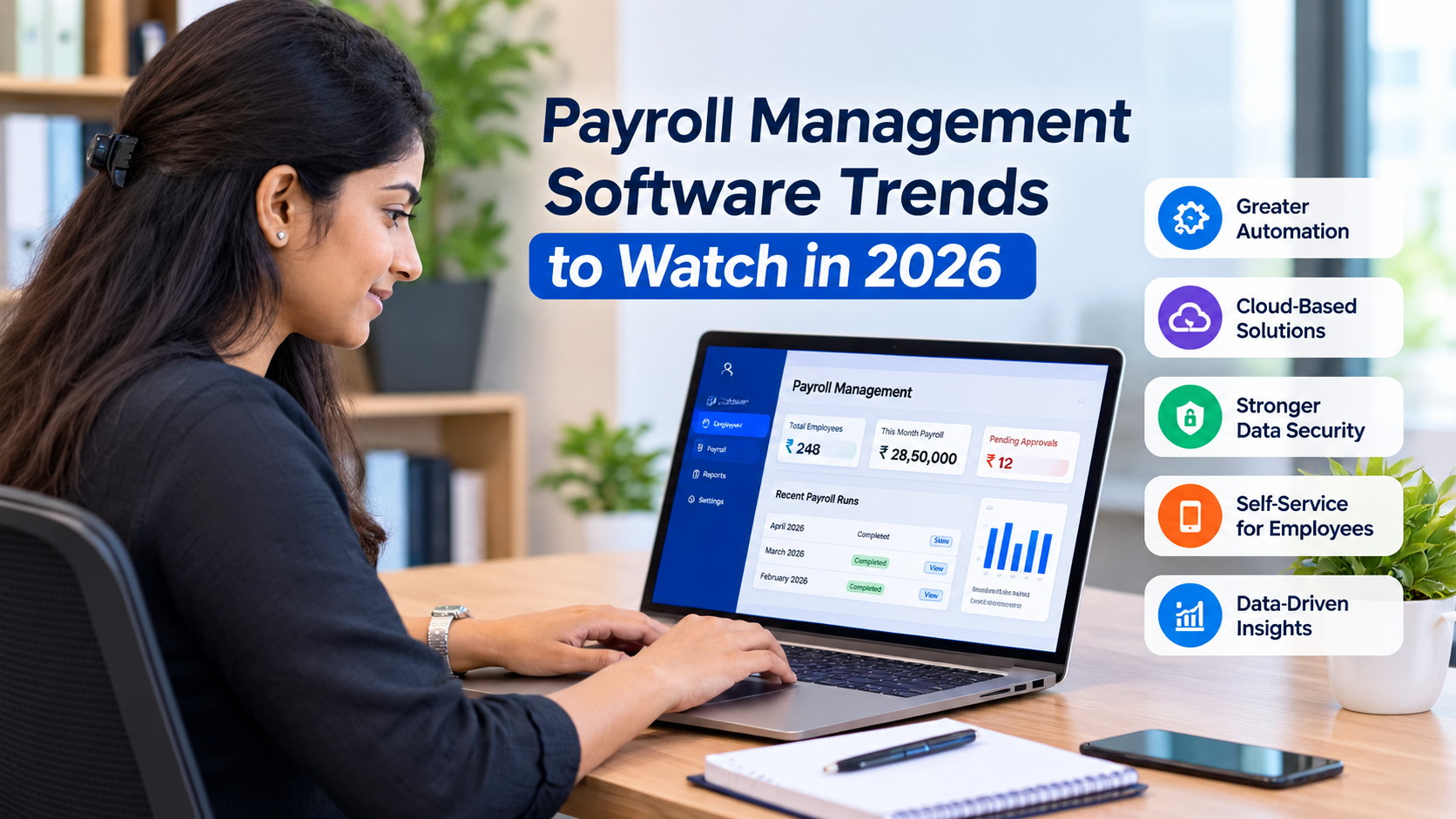
Businesses need to maintain their payroll systems while new technologies emerge that help manage their payment processing, staff information management and legal requirements.
The manual process of handling payroll work leads to extended processing times which creates more chances for mistakes to occur. Organizations require effective methods which deliver dependable outcomes to process employee payments and handle their staff information.
Businesses need solutions in 2026 to simplify their payroll operations while they seek to enhance their payment accuracy and handle their evolving workforce requirements.
In this guide, you will learn about current payroll management software trends which help businesses stay updated and find the best system for their business.
1. AI-Powered Payroll Processing
Modern payroll systems now depend on artificial intelligence because this technology has become an essential element of their operations. The system provides business organizations with automated solutions to perform their routine operations while they detect strange payroll records and they can reduce their need for human intervention.
AI-based systems review payroll information to detect possible calculation mistakes while HR teams can spot salary record differences through this process. The system requirements allow payroll staff to reduce their data verification work because they can concentrate on their core responsibilities which involve employee management and business operations.
AI systems will enable businesses to forecast their payroll expenses, detect errors and respond to employee questions about payroll during the year 2026. The system needs human operators to review salary approval processes and handle all sensitive payroll matters which require their expertise.
2. Growing Adoption of Cloud-Based Payroll Systems
Cloud-based payroll systems enable businesses to handle their salary payments and employee records through an internet-based platform. Human resources teams access payroll information through various office locations which helps them handle their dispersed staff members and their multiple workplace settings.
The systems provide better software update management, enable HR and finance teams to work together more effectively and support the growth of business operations. Organizations achieve better payroll information management through efficient operation of centralized record systems.
Organizations are adopting cloud-based solutions in 2026 because they provide better operational flexibility and extended remote access capabilities. Organizations need to review their data protection systems together with their backup systems, access verification systems and service availability systems before they decide on a service provider.
3. Increased Payroll Automation
The automation of payroll systems helps companies spend less time on their basic administrative work. Payroll Management software for salary processing allow companies to perform automatic payment component management with their built-in software rules.
A modern payroll system operates automatically to perform salary calculations, allowance processing, overtime computation, deduction management, payslip creation and payroll reporting.
Employees need to provide their data only once as the system solves standard calculation errors which people tend to make during their work. The system produces standardized salary payments through automated processing of employee records and payroll rules which companies maintain properly.
4. Integration With Attendance Management Software
Accurate attendance data is essential for correct salary processing. The monthly salary distribution is affected by three main factors including employees arriving late and working extra hours, taking unpaid time off, and their scheduled shifts and their actual workdays.
The use of separate attendance and payroll systems by businesses requires HR teams to perform manual data transfers which creates chances for mistakes and slows down their operations.
Organizations can calculate their salaries through their payroll systems by using approved attendance and leave records which Attendance Management Software integration provides. system establishes a connection which enables precise work hour tracking, efficient overtime computation and minimizes human data entry tasks while speeding up payment processing. The system operates best for businesses which need to manage employees who work in shifts at various locations with large employee populations.
5. Stronger Statutory Compliance Support
Businesses which operate in India need to keep up with their payroll compliance duties as a main operational requirement. Employers need to perform deduction calculations while they must maintain all payroll documentation and fulfill their official submission and payment responsibilities.
Organizations can manage their Employees’ Provident Fund (EPF) and Employees’ State Insurance (ESI), Tax Deducted at Source (TDS) and Professional Tax and Labour Welfare Fund contributions through modern payroll systems which operate when required. These systems produce reports which assist HR teams in their process of storing all compliance-related data.
The business world of 2026 shows rising interest in payroll systems which provide flexible solutions to meet evolving business demands. Organizations need to check their Payroll Management software settings and all legal requirements, threshold levels and deadline schedules to achieve full compliance.
6. Expansion of Employee Self-Service Portals
Employee self-service portals enable employees to access important payroll data without needing to contact HR for every request. Employees have the ability to download their payslips while reviewing salary information, accessing tax documents, checking their leave records and monitoring their attendance according to software capabilities.
Some platforms enable employees to modify the personal data which they can access. The system decreases standard administrative tasks while it presents users with quick access to payroll data.
In 2026, businesses are focusing on employee self-service to improve transparency and provide a smoother employee experience. Organizations can create simple portals which help staff members discover information quickly while HR personnel free up time to handle their essential work.
7. Greater Focus on Payroll Data Security
Payroll systems store various types of confidential information which includes employee records, bank details, salary data and tax information. The protection of this information is vital because it enables organizations to build employee confidence while they decrease their exposure to security threats. The modern payroll platforms now focus on security features which include data encryption, role-based access controls, multi-factor authentication, audit trails and secure backup systems.
Organizations maintain control over their payroll record access through these security measures which also enable them to monitor essential system operations.
The migration of business payroll operations to online platforms during 2026 has made data security the primary factor which organizations should consider when selecting their software solutions. Companies need to assess their providers’ security measures together with their employee access rights to maintain regular oversight of these aspects.
8. Mobile-Friendly Payroll Access
Mobile-friendly payroll systems allow employees and managers to access particular services through their mobile devices instead of depending on desktop computer access. Employees can obtain their payslips through supported mobile applications which also enable them to view their salary details and obtain their tax documents.
The platform enables managers to view submitted requests while they can also approve completed assignments through their remote work outside the office environment.
The system also provides businesses with adaptable solutions that help them manage their workforce, that includes factory personnel, retail employees, field staff and remote workers. Mobile access will become essential for organizations during 2026 because they need to provide easy payroll service access while protecting their employee data.
9. Payroll Analytics and Cost Insights
Organizations use payroll analytics to determine their salary costs which enables them to enhance their staff selection methods. Modern payroll platforms generate reports from salary data which display complete payroll expenses, overtime costs, department-based cost distribution, compensation patterns and attendance-related pay modifications.
HR and finance teams can use these insights to identify cost changes, prepare budgets, and review payroll performance.
The dashboard system provides managers with simple access to important payroll data as they no longer need to browse through various spreadsheet files. Nowadays, organizations need reporting solutions that will generate important data through their regular payroll activities. Organizations need solid employee data to generate useful reports which will guide their decision-making processes.
10. Flexible and Scalable Payroll Solutions
Businesses need to handle more complex payroll operations when their business activities expand. Organizations need to deal with employee expansion, office expansion, salary system changes and attendance policy modifications. Companies can modify their payroll operations through flexible systems which support their changing business requirements. Organizations need a single platform which combines salary processing with attendance tracking, compliance monitoring, employee self-service functionality and reporting capabilities.
Organizations need scalability when they expand their business because this prevents them from changing their current systems. In 2026, organizations should select software which meets their present needs while providing expansion capabilities to enhance their payroll management operations.
Conclusion
The payroll industry has developed automated systems which now link together for improved security protocols and advanced reporting capabilities. The future of payroll operations depends on four main systems which include cloud-based platforms, AI-powered check processing, employee self-service options and compliance assistance tools.
Organizations that study these market patterns will select their payroll systems through better decision-making processes. The implementation of an appropriate system will reduce manual work while it enhances payroll accuracy and allows HR teams to handle their changing workforce requirements.
Organizations need to select their present-day solutions which will support their future business growth during the year 2026. Organizations can achieve better workforce management through the strategic integration of their payroll system with attendance tracking and HR management systems.
Looking to simplify your payroll process in 2026?
Savvy HRMS provides an integrated platform that helps your organization handle its payroll operations, attendance tracking, employee data management and other human resource functions.
Book a free demo to find out more.