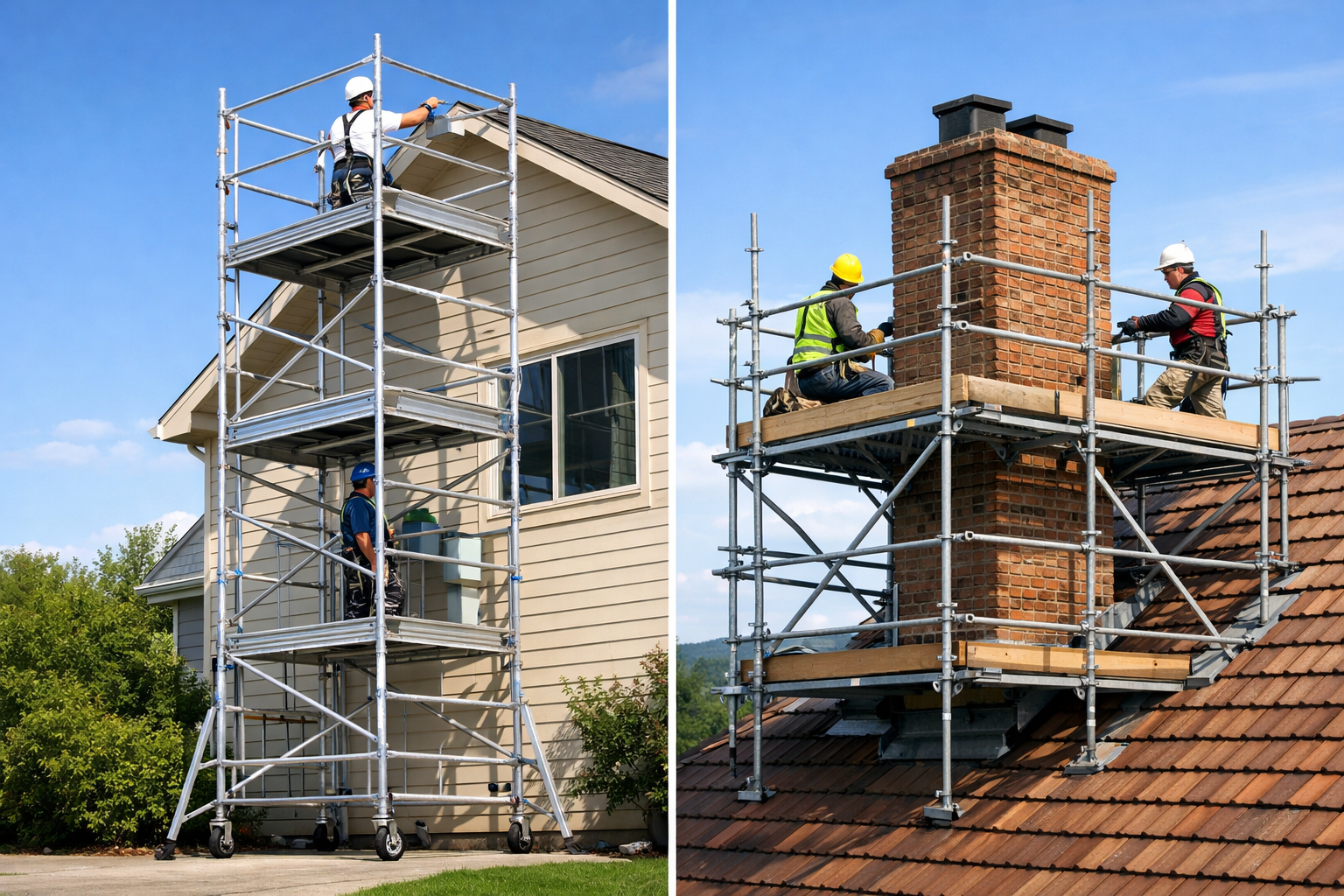
Construction and maintenance work often takes place in environments where available space is limited. Narrow corridors, crowded industrial facilities, small residential properties, and restricted work zones can make conventional scaffolding difficult to install. Contractors must find ways to provide safe elevated access without unnecessarily obstructing surrounding activities or equipment.
A Compact Modular Scaffold offers a practical access solution for projects that require a smaller footprint and adaptable component arrangements. Its modular design allows compatible parts to be assembled into configurations suited to specific working areas. When selected and installed correctly, compact scaffolding can help teams access elevated surfaces while making more efficient use of available space.
What Is a Compact Modular Scaffold?
A compact modular scaffold is a temporary access structure designed to provide working platforms within relatively restricted areas. It uses compatible prefabricated components that can be assembled, adjusted, and dismantled according to the project’s requirements.
Unlike larger scaffold arrangements designed to cover extensive building facades, compact systems are often selected for localized maintenance, installation, inspection, and repair tasks.
Depending on the system, the components may include:
- Vertical standards or prefabricated frames.
- Horizontal ledgers and connecting members.
- Diagonal braces for structural stability.
- Adjustable base jacks and base plates.
- Compact working platforms.
- Guardrails and toe boards.
- Access ladders or stair components.
- Compatible locking fittings and connectors.
The exact configuration varies by manufacturer and scaffold type. A smaller footprint does not remove the need for suitable load calculations, stability measures, and safety protection.
Why Compact Modular Scaffolding Is Useful
Space restrictions can affect how workers, tools, materials, and equipment move around a construction site. A carefully planned compact scaffold arrangement can help address these challenges.
1. Efficient Use of Limited Space
Compact scaffold configurations can provide access without occupying more floor area than necessary.
This is especially useful in narrow work zones, small buildings, and facilities where permanent equipment or existing structures restrict installation space.
A suitable layout should still provide enough room for workers, tools, and required safety features.
2. Flexible Component Arrangement
Modular scaffolding uses standardized connections and interchangeable components.
This allows installation teams to create different arrangements based on working height, available clearance, and the shape of the work area.
The flexibility is useful when a project involves several small maintenance locations with different access requirements.
3. Easier Transportation and Handling
Smaller scaffold components can be easier to move through restricted entrances, corridors, and service areas.
This can reduce handling difficulties when equipment needs to be transported inside existing buildings or industrial facilities.
Actual handling requirements depend on component dimensions, material, weight, and site access conditions.
4. Reduced Site Obstruction
Large scaffold structures may interfere with pedestrian routes, nearby operations, or equipment movement.
A properly designed compact arrangement can help limit unnecessary obstruction while maintaining access to the required work area.
Contractors should preserve designated walkways, emergency exits, and operating clearances throughout installation and use.
5. Reusability Across Different Projects
Modular components can often be dismantled and reused in other compatible configurations.
This can be useful for maintenance teams and contractors who regularly work in buildings with similar space limitations.
Before reuse, every component should be inspected and confirmed as compatible with the new scaffold arrangement.
Where Compact Modular Scaffolds Make the Biggest Difference
Compact access structures are particularly useful in environments where conventional scaffolding may be difficult to position.
1. Residential Renovation Projects
Homes and small residential buildings often have narrow side passages, limited yards, and restricted access around exterior walls.
Compact scaffolding can provide working platforms for activities such as painting, plaster repairs, window maintenance, and exterior finishing.
Its smaller configuration may also help contractors work around landscaping, entrances, and other existing features.
2. Indoor Building Maintenance
Commercial buildings, schools, hospitals, and offices frequently require elevated maintenance in occupied spaces.
Tasks such as ceiling repairs, lighting replacement, painting, and ventilation maintenance may take place in corridors or rooms with limited floor space.
Compact scaffold towers can provide a designated working platform while allowing surrounding areas to remain more accessible.
The installation must account for floor capacity, overhead obstructions, pedestrian movement, and emergency access requirements.
3. Industrial Facilities
Factories and processing plants often contain machinery, pipes, electrical installations, and permanent equipment that restrict available working areas.
Compact modular scaffolding can be arranged for localized access around selected installations.
It may support maintenance activities involving overhead pipes, cable trays, ventilation systems, and elevated machinery.
Before installation, contractors should assess nearby hazards, operating equipment, and any requirements for isolating machinery or services.
4. Retail and Commercial Spaces
Shops, restaurants, warehouses, and other commercial properties may require maintenance without occupying large sections of the premises.
Compact scaffolding can be useful for repairing signs, servicing ceiling fixtures, maintaining lighting, and completing interior finishing work.
Where businesses remain operational, installation schedules and exclusion zones should be coordinated to protect workers and visitors.
5. Narrow Outdoor Passages
Some buildings have limited space between exterior walls, boundary fences, and neighboring properties.
Compact scaffold arrangements may help provide access in these confined areas where wider structures are impractical.
Contractors must confirm that the selected system has sufficient clearance, a suitable foundation, and appropriate access and stability provisions.
6. Mechanical and Electrical Installation
Mechanical and electrical contractors often work above floor level to install or maintain cables, ducts, pipes, and other building services.
A compact scaffold platform can provide a more stable working surface than relying on unsuitable temporary access arrangements.
The scaffold should be selected according to the task, equipment loads, working height, and available space.
Common Types of Compact Modular Scaffolding
Different scaffold designs offer different advantages depending on the project environment.
Compact Frame Scaffolding
Frame scaffolding uses prefabricated frames connected by compatible braces and other fittings.
Smaller frame configurations can be suitable for localized building maintenance and finishing activities.
Their dimensions are generally predetermined, so buyers should check whether the frame size matches the available working area.
Compact Ringlock Scaffolding
Ringlock systems use vertical standards fitted with rosette plates that connect horizontal and diagonal members.
Their multi-directional connection design allows compatible components to form different layouts.
This flexibility can be helpful in restricted or irregular working areas where the scaffold needs to accommodate nearby structures or obstacles.
Compact Tube and Coupler Scaffolding
Tube and coupler systems use individual tubes joined through compatible fittings.
Their adaptable arrangement can be useful where the working area has unusual dimensions or obstacles that make standard frame layouts unsuitable.
Assembly requires trained personnel and careful attention to connection placement and structural stability.
Mobile Scaffold Towers
Mobile scaffold towers are equipped with compatible castors, allowing repositioning when the design and operating conditions permit.
They are commonly used for indoor maintenance, painting, and installation tasks.
Castors must be suitable for the system, securely fitted, and locked during work. The tower should only be moved under the conditions specified by the manufacturer and applicable safety requirements.
Important Factors When Choosing a Compact Scaffold
A small scaffold still needs to satisfy the same fundamental safety and performance requirements as a larger access structure.
Available Working Space
Measure the installation area before selecting a scaffold.
Consider the width and length of the available floor space, overhead clearance, nearby equipment, doorways, and movement routes.
The scaffold should fit without compromising safe access or required working clearances.
Working Height
Determine the height needed to complete the task safely.
The selected system should provide suitable platform elevations without requiring workers to stand on guardrails, boxes, or other unauthorized surfaces to reach the work area.
Load Capacity
Scaffolds may support workers, tools, materials, and equipment.
The system must be suitable for the expected loading, and its platforms and supporting structure should remain within the specified limits.
Compact dimensions should never be interpreted as permission to use components beyond their rated capacity.
Material and Durability
Steel and aluminum are commonly used in scaffold manufacturing.
Steel provides strength and durability for many applications, while aluminum offers lower weight and easier handling in suitable systems.
Buyers should review material specifications, connection quality, corrosion protection, and product documentation.
Foundation and Floor Conditions
Indoor floors and outdoor ground surfaces must be capable of supporting the scaffold.
For mobile systems, the surface should be suitable for the castors and free from conditions that could cause instability.
Where floor capacity or ground conditions are uncertain, a competent professional should assess their suitability.
Component Compatibility
All standards, frames, braces, platforms, and fittings should belong to a compatible system.
Combining parts from different manufacturers or scaffold types without confirming compatibility can affect the structural performance of the completed installation.
Safety Practices for Compact Modular Scaffolds
Limited working space can introduce additional risks, particularly when scaffolding is installed near machinery, walls, doorways, or pedestrian routes.
Following appropriate safety procedures helps reduce these hazards.
- Prepare a stable and suitable supporting surface.
- Assemble the scaffold according to manufacturer instructions and the approved design.
- Install all required braces and locking connections.
- Provide suitable platforms, guardrails, and toe boards.
- Maintain safe access between working levels.
- Observe the specified load limits.
- Keep tools and materials organized on the platform.
- Protect nearby workers and visitors from the installation area.
- Inspect the scaffold before use and at required intervals.
- Remove damaged or incompatible components from service.
Mobile towers require additional attention to castor condition, wheel locks, movement restrictions, and ground conditions.
Scaffolds should not be moved while occupied unless the specific system is designed for that operation and the manufacturer’s instructions and applicable regulations expressly permit it.
How Compact Scaffolding Supports Better Project Planning
Selecting the right access equipment can improve the coordination of maintenance and construction activities.
More Efficient Equipment Preparation
When contractors use standardized modular components, they can prepare equipment packages for recurring maintenance tasks.
This makes it easier to identify required parts and check inventory before arriving at the site.
Easier Storage and Organization
Compact components may require less storage space than larger scaffold assemblies.
Organizing parts by type and size also helps reduce the time needed to locate equipment and identify missing items.
Better Coordination in Occupied Buildings
Maintenance work in offices, shops, and public facilities often needs to be coordinated around normal operations.
A carefully positioned compact scaffold can help limit the area affected by the work, although exclusion zones and safe access routes must still be maintained.
Adaptability for Repeated Maintenance Tasks
Facilities teams may carry out similar repairs in different rooms, corridors, or service areas.
Reusable modular components can support consistent equipment planning when the configurations remain within the system’s approved design limits.
Maintenance and Storage of Compact Scaffold Components
Regular inspection and responsible storage help preserve the condition of scaffold equipment.
Before and after use, components should be checked for:
- Bent or damaged structural members.
- Cracked welds or visible fractures.
- Corrosion or deterioration.
- Worn locking mechanisms and fittings.
- Damaged platform surfaces.
- Defective castors or wheel-locking devices.
Damaged parts should be removed from service and assessed by a competent person.
After dismantling, components should be cleaned, sorted, and stored in suitable conditions. Keeping equipment organized helps contractors prepare future installations and maintain better control over their scaffold inventory.
Conclusion
Compact modular scaffolding provides a practical way to create temporary elevated access in locations where available space is limited. From residential renovations and indoor maintenance to industrial installations and narrow outdoor passages, these systems can help contractors organize work areas without unnecessarily occupying surrounding space.
The right solution depends on working height, site dimensions, load requirements, floor conditions, and the specific maintenance task. Careful selection, compatible components, competent installation, and regular inspection remain essential for safe operation.
When these factors are properly addressed, compact modular scaffolds can support efficient maintenance planning and provide adaptable access across a wide range of construction environments.