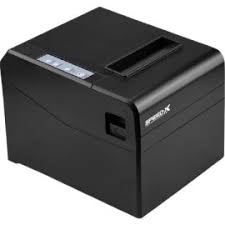
Bulk purchasing is a common strategy for retailers, restaurant groups, supermarkets, wholesalers, and businesses that operate multiple checkout locations. Ordering receipt printers in large quantities can help standardize equipment, simplify procurement, and reduce per-unit costs. However, the benefits depend heavily on choosing a manufacturer that can deliver consistent quality, meet production deadlines, and provide dependable support.
A large order also involves greater financial and operational risks than purchasing a few individual units. Buyers need to assess manufacturing capabilities, product specifications, quality management, and long-term supply arrangements before making a commitment. Working with an experienced Receipt Printer Manufacturer can help businesses establish a more predictable procurement process and select equipment suited to their daily transaction requirements.
1. Understand Your Bulk Purchasing Requirements
Before contacting potential suppliers, businesses should define their purchasing needs. A clear specification makes it easier to compare quotations and prevents confusion during production.
Start by estimating the number of printers required, the locations where they will be installed, and the expected daily transaction volume. A small retail shop may need a basic desktop thermal printer, while a large restaurant chain may require models with different connectivity options and more demanding operating capabilities.
Prepare a list covering:
- Required order quantity.
- Preferred printer models and printing technology.
- Printing speed and resolution.
- Paper width and roll compatibility.
- Required communication interfaces.
- Operating system and POS software compatibility.
- Branding and packaging requirements.
- Expected delivery schedule.
A detailed purchasing plan gives manufacturers a clearer understanding of the project and helps them provide more accurate proposals.
2. Examine the Manufacturer’s Production Capacity
A manufacturer must have sufficient resources to complete large orders without compromising quality or delivery commitments.
Production capacity depends on several factors, including assembly equipment, workforce availability, component inventory, production planning, and manufacturing experience.
Buyers should ask how the supplier manages high-volume orders and whether its existing production schedule can accommodate the required quantity.
It is useful to investigate whether the facility can handle repeat orders, seasonal demand increases, and multiple product configurations. A supplier with organized production planning is generally better positioned to maintain consistent output.
3. Evaluate Product Quality and Durability
Receipt printers are used frequently in commercial environments. Their components must withstand repeated printing cycles, paper changes, and regular handling.
When purchasing in bulk, even a small quality issue can become expensive if it affects numerous devices. Buyers should therefore examine product construction and performance before approving mass production.
Important components to evaluate include:
- Thermal printhead: Influences printing clarity, consistency, and service life.
- Paper-feeding mechanism: Helps maintain smooth paper movement and reduce feeding problems.
- Automatic cutter: Should separate receipts consistently in models equipped with this feature.
- Electronic components: Support stable operation and communication.
- Printer housing: Protects internal parts from everyday handling and environmental conditions.
Product samples and technical specifications can help buyers assess whether a model meets their operational expectations.
4. Compare Technical Specifications Across Models
Manufacturers may offer several receipt printer models with different performance characteristics. Buyers should avoid selecting equipment based only on appearance or advertised printing speed.
A technical comparison helps identify which models provide the necessary functions without adding unnecessary costs.
| Technical Feature | What Buyers Should Evaluate |
|---|---|
| Printing method | Thermal or impact printing requirements |
| Printing speed | Suitability for expected transaction volumes |
| Print resolution | Clarity of text, graphics, and codes |
| Paper width | Compatibility with existing receipt formats |
| Connectivity | USB, Ethernet, serial, Bluetooth, or Wi-Fi options |
| Cutter mechanism | Automatic or manual receipt separation |
| Dimensions | Available counter or workstation space |
| Software support | Compatibility with POS applications and operating systems |
The selected specifications should match the actual working environment. For example, a busy checkout counter may benefit from fast printing and reliable paper handling, while a mobile service environment may require wireless connectivity.
5. Request Product Samples for Testing
Product samples allow buyers to examine equipment before committing to a large order. They are particularly valuable when the printers will be integrated into an existing POS system.
Testing should take place under conditions similar to those expected during normal business operations.
A practical sample assessment should include:
- Installing the printer drivers and connecting the device.
- Printing receipts with different text and formatting requirements.
- Testing supported barcode and QR code printing.
- Checking paper loading and feeding.
- Evaluating print clarity and speed.
- Testing available wired or wireless connections.
- Checking cutter performance where applicable.
- Running repeated print jobs to observe consistency.
Buyers should document the results and use the approved sample as a reference when inspecting the bulk shipment.
6. Review Pricing and Minimum Order Quantities
Bulk orders often qualify for volume-based discounts, but pricing structures can differ between manufacturers. Some suppliers offer lower unit prices for larger quantities, while others may have minimum order requirements or additional customization charges.
A detailed quotation should explain the full cost of the order rather than presenting only a unit price.
Ask manufacturers to specify:
- Minimum order quantity.
- Unit price at different volume levels.
- Sample and customization charges.
- Packaging expenses.
- Payment conditions.
- Shipping and insurance costs.
- Warranty coverage.
Buyers should also calculate import duties, customs fees, and local transportation costs when purchasing internationally.
Comparing the total landed cost provides a more realistic basis for evaluating competing offers.
7. Investigate Customization and Private Label Services
Businesses that distribute receipt printers or sell equipment under their own brands may require OEM or ODM services.
Customization can include external branding, product labels, packaging, documentation, or certain technical configurations. The exact options depend on the manufacturer’s design and production capabilities.
Before requesting customization, buyers should clarify:
- Available logo and branding options.
- Packaging design requirements.
- Supported interface configurations.
- Firmware or software adjustments.
- Minimum quantities for customized products.
- Additional development and production costs.
- Approval procedures for samples and artwork.
Customized production should be documented carefully so that every unit in the order follows the approved specifications.
8. Assess Quality Control and Inspection Procedures
Quality control is essential for maintaining consistency across large production batches. Buyers should understand how the manufacturer checks components and finished printers before shipment.
A structured quality assurance process may involve incoming material inspections, assembly checks, functional testing, and final product verification.
Relevant inspection points include:
- Component condition and specifications.
- Circuit board assembly.
- Printhead operation.
- Paper-feeding accuracy.
- Printing performance.
- Interface functionality.
- Cutter operation.
- Appearance and packaging.
For high-volume orders, buyers may arrange third-party inspections before shipment. They can also request inspection reports or discuss an agreed sampling procedure.
Clear quality standards help both parties understand what constitutes an acceptable finished product.
9. Confirm Production Lead Times
Production schedules can affect store openings, equipment replacement programs, and business expansion plans. A manufacturer should provide a realistic estimate based on order quantity, product availability, and customization requirements.
The overall lead time may include component sourcing, production preparation, assembly, testing, packaging, and shipment.
Buyers should ask whether the quoted schedule includes all these stages or only the manufacturing period.
It is also useful to discuss how the supplier handles unexpected production delays. For businesses operating across multiple locations, partial shipments may provide flexibility when some equipment is ready before the rest of the order.
10. Check Component Sourcing and Supply Chain Reliability
Receipt printer manufacturing depends on the availability of components such as thermal printheads, motors, sensors, electronic boards, cutters, and power supplies.
A disruption in component sourcing can delay production or affect the availability of particular models.
Buyers should ask how the manufacturer manages its supply chain and whether it has established relationships with component suppliers. They should also investigate how the supplier handles discontinued parts and changes in component specifications.
Stable sourcing arrangements are particularly important for companies that expect to place repeat orders over several years.
11. Verify POS Software and Operating System Compatibility
A receipt printer must communicate correctly with the business’s existing point-of-sale environment. Compatibility problems can create installation delays and interrupt checkout operations.
Before approving a bulk order, buyers should confirm the printer’s supported operating systems, drivers, interfaces, and printing command languages.
Depending on the selected model, compatibility requirements may include:
- Windows, Android, or Linux support.
- USB, serial, or Ethernet interfaces.
- Bluetooth or Wi-Fi connectivity.
- ESC/POS command compatibility.
- Barcode and QR code printing.
- Integration with relevant POS software.
Testing the equipment with the actual software environment is more reliable than relying exclusively on a general compatibility statement.
12. Evaluate Warranty and Technical Support
After-sales service becomes increasingly important when a business operates many printers across different locations. A technical issue affecting several devices can disrupt transactions and increase maintenance costs.
Buyers should review warranty terms before confirming an order. They should understand the coverage period, excluded components, claim procedures, and available repair or replacement options.
It is also worth asking whether the manufacturer provides installation guidance, troubleshooting documentation, driver updates, and remote technical assistance.
For international procurement, clarify how defective units are handled and who is responsible for transportation during warranty claims.
13. Confirm Spare Parts Availability
Access to replacement components can help businesses maintain equipment without replacing complete printers whenever a repair is needed.
Common parts may include printheads, rollers, cutter assemblies, power adapters, cables, and interface boards.
Before placing a large order, buyers should ask whether these components are available separately and whether they are expected to remain compatible with the selected printer models.
Businesses with high transaction volumes may also consider purchasing essential spare parts in advance. The required inventory should be based on equipment quantity, usage levels, and maintenance arrangements.
14. Examine Packaging and Transportation Arrangements
Bulk shipments require appropriate packaging to protect printers during storage, handling, and transportation. Electronic devices may be exposed to vibration, pressure, moisture, and repeated movement during international shipping.
Buyers should discuss packaging requirements before production starts.
Consider checking:
- Individual protective packaging.
- Carton strength and dimensions.
- Moisture-resistant materials where needed.
- Product labels and identification.
- Pallet arrangements for large shipments.
- Export documentation.
- Shipping insurance and delivery terms.
The manufacturer and buyer should also clarify responsibility for freight arrangements, customs paperwork, and any additional transportation expenses.
15. Investigate Industry Experience and Business Reputation
A manufacturer’s background can help buyers understand its ability to meet technical and commercial requirements.
Businesses should review the supplier’s experience with receipt printer production, product range, export markets, and previous large-scale projects.
Useful evaluation methods include examining product catalogs, requesting references, checking available certifications, and discussing similar orders the manufacturer has completed.
Communication quality is another important consideration. A supplier should be able to explain specifications clearly, answer technical questions, and provide realistic information about costs and production schedules.
16. Understand Payment Terms and Contract Conditions
Bulk procurement often involves significant financial commitments. Payment arrangements should therefore be agreed upon before production begins.
Buyers should review the purchase agreement and ensure that it identifies the products, quantities, specifications, prices, and delivery requirements.
The contract should also address:
- Deposit and balance payment arrangements.
- Production milestones.
- Sample approval.
- Inspection procedures.
- Delivery responsibilities.
- Warranty conditions.
- Procedures for handling defective products.
- Order changes and cancellation terms.
International buyers should pay particular attention to the agreed shipping terms and the responsibilities assigned to each party.
17. Consider Environmental and Regulatory Requirements
Receipt printers may be sold in different countries, each with its own product safety, electrical, and environmental requirements.
Buyers should identify the regulations that apply in their target markets before placing an order.
Depending on the destination and product configuration, relevant considerations may include electrical safety, electromagnetic compatibility, hazardous substance restrictions, and applicable conformity documentation.
Businesses should request genuine documentation and verify that it applies to the specific model being purchased. This step can help reduce customs complications and support smoother market entry.
18. Calculate the Total Cost of Ownership
The initial purchase price does not represent the full cost of operating receipt printers over time.
Businesses should consider consumables, maintenance, replacement parts, energy use, and potential downtime when comparing products.
For thermal printers, paper quality and compatibility can also influence ongoing operating costs. Selecting unsuitable paper may lead to inconsistent printing or unnecessary maintenance.
A total cost assessment should include:
- Initial equipment purchase.
- Shipping and import expenses.
- Receipt paper consumption.
- Routine maintenance.
- Replacement components.
- Technical support.
- Expected service life.
- Potential downtime costs.
This broader calculation can help buyers identify equipment that offers practical long-term value rather than simply the lowest upfront price.
19. Plan for Future Orders and Long-Term Supply
A successful bulk purchasing relationship should support more than the first shipment. Businesses may need additional printers as they expand, replace older equipment, or open new locations.
Before selecting a manufacturer, discuss future production availability and the possibility of maintaining consistent specifications across repeat orders.
It is useful to confirm whether the supplier can provide advance notice of model changes, discontinued products, and component updates.
A long-term supply arrangement can make procurement more predictable and simplify equipment management across multiple business locations.
Conclusion
Selecting a receipt printer manufacturer for bulk orders requires a balanced assessment of production capacity, technical specifications, product quality, pricing, customization, and service support. Buyers should also examine supply chain reliability, delivery arrangements, regulatory requirements, and the availability of replacement components.
Requesting samples, comparing detailed quotations, and establishing clear inspection and contract terms can reduce the risks associated with large purchases. By evaluating both immediate requirements and future supply needs, businesses can make more informed procurement decisions and build a dependable relationship with their manufacturing partner.