Industrial equipment often operates in environments where conventional metals may wear, corrode, or react with process materials. High temperatures, chemical exposure, electrical requirements, and abrasive contact can place demanding conditions on components that must maintain their shape and function. Advanced ceramics offer an alternative for selected applications because their properties differ significantly from those of common engineering metals. Zirconia is one such ceramic, valued for its strength, toughness relative to many other ceramics, and wear-related characteristics.
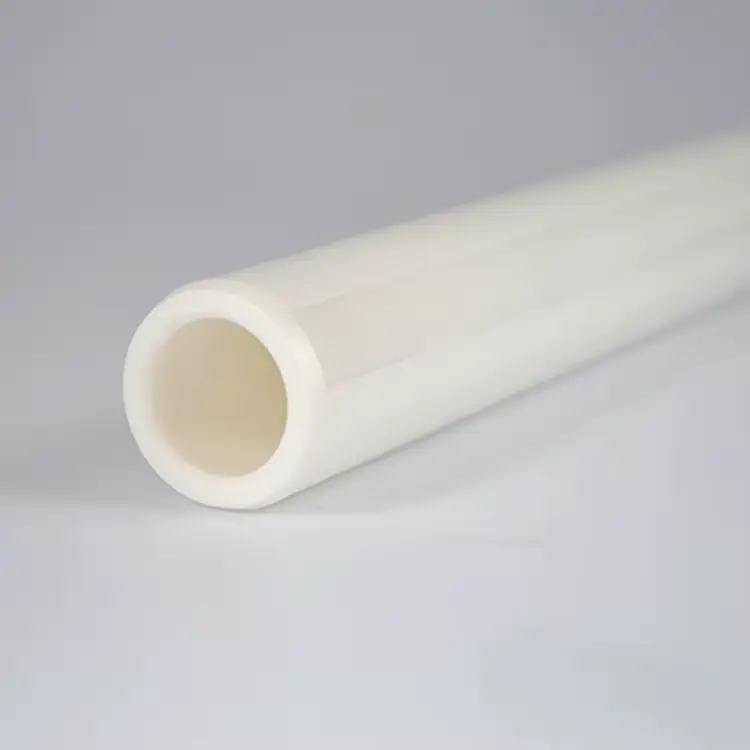
A Zirconia Ceramic Tube may be considered when a process requires a tubular component with specific thermal, mechanical, electrical, or chemical properties. The correct specification depends on the zirconia composition, stabilization method, dimensions, operating temperature, and surrounding environment. Understanding these factors helps engineers determine whether zirconia is suitable for the intended service.
What is zirconia ceramic?
Zirconia is a ceramic material based on zirconium dioxide. Its crystal structure can change with temperature, and these transformations influence dimensional stability and mechanical behavior. To make zirconia suitable for engineering applications, manufacturers commonly use stabilizing additives that help retain a desired crystal structure.
Different zirconia formulations can offer different property combinations. Partially stabilized zirconia and other stabilized compositions are used in engineering components where strength and fracture resistance are important. The precise performance depends on composition, processing, microstructure, and the final operating conditions.
Mechanical properties and wear behavior
Compared with many conventional ceramics, certain zirconia grades offer relatively high fracture toughness and strength. This can make them useful in components exposed to mechanical contact, repeated loading, or abrasive conditions.
Zirconia may also provide good wear resistance when the grade and surface finish are appropriate. In a tubular component, this can be valuable where fluids, particles, or moving parts interact with the internal or external surface.
However, ceramic components remain sensitive to design details and damage mechanisms. Sharp corners, impact, surface flaws, and concentrated stresses can initiate cracks. Engineers should consider support conditions, wall thickness, loading, and installation methods to avoid unnecessary stress concentrations.
Thermal and chemical considerations
Zirconia has useful high-temperature characteristics, but its thermal behavior depends on the grade and operating environment. Temperature changes can create thermal stresses, especially where heating or cooling is rapid or uneven. The component’s geometry and surrounding materials should therefore be considered when assessing thermal shock risk.
Chemical compatibility is another important selection factor. Zirconia can be suitable in a range of environments, but no ceramic should be assumed resistant to every chemical or process condition. Concentration, temperature, exposure time, and the presence of other substances may affect long-term behavior.
Engineers should obtain material-specific compatibility information for the actual process fluid or atmosphere.
Why use a tubular ceramic design?
A tube provides a defined passage for fluid, gas, sensors, or other equipment. In industrial systems, it may act as an insulating sleeve, protective tube, guide, liner, or component in a specialized process assembly.
Zirconia’s electrical properties can be useful in certain designs requiring electrical insulation, although the exact behavior depends on composition and temperature. Its wear and thermal characteristics may also support use in equipment where a metal tube would not provide the required combination of properties.
The tube’s inside diameter, outside diameter, length, straightness, and wall thickness should be specified according to the assembly. End geometry and surface finish may also affect sealing, alignment, and installation.
Manufacturing and finishing
Ceramic tube production typically involves preparing a controlled ceramic powder, forming the desired shape, and firing it at high temperature. Forming methods may include pressing, extrusion, or other processes selected according to the geometry and production requirements.
Sintering develops the ceramic’s final structure. Shrinkage must be considered when establishing forming dimensions. Depending on the required accuracy, additional grinding or finishing may be necessary to achieve the specified dimensions and surface quality.
Quality checks can include dimensional measurement, visual inspection, density assessment, and appropriate mechanical or material tests. For demanding applications, the supplier should provide relevant grade information and manufacturing controls.
Applications in industrial systems
Zirconia tubes may be used in high-temperature equipment, chemical processing systems, electrical assemblies, laboratory apparatus, wear-resistant mechanisms, and specialized instrumentation. Their role varies according to the material grade and the requirements of the process.
A protective tube in a thermal system may prioritize temperature behavior, while an insulating sleeve may be selected for electrical characteristics. A wear-related application may require careful attention to contact conditions and surface finish.
Selecting for service conditions
A zirconia tube should be specified by its function, dimensions, grade, thermal exposure, chemical environment, and mechanical loading. Ceramic performance is highly dependent on application details, so sample evaluation and supplier documentation are valuable when operating conditions are demanding. With appropriate selection and installation, zirconia can provide a useful material solution where ordinary metals or other ceramics do not meet the required combination of properties.