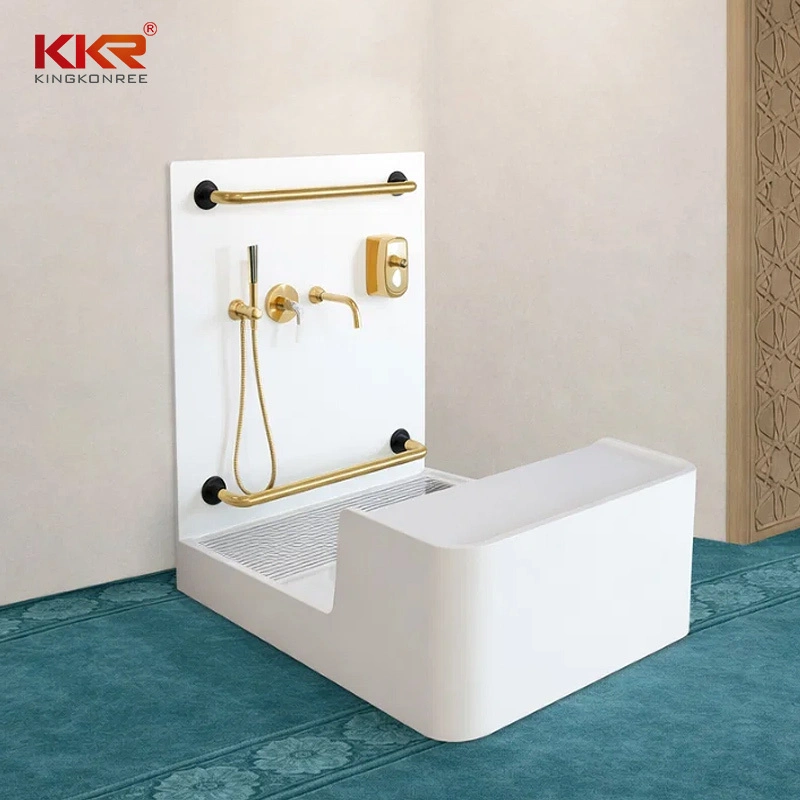
Choosing the right material for a wudu basin is essential for maintaining hygiene, durability, and an attractive bathroom design. Because ablution involves frequent water use, the basin must withstand regular moisture, cleaning, and everyday wear. A suitable material should also resist staining, remain comfortable to use, and require minimal effort to maintain.
When selecting a Bathroom Wudu Basin, consider more than its appearance. The material affects the basin’s weight, installation requirements, resistance to scratches, and long-term maintenance needs. Ceramic, porcelain, solid surface, natural stone, and stainless steel each offer different advantages, making it important to compare their properties before making a purchase.
1. Ceramic: A Practical Choice for Everyday Use
Ceramic is a common material for bathroom basins because it combines a smooth surface with straightforward maintenance. Its glazed finish helps resist ordinary stains and makes it relatively easy to clean after regular use.
Benefits of Ceramic
- Easy cleaning: Smooth glazed surfaces can usually be cleaned with mild soap and a soft cloth.
- Moisture resistance: Properly glazed ceramic does not readily absorb water through its finished surface.
- Classic appearance: Ceramic is available in familiar shapes and neutral colors that suit many bathroom styles.
- Everyday practicality: It can be a suitable option for residential bathrooms and frequently used ablution areas.
Potential Limitations
Ceramic can chip or crack if subjected to a strong impact. Once the glazed surface is damaged, the affected area may become harder to keep clean and could require repair or replacement.
Ceramic is worth considering for homeowners who want a familiar, easy-care basin without an elaborate maintenance routine. Check the product’s finish, dimensions, and installation requirements before purchasing.
2. Porcelain: Smooth, Hygienic, and Refined
Porcelain is another popular option for bathroom fixtures. It is generally dense and is often finished with a smooth, nonporous glaze that helps prevent ordinary bathroom residue from becoming difficult to remove.
Why Choose Porcelain?
Porcelain basins can provide a clean, refined appearance while supporting regular hygiene routines. Their smooth surfaces are usually easy to wipe down, and many designs suit both modern and traditional interiors.
The material is also available in a variety of shapes, allowing homeowners to choose a compact basin for a small bathroom or a larger model for a dedicated ablution area.
What to Consider
Although porcelain can be durable, it is not immune to impact damage. Heavy objects may chip or crack the fixture, and damaged areas should be assessed rather than ignored.
Porcelain is a strong candidate for bathrooms where easy cleaning and a polished appearance are priorities. Compare the specifications of individual products because construction, glaze quality, and manufacturing standards can vary.
3. Solid Surface: Modern Design with Seamless Options
Solid-surface materials are used in contemporary bathroom fixtures because they can be formed into clean shapes and, in some designs, integrated with surrounding countertops. Depending on the product, the material may consist of mineral fillers combined with resin or other binding components.
Main Advantages
- Contemporary styling: Solid surface can create smooth lines and coordinated basin-and-counter designs.
- Easy routine maintenance: Many nonporous solid-surface products can be cleaned using mild household cleaners.
- Design flexibility: Manufacturers may offer different shapes, colors, and integrated configurations.
- Potential repairability: Some solid-surface products allow minor surface damage to be repaired, depending on the material and manufacturer’s guidance.
Possible Drawbacks
Solid surface is not a single standardized material, so durability and heat resistance vary by formulation. Some products may scratch more easily than ceramic or porcelain, while harsh chemicals can damage certain finishes.
Before purchasing, ask about scratch resistance, recommended cleaning products, repair procedures, and warranty coverage. This is particularly important for ablution areas where the basin may be used many times each day.
Solid surface may be suitable for homeowners seeking a modern design with straightforward maintenance, provided the product’s performance characteristics match the intended use.
4. Natural Stone: Distinctive Appearance with Additional Care
Natural stone can give a bathroom a distinctive appearance through its natural patterns, colors, and textures. Materials such as marble and granite are sometimes used for basins or basin surfaces, although their maintenance requirements differ.
Benefits of Natural Stone
Stone can create a premium appearance and complement bathrooms that feature natural textures. A carefully selected stone basin may also serve as a visual focal point in a larger ablution area.
Depending on the stone type, finish, and construction, the material may offer good durability for long-term use.
Maintenance Considerations
Natural stone requires more careful material selection than many glazed fixtures. Some stones are porous and may absorb moisture or become stained unless appropriately sealed. Marble can also be sensitive to acidic substances, including certain bathroom cleaners.
To maintain a stone basin:
- Use a cleaner recommended for the specific stone.
- Avoid acidic products unless the manufacturer confirms they are suitable.
- Follow the supplier’s guidance on sealing and resealing.
- Wipe away residue and standing water when appropriate.
- Check joints and seals regularly for signs of deterioration.
Natural stone may be best for homeowners who value its appearance and are prepared to follow a more specific care routine.
5. Stainless Steel: Practical for Contemporary and Shared Spaces
Stainless steel is commonly associated with commercial and utility fixtures, but it can also suit certain contemporary bathroom designs. Its performance depends on the grade of steel, fabrication quality, surface finish, and maintenance.
Advantages of Stainless Steel
Stainless steel is generally resistant to corrosion when the appropriate grade is used and the surface is maintained correctly. It is also nonporous, lightweight compared with many stone fixtures, and straightforward to wipe clean.
These qualities can make it worth considering for busy shared facilities or bathrooms where practical maintenance is a priority.
Potential Limitations
Water spots, fingerprints, and surface scratches may be more noticeable on some finishes. Lower-quality steel or prolonged exposure to unsuitable cleaning chemicals can also lead to corrosion or surface deterioration.
Choose a product designed for bathroom use and follow its cleaning recommendations. Avoid abrasive pads and cleaners that could scratch the finish.
Stainless steel may suit practical or modern interiors, although its appearance may not match every residential bathroom style.
6. Comparing Common Bathroom Wudu Basin Materials
The following comparison provides a general overview. Actual performance depends on the specific product, finish, installation, and maintenance routine.
| Material | Cleaning and hygiene | Durability considerations | Maintenance level |
|---|---|---|---|
| Ceramic | Glazed surfaces are generally easy to clean | Can chip or crack from impact | Low |
| Porcelain | Smooth finishes support routine cleaning | Hard but vulnerable to impact damage | Low |
| Solid surface | Many products have easy-care, nonporous finishes | Scratch and heat resistance vary | Low to moderate |
| Natural stone | Depends on the stone and surface treatment | Some varieties can stain, etch, or chip | Moderate to high |
| Stainless steel | Nonporous and easy to wipe clean | May show scratches or water spots | Low to moderate |
For most households, glazed ceramic and porcelain are practical starting points because they offer straightforward cleaning and familiar bathroom performance. Solid surface can be attractive for modern integrated designs, while natural stone and stainless steel may suit more specific aesthetic or functional requirements.
7. Which Material Is Best for Easy Cleaning?
A basin’s ease of cleaning depends on more than its base material. Surface texture, glaze quality, joint design, and the cleaning products used all influence how easily residue can be removed.
Smooth, Nonporous Surfaces
Smooth glazed ceramic, porcelain, and many solid-surface products are usually easy to maintain because their finished surfaces do not readily absorb everyday residue. Regular cleaning with a suitable mild product can help prevent deposits from building up.
Fewer Joints and Recesses
A basin with simple contours and minimal hard-to-reach joints may be easier to clean than one with elaborate edges or decorative grooves. Integrated designs can reduce some joints, although the connection between the basin and surrounding surface still needs appropriate sealing.
Appropriate Cleaning Products
Avoid assuming that every bathroom cleaner is suitable for every material. Abrasive products can scratch certain finishes, while acidic cleaners may damage sensitive stone. Follow the manufacturer’s care instructions to preserve the surface and its protective finish.
A simple shape, suitable material, and consistent cleaning routine often make more difference than decorative features alone.
8. Durability Factors Beyond Material Choice
Even a durable material can perform poorly if the basin is incorrectly installed or used outside its intended conditions.
Installation quality: The basin must be supported according to the manufacturer’s requirements. Poor mounting can place stress on the fixture and increase the risk of damage.
Water and drainage management: Effective drainage reduces standing water and makes cleaning easier. Leaks around connections should be repaired promptly to protect surrounding cabinets and walls.
Surface finish: A well-finished surface is generally easier to maintain than one with defects, rough areas, or poorly sealed joints.
Frequency of use: A basin used by several people throughout the day may require more frequent cleaning than one in a private bathroom.
Care routine: Suitable cleaners and soft cleaning tools help preserve the finish. Prompt attention to chips, cracks, loose fittings, or damaged seals can prevent minor problems from becoming more serious.
When evaluating a product, review its technical specifications, installation guidance, warranty, and recommended maintenance schedule.
9. How to Choose the Right Material for Your Bathroom
The best material depends on your space, budget, design preferences, and expected use.
For a family bathroom, ceramic or porcelain may provide a useful balance of easy cleaning and everyday practicality. In a modern bathroom with an integrated countertop, solid surface may offer greater design flexibility. Natural stone may be appropriate when appearance is a major priority and additional maintenance is acceptable.
For a mosque, community facility, or another shared ablution area, consider how frequently the basin will be used and how easily staff can clean it. Durability, replacement availability, and access to plumbing connections become especially important in these environments.
Before deciding, ask the supplier:
- What is the exact material and surface finish?
- Which cleaning products are recommended?
- How resistant is the surface to scratches, stains, and impact?
- Does the basin require sealing or special treatment?
- What mounting and plumbing requirements apply?
- What warranty and repair support are available?
These questions help you compare products based on practical performance rather than appearance alone.
Conclusion
Selecting a durable and easy-to-clean bathroom wudu basin begins with understanding how different materials perform in everyday conditions. Ceramic and porcelain are practical options for many households because their smooth glazed surfaces are generally easy to maintain. Solid surface offers modern design flexibility, while natural stone and stainless steel can suit particular styles and usage requirements.
The best choice combines an appropriate material with reliable installation, effective drainage, and a manageable cleaning routine. By comparing the product specifications and considering how the basin will be used, homeowners can create a hygienic, attractive ablution area that remains functional over time.