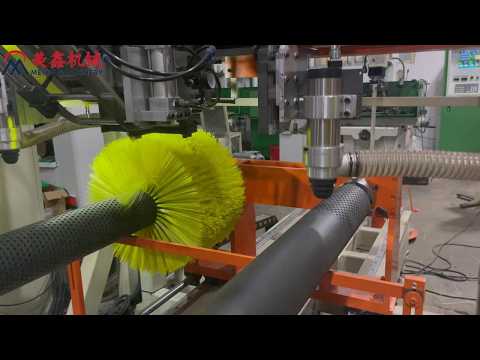
Efficient production depends on consistent processes, reliable equipment, and the ability to maintain product quality at scale. In industries that manufacture roller brushes, repetitive tasks such as drilling, bristle insertion, positioning, and finishing can require considerable time when performed manually.
For manufacturers researching Industrial Roller Brush Machines For Sale, the right equipment can help streamline these processes while improving consistency. Machine-assisted production can reduce repetitive manual work, support higher output, and make it easier to maintain established brush specifications.
Increase Production Speed
One of the most noticeable benefits of industrial roller brush machines is their ability to accelerate repetitive production tasks. Automated or semi-automated processes can complete certain operations more quickly than manual methods.
Higher processing efficiency can help manufacturers meet larger orders and maintain more predictable production schedules without compromising established quality requirements.
Improve Production Consistency
Consistency is essential when producing large quantities of industrial brushes. Variations in bristle placement, spacing, density, or brush dimensions can affect the performance of the finished product.
Machine-based production can provide repeatable settings for different manufacturing steps. This makes it easier to maintain similar results across multiple batches and production runs.
Reduce Repetitive Manual Work
Manufacturing roller brushes can involve numerous repetitive operations. Performing these tasks manually for extended periods can increase labor requirements and introduce variations between individual products.
Industrial machinery can automate selected stages of production, allowing operators to focus on machine setup, monitoring, quality control, and other tasks that require greater attention.
Support Different Brush Configurations
Production requirements can vary depending on the industry and application. Manufacturers may need to produce roller brushes with different diameters, lengths, bristle materials, and densities.
Equipment with adjustable production settings can make it easier to accommodate these variations. This flexibility can be particularly useful for businesses serving multiple customers or industries.
Production Features to Consider
Depending on the machine design, useful capabilities may include:
- Adjustable brush dimensions
- Different bristle materials and densities
- Variable production speeds
- Programmable positioning
- Automated or semi-automated processing
- Compatibility with different brush cores
The appropriate features will depend on the manufacturer’s specific production requirements.
Reduce Material Waste
Production accuracy can also influence material efficiency. Errors in drilling, positioning, or bristle insertion may result in defective brushes and wasted materials.
More consistent machine operation can help reduce these errors. Better control over production parameters allows manufacturers to use materials more efficiently and identify process problems earlier.
Improve Workflow Management
A streamlined production process makes it easier to coordinate different manufacturing stages. When machine operations follow predictable cycles, businesses can better estimate production times and organize labor and materials.
This can contribute to smoother workflow management, particularly in facilities handling multiple brush models or large production volumes.
Make Quality Control More Efficient
Consistent manufacturing parameters can simplify quality control. When brushes are produced using repeatable machine settings, inspectors can compare finished products against established specifications more easily.
Identifying deviations can also become more straightforward. If a production issue occurs, operators can review machine settings and process conditions to determine where adjustments may be necessary.
Support Higher Production Volumes
As customer demand increases, manual production methods may become difficult to scale efficiently. Industrial machinery can provide additional production capacity without requiring a proportional increase in manual labor.
The machine’s actual capacity should still be matched to the manufacturer’s requirements. Selecting equipment that is appropriately sized for expected production volumes can support sustainable growth.
Improve Resource Utilization
Efficient machinery can help businesses make better use of labor, materials, floor space, and production time. Reducing unnecessary manual steps allows available resources to be directed toward activities that provide greater operational value.
However, efficiency depends on proper machine setup and operator training. Equipment should be integrated into the overall production workflow rather than treated as an isolated solution.
Support Long-Term Production Planning
Manufacturing requirements can change as a company grows. New brush designs, larger orders, or different material requirements may create additional production challenges.
Choosing equipment with suitable adjustment capabilities can provide greater flexibility over time. A machine that accommodates multiple production specifications may remain useful as manufacturing needs evolve.
Conclusion
Industrial roller brush machines can improve production processes by increasing efficiency, reducing repetitive manual work, supporting consistent quality, and providing greater flexibility. They can also help manufacturers manage material usage, production planning, and higher output requirements.
Before investing in equipment, manufacturers should evaluate production volume, brush specifications, automation capabilities, maintenance needs, and future requirements. A machine that fits the existing workflow and provides room for growth can contribute to a more efficient and reliable brush manufacturing process.