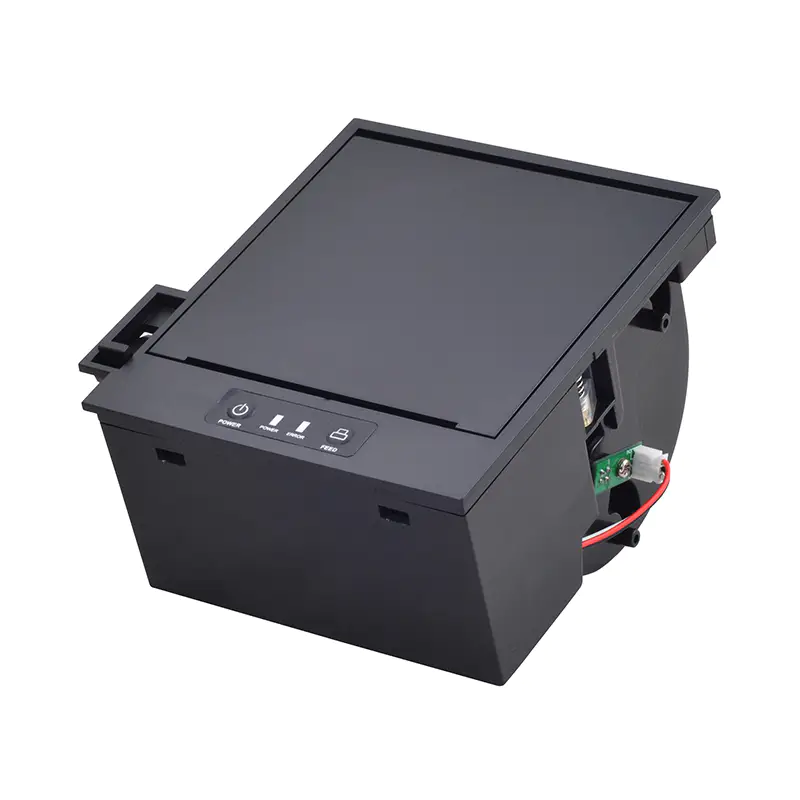
Choosing a supplier for a bulk order of compact printers requires more than comparing the unit price. When printers are integrated into machines, kiosks, instruments, or automated systems, factors such as consistency, production capacity, technical compatibility, and long-term support can have a significant impact on the overall project.
A Panel Printer Manufacturer may offer several models with different printing mechanisms, interfaces, dimensions, and operating characteristics. Comparing suppliers systematically helps businesses identify an option that can meet current requirements while remaining practical for repeated purchasing and future production.
Start With a Clear Product Specification
Before comparing manufacturers, buyers should define exactly what they need. A detailed specification makes it easier to compare suppliers on the same criteria.
The specification may include:
- Print width and resolution
- Printing speed
- Paper dimensions
- Maximum paper-roll diameter
- Communication interface
- Input voltage
- Cutter requirements
- Mounting dimensions
- Operating environment
- Expected daily or monthly print volume
Without clear requirements, a lower-priced printer may appear attractive even though it does not meet the application’s technical needs.
Compare Product Compatibility
The first major comparison should be whether each printer is compatible with the equipment in which it will be installed.
Physical dimensions are particularly important for panel-mounted applications. Buyers should check the printer’s overall size, mounting points, paper access, connector locations, and required clearance.
Software compatibility should also be considered. A printer that cannot communicate effectively with the host system may require additional development work, increasing the actual project cost.
Evaluate Printing Performance
Bulk purchases should be based on the printer’s expected workload rather than its maximum advertised capabilities alone.
Important performance characteristics can include print speed, resolution, paper-feed consistency, and thermal printing performance. Buyers should consider how frequently the printer will operate and whether it needs to support continuous or intermittent printing.
A printer selected for a low-volume application may not be suitable for equipment that produces thousands of printouts over its operating life.
Examine Production Capacity
A supplier may have a suitable product but lack the production capacity required for a large or recurring order.
Buyers should ask about manufacturing capacity, standard production lead times, minimum order quantities, and the ability to handle repeat orders.
For companies with ongoing production schedules, supply continuity can be just as important as the initial order.
Questions to Ask
Useful questions include:
- What is the normal production lead time?
- Can the supplier support recurring bulk orders?
- Are minimum order quantities required?
- How are production schedules managed?
- Can demand increases be accommodated?
- How are component shortages handled?
The answers can help buyers assess whether a supplier is suitable for long-term purchasing.
Review Quality-Control Procedures
Consistency is especially important when ordering hundreds or thousands of units. Small variations between batches can create integration or service problems.
Buyers can ask how the manufacturer checks incoming components, assembly quality, print performance, communication functions, paper feeding, and final product operation.
It is also useful to understand whether production units are tested individually or through sampling procedures. The appropriate approach depends on the product and application.
Consider Batch-to-Batch Consistency
For an OEM product, the printer installed in one production batch should behave consistently with printers supplied later.
Changes to components, firmware, mechanical parts, or manufacturing processes can potentially affect compatibility. Buyers should therefore understand how product revisions are controlled.
Clear revision management can help prevent unexpected differences between earlier and later deliveries.
Look at Customization Capabilities
Some bulk orders require the same standard printer, while others involve modifications. If customization may become necessary, it is useful to evaluate the supplier’s engineering capabilities before placing a large order.
Potential customization areas include:
- Mounting structures
- Housing dimensions
- Connector configurations
- Paper capacity
- Firmware
- Communication protocols
- Branding
- Electrical specifications
A supplier capable of supporting these requirements may provide greater flexibility as the project develops.
Compare Sample and Prototype Policies
Before committing to a large order, buyers should have an opportunity to evaluate samples whenever possible.
A sample can reveal practical issues that may not appear in a specification sheet. For example, the printer may fit physically but have limited access for paper replacement, or the communication interface may require unexpected software adjustments.
Testing samples in the actual host equipment provides a stronger basis for a bulk purchasing decision.
Assess Technical Documentation
Good documentation can reduce integration and troubleshooting time.
A supplier should be able to provide relevant information about dimensions, electrical requirements, interfaces, paper specifications, installation, and operating procedures.
For engineering teams, access to accurate technical documentation can be particularly important during product development and certification.
Compare Total Cost Instead of Unit Price
Unit price is an important purchasing factor, but it should not be the only one.
The total cost of ownership may include:
- Printer purchase price
- Shipping
- Integration expenses
- Custom tooling
- Software development
- Maintenance
- Replacement parts
- Warranty-related costs
- Inventory requirements
A slightly more expensive printer may have a lower overall cost if it requires less modification, has better reliability, or is easier to maintain.
Review Lead Times and Inventory Planning
Bulk orders often need to align with a larger manufacturing schedule. Delayed printer deliveries can affect assembly lines, product launches, or customer shipments.
When comparing suppliers, buyers should consider both quoted lead times and the supplier’s ability to maintain them consistently.
For recurring orders, businesses may also discuss forecasting arrangements or planned purchasing schedules to improve supply planning.
Examine Warranty and After-Sales Support
A supplier relationship does not necessarily end when the shipment arrives. Technical questions, replacement requirements, or unexpected field issues may arise after installation.
Buyers should understand the manufacturer’s warranty terms and support procedures before committing to a large order.
Important areas may include:
- Warranty duration
- Defect reporting process
- Replacement procedures
- Technical support
- Spare-part availability
- Firmware support
- Product revision notifications
Clear support arrangements can reduce uncertainty after deployment.
Consider Component Availability
The long-term availability of key components can influence the stability of a printer product line.
Thermal print heads, motors, circuit components, sensors, connectors, and other parts may have different supply cycles. A manufacturer with effective sourcing and component-management processes can be better prepared for changes in availability.
This is particularly relevant when a printer is built into equipment that will remain in production for several years.
Evaluate Communication and Project Management
Bulk purchasing often involves coordination between purchasing teams, engineers, quality departments, and the manufacturer.
A supplier should be able to communicate clearly about specifications, production schedules, changes, quality issues, and shipment arrangements.
Good communication becomes even more important when the order includes customized hardware or recurring deliveries.
Check Packaging and Shipping Practices
Compact printers contain mechanical and electronic components that can be affected by poor handling during transportation.
Buyers should consider how products are packaged for bulk shipment and whether individual units are adequately protected.
For international orders, shipping documentation and packaging requirements may also need to be coordinated with the purchasing and logistics teams.
Build a Supplier Comparison Checklist
Creating a structured comparison can make the final decision easier. Buyers can score manufacturers according to factors such as:
| Evaluation Area | Key Consideration |
|---|---|
| Product compatibility | Fits mechanical and electronic requirements |
| Printing performance | Meets required speed and quality |
| Production capacity | Supports current and future order volumes |
| Quality control | Provides consistent production |
| Customization | Handles application-specific requirements |
| Lead time | Fits the production schedule |
| Documentation | Provides useful technical information |
| Support | Offers assistance after delivery |
| Total cost | Remains practical beyond the unit price |
| Supply continuity | Supports repeat purchasing |
This approach helps prevent one factor, such as price, from dominating the entire supplier evaluation.
Test Before Scaling Up
A staged purchasing strategy can reduce risk. Instead of moving directly from initial discussions to a very large order, companies may first evaluate samples or a smaller production batch.
The initial units can be tested under real operating conditions. Feedback from engineering, production, and quality teams can then be used before increasing order quantities.
This is particularly valuable when printers are being integrated into a new machine or product.
Think About the Long-Term Supplier Relationship
Bulk orders are often part of an ongoing production relationship rather than a single transaction. A printer that performs well today may become a standard component across multiple product generations.
For this reason, buyers should consider whether the manufacturer can support future requirements, design changes, replacement needs, and increasing production volumes.
A supplier comparison should therefore consider both immediate purchasing requirements and the expected life of the overall project.
Conclusion
Comparing panel printer manufacturers for bulk orders involves several factors beyond the initial quotation. Product compatibility, print performance, manufacturing capacity, quality control, customization, lead times, documentation, technical support, and supply continuity can all influence the success of a purchasing decision.
The most effective approach is to establish clear requirements, evaluate samples, compare suppliers using consistent criteria, and calculate the broader cost of ownership. This allows businesses to choose a printing supplier based on practical performance and long-term suitability rather than relying on price alone.