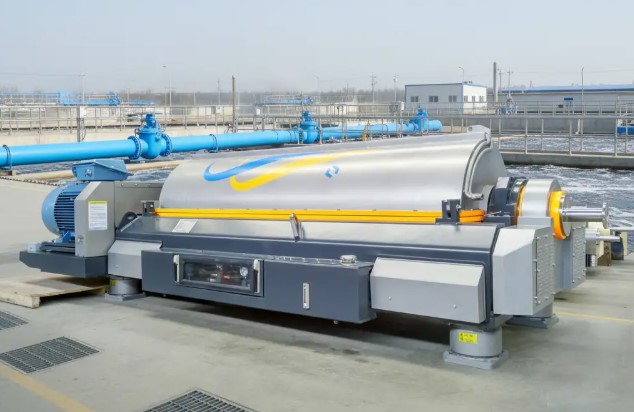
Industrial processes rarely follow identical operating conditions. Feed materials, production volumes, separation targets, and plant layouts can vary significantly between facilities. For this reason, standard centrifuge equipment may not always provide the best fit for a specific application.
Working with a reliable Centrifuge Machine Manufacturer gives buyers an opportunity to discuss equipment modifications that match their process requirements. Shenzhou Machinery offers centrifuge solutions for industrial applications where equipment configuration needs careful consideration.
Why Does Centrifuge Customization Matter?
Customization allows equipment to align more closely with the characteristics of a particular production process. The right configuration can support consistent separation, smoother operation, easier maintenance, and better use of available space.
A customized centrifuge also helps businesses avoid paying for unnecessary features. Instead, buyers can focus on components and specifications that directly support their operating goals.
Feed Capacity and Processing Requirements
One of the first customization areas involves processing capacity. Different facilities may require different feed rates based on their production schedules and material characteristics.
Manufacturers may adjust the machine configuration according to the required throughput. Discuss your expected feed volume, operating hours, and future production plans before selecting the equipment.
Choosing a suitable capacity helps prevent excessive loading while avoiding unnecessary investment in an oversized machine.
Bowl and Rotor Configuration
The bowl or rotor plays an important role in centrifugal separation. Its design affects factors such as centrifugal force, residence time, and separation performance.
Depending on the application, manufacturers may offer different bowl dimensions, configurations, and operating parameters. The appropriate choice depends on the feed material and the desired separation results.
Ask the supplier to explain why a particular configuration suits your process rather than selecting equipment based only on general specifications.
Construction Materials
The materials used to manufacture centrifuge components can also be customized for demanding applications. This consideration becomes especially important when processing corrosive, abrasive, or temperature-sensitive materials.
Manufacturers may recommend suitable materials for product-contact surfaces and other critical components based on the operating environment.
Discuss factors such as chemical compatibility, abrasion resistance, operating temperature, and expected service life during the design stage.
Wear Protection Options
Abrasive solids can place considerable stress on centrifuge components. Continuous exposure may increase wear on surfaces that come into contact with the processed material.
Customization options may include enhanced wear protection for specific components. The manufacturer can assess where additional protection could provide practical value based on the feed characteristics.
This approach helps balance equipment durability with project requirements without adding unnecessary modifications.
Discharge System Customization
Different industrial processes require different methods for removing separated solids and liquids. A centrifuge configuration should therefore account for the characteristics of the separated material.
Discuss the preferred discharge arrangement with the manufacturer. Factors such as solids concentration, particle characteristics, moisture requirements, and continuous operation can influence the appropriate setup.
A suitable discharge design can also make downstream handling more convenient.
Motor and Drive Configuration
The drive system determines how the centrifuge reaches and maintains its operating speed. Motor specifications should match the machine configuration and process requirements.
Depending on the application, buyers may discuss motor capacity, drive arrangements, speed control, and energy requirements with the manufacturer.
Proper drive selection supports stable operation and helps the equipment operate within its intended performance range.
Automation and Control Systems
Modern industrial facilities often require equipment that integrates smoothly with existing control systems. Centrifuges may therefore include customized monitoring and control features.
Depending on the project, buyers can discuss options such as:
- Automated operating controls
- Speed monitoring
- Vibration monitoring
- Temperature monitoring
- Alarm systems
- Emergency shutdown functions
- Integration with plant control systems
The appropriate level of automation depends on production needs, available infrastructure, and operator preferences.
Electrical Specifications
Electrical requirements can vary between facilities and regions. Voltage, frequency, motor specifications, and control-system requirements should match the plant’s available power infrastructure.
Discuss these details before manufacturing begins. Providing accurate electrical information helps reduce compatibility problems during installation.
A manufacturer with experience in customized industrial equipment can also help identify important electrical considerations early in the project.
Size and Installation Configuration
Available floor space can influence centrifuge selection. A machine that performs well technically may still create installation challenges if the surrounding space cannot accommodate it.
Manufacturers can consider equipment dimensions, access areas, piping connections, discharge arrangements, and maintenance clearance during the design process.
Share accurate site information before finalizing the equipment. This step can help create a more practical installation plan.
Inlet and Outlet Connections
Connection requirements can vary depending on the existing production system. Feed lines, liquid outlets, solids discharge points, and drainage connections should work with the surrounding plant infrastructure.
Discuss connection sizes, positions, and orientations with the manufacturer before production starts.
Proper planning can simplify installation and reduce the need for unnecessary modifications at the facility.
Safety Features
Safety requirements should remain a priority when customizing centrifuge equipment. High-speed rotating machinery requires suitable protection and monitoring.
Depending on the machine design, buyers can discuss features such as protective covers, emergency stops, imbalance detection, overload protection, and monitoring systems.
The manufacturer should explain the available safety features and how operators should use them.
Spare Parts and Maintenance Considerations
Customization should not make future maintenance unnecessarily complicated. Ask about the availability and expected service life of customized components.
It also helps to identify critical spare parts before ordering the machine. Keeping suitable replacement components available can reduce downtime when maintenance becomes necessary.
Shenzhou Machinery can discuss equipment configuration, component selection, and maintenance considerations according to the requirements of a specific industrial application.
How to Discuss Customization With a Manufacturer
A productive customization discussion starts with accurate process information. Prepare details about the feed material, production capacity, operating temperature, separation targets, installation space, and available utilities.
It can also help to provide samples or test data when possible. More complete technical information gives the manufacturer a stronger basis for recommending practical equipment modifications.
Choosing the Right Customization Approach
Not every process requires extensive customization. Adding unnecessary modifications can increase complexity, cost, and maintenance requirements without delivering meaningful benefits.
The goal should remain focused on matching the centrifuge to actual operating conditions. A thoughtful design balances performance, durability, maintenance, safety, installation requirements, and overall project value.
Final Thoughts
Centrifuge customization can cover many areas, from processing capacity and construction materials to discharge systems, drives, controls, and installation dimensions. The right options depend on the material being processed and the goals of the production facility.
Before placing an order, discuss your complete process requirements with the supplier and ask which modifications provide genuine operational benefits. Shenzhou Machinery can help businesses evaluate centrifuge configurations for different industrial separation applications and select options that align with their specific needs.