Introduction
Alzheimer’s disease research increasingly relies on molecular biomarkers to investigate changes associated with amyloid pathology, tau-related processes, and neurodegeneration. These biomarkers help researchers examine disease mechanisms, compare study populations, and explore potential relationships between biological measurements and cognitive or neurological characteristics. As analytical methods continue to develop, selecting appropriate laboratory reagents and testing systems has become an important part of research planning.
Choosing an alzheimer disease biomarker kit requires careful consideration of the target analyte, sample type, analytical performance, and intended research application. A suitable kit should provide clear technical documentation, validated procedures, and performance characteristics that match the laboratory’s needs. Researchers should also consider instrument compatibility, quality-control requirements, and consistency across experimental batches to support reliable results.
Understanding Alzheimer’s Disease Biomarkers
Alzheimer’s disease involves several interconnected biological processes. Biomarkers provide measurable indicators that help researchers investigate these processes and understand how they relate to disease-associated changes.
The major biomarker categories include amyloid-related markers, tau-related markers, and indicators of neurodegeneration or neuronal injury.
Amyloid Biomarkers
Amyloid-beta peptides are produced through the processing of amyloid precursor protein. Certain forms, particularly amyloid-beta 42, can aggregate and contribute to amyloid plaque formation.
Commonly investigated amyloid biomarkers include:
- Amyloid-beta 42 (Aβ42): Frequently studied because of its tendency to aggregate.
- Amyloid-beta 40 (Aβ40): A more abundant peptide often measured alongside Aβ42.
- Aβ42/Aβ40 ratio: A combined measurement that can provide additional information about amyloid-related changes.
Researchers may measure these biomarkers in cerebrospinal fluid or blood, depending on the study design and the validation of the analytical method.
Tau Biomarkers
Tau is a protein involved in maintaining neuronal microtubule structure. In Alzheimer’s disease, abnormal tau phosphorylation and aggregation are associated with neurofibrillary tangle formation.
Important tau-related measurements include:
- Total tau: Reflects the overall amount of tau detected by the assay.
- p-tau 181: Measures tau phosphorylated at threonine 181.
- p-tau 217: Measures tau phosphorylated at threonine 217.
- p-tau 231: Measures tau phosphorylated at threonine 231.
These markers provide different information and should not be considered interchangeable. The most appropriate target depends on the research question and available analytical validation.
Neurodegeneration-Related Biomarkers
Researchers also investigate biomarkers associated with neuronal injury and neurodegeneration. Examples include neurofilament light chain (NfL), which is studied as an indicator of axonal injury, and imaging-based measures of brain structure.
Combining these measurements with amyloid and tau biomarkers can help provide a broader understanding of biological changes.
1. Define the Research Objective Before Selecting a Kit
The first step in selecting a biomarker kit is identifying the specific question the laboratory intends to investigate.
A study focused on amyloid accumulation may require different reagents from one examining tau phosphorylation or neuronal injury. Similarly, a project comparing biomarker concentrations across participant groups may have different analytical requirements from a longitudinal study involving repeated measurements.
Researchers should establish:
- Which biomarker or molecular target will be measured.
- Which biological sample will be analyzed.
- Whether the study requires qualitative or quantitative results.
- The expected concentration range.
- The number of samples and planned testing frequency.
- Whether measurements will be compared across different time points or laboratories.
Defining these requirements early helps narrow the available options and prevents selecting a kit that does not adequately support the intended application.
2. Evaluate Analytical Sensitivity
Analytical sensitivity is an essential consideration, particularly when measuring biomarkers that occur at low concentrations.
A kit with insufficient sensitivity may fail to quantify samples near the lower end of the expected concentration range. This can limit the usefulness of the resulting data.
Researchers should review three important analytical parameters:
Limit of Blank
The limit of blank (LoB) describes the upper range of apparent analyte concentrations expected in samples that do not contain the target.
Limit of Detection
The limit of detection (LoD) identifies the lowest concentration that can be distinguished from the blank with a defined level of confidence.
Limit of Quantification
The limit of quantification (LoQ) represents the lowest concentration that can be measured with predefined accuracy and precision.
These values should be evaluated for the intended sample type and assay conditions. A kit’s sensitivity in one matrix should not automatically be assumed to apply to another.
3. Assess Analytical Specificity
Specificity describes how effectively an assay measures its intended target without responding significantly to unrelated substances.
This is particularly important for Alzheimer’s biomarker research because amyloid and tau proteins exist in multiple molecular forms.
For example, a p-tau 181 assay should be evaluated for its ability to distinguish tau phosphorylated at threonine 181 from non-phosphorylated tau and other phosphorylated forms.
When reviewing kit documentation, researchers should look for information about:
- Antibody recognition and target specificity.
- Cross-reactivity with related proteins.
- Potential interference from biological sample components.
- Validation using relevant sample matrices.
- Evidence supporting the intended analytical application.
A highly sensitive assay is not necessarily highly specific. Both characteristics should be considered when assessing overall performance.
4. Confirm Compatibility with the Intended Sample Type
Different biological samples present different analytical challenges. A kit validated for one sample type may not perform equally well with another.
Cerebrospinal Fluid
Cerebrospinal fluid (CSF) is widely used in Alzheimer’s biomarker research because it provides information about proteins associated with central nervous system processes.
Researchers commonly investigate Aβ42, Aβ40, total tau, and phosphorylated tau in CSF. Sample collection and handling procedures must be standardized to reduce variability.
Plasma and Serum
Blood-based biomarkers are receiving increasing attention because blood collection is generally less invasive than lumbar puncture. Plasma and serum can be used to investigate amyloid-beta and phosphorylated tau, provided the selected assay is validated for the relevant matrix.
Blood samples contain numerous proteins and other substances that may affect antibody binding or signal generation. Researchers should therefore assess matrix effects and analytical recovery.
Sample Compatibility Checklist
Before purchasing or adopting a kit, laboratories should confirm:
- Whether the intended sample type is explicitly supported.
- Whether sample dilution is required.
- What collection tubes and processing conditions are recommended.
- Whether freeze-thaw cycles may affect results.
- Whether matrix-specific performance data are available.
Following the manufacturer’s validated sample preparation instructions helps reduce pre-analytical variation.
5. Compare Detection Technologies
Different analytical technologies are used to measure Alzheimer’s-related biomarkers. Understanding their principles can help laboratories select an appropriate approach.
Enzyme-Linked Immunosorbent Assay
ELISA uses antibody-based recognition and an enzyme-mediated signal. It is widely used in research laboratories and can provide quantitative measurements when the assay is appropriately validated.
Its suitability depends on sensitivity, specificity, workflow requirements, and the expected analyte concentration.
Chemiluminescence Immunoassay
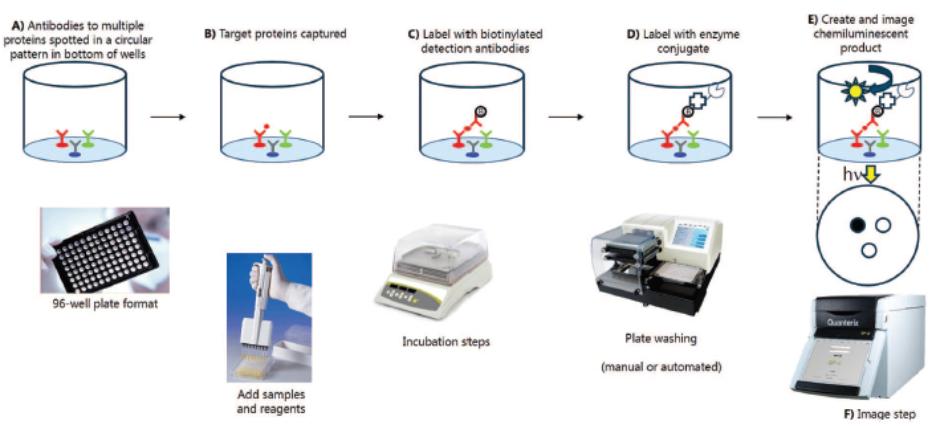
Chemiluminescence immunoassay (CLIA) converts antibody-target recognition into a measurable light signal. Depending on the assay design, a chemical reaction generates photons that an analyzer detects.
Potential benefits include sensitive signal measurement and opportunities for automation. Automated systems may standardize reagent dispensing, incubation, washing, and signal detection.
However, laboratories must confirm that the selected biomarker assay is compatible with the instrument and validated under the intended operating conditions.
Multiplex Immunoassay
Multiplex methods allow multiple analytes to be measured within a single sample or workflow. They may be useful when a study investigates several biomarkers simultaneously.
Researchers should assess whether multiplexing affects sensitivity, specificity, or interactions between assay components.
Mass Spectrometry
Mass spectrometry provides a different analytical approach based on molecular mass and charge characteristics. It can be used to investigate specific peptides and protein forms.
Although it can provide detailed molecular information, the method may require specialized equipment, sample preparation, and technical expertise.
6. Review Precision and Reproducibility
Precision describes the agreement between repeated measurements under specified conditions. Reproducibility concerns the consistency of results across different runs, operators, days, or laboratories.
These characteristics are especially important in studies involving large sample groups or repeated measurements.
Researchers should review:
- Within-run precision.
- Between-run precision.
- Between-lot variation.
- Reproducibility across operators.
- Performance at low, medium, and high analyte concentrations.
A kit should provide appropriate performance documentation, while laboratories should independently assess whether the results meet their own acceptance criteria.
7. Examine Calibration and Quality-Control Requirements
Calibration establishes the relationship between an assay signal and the concentration of the target analyte. It is necessary for converting raw measurements into quantitative results.
A reliable kit should provide clear information about calibrator preparation, calibration procedures, and the expected measuring range.
Quality-control materials are also important because they help laboratories monitor performance over time.
Before selecting a kit, consider whether the documentation includes:
- Calibrator concentrations and preparation instructions.
- Calibration frequency or conditions.
- Recommended quality-control procedures.
- Acceptable control ranges, where provided.
- Guidance for investigating unexpected results.
- Information about reagent stability and lot changes.
Consistent calibration and quality-control practices support more dependable comparisons between experimental batches.
8. Consider Instrument Compatibility and Laboratory Workflow
Some biomarker kits are designed for manual workflows, while others are intended for use with automated platforms. Selecting the appropriate format depends on laboratory capacity, sample volume, staffing, and testing frequency.
Automated systems may reduce repetitive manual operations and improve consistency in sample processing. However, not every assay can be transferred to every analyzer.
Laboratories should confirm:
- Instrument compatibility.
- Required sample volume.
- Reagent format and handling.
- Incubation and reaction requirements.
- Throughput and processing time.
- Maintenance and service requirements.
- Availability of technical documentation.
An analyzer’s general ability to perform immunoassays does not establish that a specific Alzheimer’s biomarker kit has been validated on that system.
9. Evaluate Technical Documentation and Support
Clear technical documentation helps researchers understand how a kit should be used and what its performance limitations may be.
Useful documentation includes:
- Intended use and target analyte.
- Supported sample types.
- Analytical sensitivity and specificity.
- Measuring range.
- Precision and recovery data.
- Cross-reactivity and interference information.
- Storage and stability requirements.
- Sample preparation procedures.
- Troubleshooting guidance.
Technical support can also be valuable when laboratories encounter unexpected results, changes in reagent performance, or questions about method suitability.
Researchers should prioritize products with transparent documentation and sufficient information to support independent evaluation.
10. Compare Cost and Long-Term Research Requirements
Purchase price is only one part of the overall cost of biomarker testing. Laboratories should consider the total resources required to obtain reliable measurements.
Relevant factors include:
- Cost per reportable sample.
- Number of tests per kit.
- Reagent stability after opening.
- Calibration and quality-control consumption.
- Required consumables.
- Instrument maintenance.
- Sample preparation workload.
- Staff training requirements.
A lower initial price may not necessarily result in lower long-term costs if the kit requires additional preparation, has limited stability, or generates substantial repeat testing.
The best choice is generally the option that meets analytical requirements while supporting the laboratory’s operational and budget constraints.
Comparison Checklist for Alzheimer’s Biomarker Kits
The following table summarizes important factors to review when evaluating potential kits.
| Selection criterion | What to examine | Why it matters |
|---|---|---|
| Target analyte | Amyloid, total tau, p-tau, or another marker | Ensures alignment with the research question |
| Sample compatibility | CSF, plasma, serum, or other matrices | Helps prevent unsuitable sample use |
| Analytical sensitivity | LoB, LoD, and LoQ | Supports measurement at relevant concentrations |
| Specificity | Antibody recognition and cross-reactivity | Reduces non-specific responses |
| Precision | Within-run and between-run variation | Supports reproducibility |
| Measuring range | Validated quantitative interval | Determines suitable sample concentrations |
| Calibration | Calibrator design and procedures | Supports quantitative accuracy |
| Quality control | Control materials and acceptance criteria | Helps monitor performance |
| Instrument compatibility | Manual or automated workflow requirements | Supports reliable implementation |
| Documentation | Validation and technical information | Enables informed evaluation |
| Overall cost | Reagents, consumables, and maintenance | Supports long-term planning |
Common Mistakes to Avoid When Selecting Biomarker Kits
Even a technically capable assay may be unsuitable if important selection factors are overlooked.
Choosing Based on Sensitivity Alone
High sensitivity is valuable, but it does not guarantee specificity or reproducibility. Researchers should evaluate the full analytical performance profile.
Ignoring Sample Matrix Validation
A kit validated for CSF may not be appropriate for plasma or serum. Laboratories should verify the intended sample type before testing.
Overlooking Cross-Reactivity
Related amyloid or tau molecular forms may interfere with measurements. Reviewing cross-reactivity information is essential for target-specific research.
Assuming All Platforms Are Interchangeable
Different assays may use different antibodies, calibrators, and detection chemistries. Results should not be directly compared without appropriate method-comparison evidence.
Neglecting Quality Control
Inadequate quality-control procedures can allow calibration drift, reagent changes, or instrument problems to affect research results.
Conclusion
Selecting an Alzheimer’s disease biomarker kit requires a balanced assessment of analytical performance, sample compatibility, detection technology, calibration, reproducibility, and laboratory workflow. The most suitable option is not necessarily the kit with the highest sensitivity or lowest purchase price, but the one that has been appropriately validated for the intended research application.
By defining study objectives, reviewing technical documentation, confirming sample compatibility, and establishing consistent quality-control procedures, laboratories can make better-informed decisions about biomarker testing. Careful selection and validation help generate dependable data for investigating amyloid pathology, tau-related changes, and other biological processes associated with Alzheimer’s disease.