Large-volume facial mask orders require more than a factory with a high production capacity. Beauty brands need a manufacturing partner that can maintain consistent quality, manage deadlines, and handle growing order requirements without disrupting supply. The right facial mask manufacturer combines production capacity with reliable systems, skilled teams, and strong quality controls.
A supplier that handles small batches successfully may not deliver the same results at scale. Large orders place greater demands on raw material sourcing, production planning, equipment, packaging, inspections, and logistics. Brands should therefore evaluate a manufacturer’s complete production system before committing to a high-volume order.
High Production Capacity
Production capacity provides the foundation for handling large orders. A suitable manufacturer should have enough equipment, production lines, workforce, and facility space to meet required quantities within agreed schedules.
Capacity also needs to match future demand. A brand may start with one large order and later increase its volume after successful market performance. A manufacturer with scalable operations can make that growth easier to manage.
Reliable Production Planning
Large orders require careful planning from the beginning. Manufacturers need to coordinate raw materials, formulas, packaging components, production schedules, inspections, and shipment preparation.
Effective planning helps reduce delays caused by missing materials or production bottlenecks. It also allows manufacturers to provide clearer timelines to their clients.
A professional supplier should communicate important production milestones rather than leaving brands uncertain about order progress.
Consistent Product Quality
High volume should never mean inconsistent quality. Every batch needs to match the approved product specifications for appearance, texture, essence quantity, packaging, and other relevant characteristics.
Quality control systems should operate throughout the manufacturing process. Inspecting only the finished products may not identify problems early enough.
A dependable manufacturer uses multiple quality checkpoints to identify deviations before they affect a large quantity of finished masks.
Strong Raw Material Supply
Large-volume manufacturing depends on reliable access to raw materials. Facial masks may require sheet materials, active ingredients, essences, packaging films, pouches, cartons, and other components.
Manufacturers should have organized supplier relationships and procurement processes to reduce the risk of material shortages.
They also need suitable storage conditions for ingredients and packaging materials. Proper inventory management helps maintain production continuity when order volumes increase.
Efficient Manufacturing Equipment
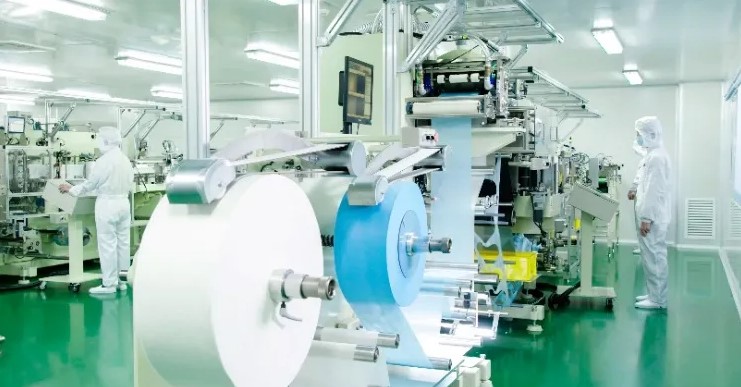
Modern production equipment supports both speed and consistency. Automated or semi-automated systems can improve filling accuracy, cutting, folding, sealing, and packaging efficiency.
The right equipment also reduces excessive manual handling during high-volume production. This can help manufacturers maintain consistent output across large batches.
However, equipment alone does not determine manufacturing quality. Skilled operators, preventive maintenance, and appropriate production procedures remain equally important.
Effective Quality Assurance Systems
A large-volume order requires a structured quality assurance process. Manufacturers should have documented procedures for checking raw materials, production conditions, finished products, and packaging.
Depending on the product, quality checks may cover:
- Formula appearance and consistency
- Product weight and filling quantity
- Sheet dimensions
- Package sealing
- Microbiological quality
- Batch identification
- Finished-product appearance
Clear records also make it easier to trace problems and determine where corrective action may have occurred.
Flexible Customization Capabilities
Large brands often require products that match specific market needs. Customization may involve formulas, sheet materials, mask shapes, packaging designs, fragrance profiles, or product sizes.
A manufacturer should have enough technical flexibility to support these requirements without creating unnecessary production complications.
Nox Bellcow Cosmetics can serve as an example of a manufacturing partner that brands may consider when they need facial mask production alongside product development and customization support.
Stable Packaging Operations
Packaging becomes especially important when production reaches large volumes. A manufacturer needs reliable filling and sealing equipment that can process thousands of units while maintaining consistent package quality.
Poor seals, incorrect labels, damaged pouches, or inconsistent filling quantities can create significant losses during a large production run.
Manufacturers should therefore inspect packaging materials and finished packages as part of their overall quality process.
Skilled Production Teams
Technology supports production, but experienced people remain essential. Skilled teams understand equipment operation, formulation handling, quality checks, production troubleshooting, and process control.
Experienced production managers can also respond quickly when unexpected issues arise. This matters when a manufacturer has strict delivery deadlines or large quantities moving through several production stages.
Scalable Supply Chain Management
A suitable manufacturer should have systems that support increasing order volumes. Supply chain management becomes more complex as quantities grow because even a small shortage can affect thousands of finished products.
Good planning should cover material purchasing, inventory levels, production scheduling, packaging availability, and shipment preparation.
Brands should ask potential suppliers how they handle sudden increases in demand before placing major orders.
Clear Communication and Order Tracking
Communication becomes increasingly important as order size grows. Brands need timely updates about production progress, material availability, quality inspections, and shipping arrangements.
A manufacturer that communicates clearly can help clients identify potential issues early. This reduces surprises close to the planned delivery date.
Regular communication also creates a more efficient working relationship between the brand and manufacturing team.
Competitive Lead Times
A large production order naturally requires more time than a small batch. However, an experienced manufacturer should provide realistic lead times based on production capacity and material availability.
Brands should avoid suppliers that promise unusually fast delivery without explaining how they plan to meet the schedule.
A realistic timeline helps businesses coordinate inventory, marketing campaigns, product launches, and distribution plans more effectively.
Ability to Support Repeat Orders
Large-volume business rarely ends with one shipment. Successful beauty brands often place repeat orders as products gain market traction.
A suitable manufacturer should maintain consistent specifications between production runs. This includes formula details, packaging requirements, raw materials, and approved product standards.
Repeat-order consistency helps brands provide customers with a familiar product experience.
What Should Brands Ask Before Placing a Large Order?
Before choosing a manufacturer, brands should discuss several practical areas. Important questions include:
- What is the manufacturer’s monthly production capacity?
- How does it manage large-volume raw material requirements?
- What quality checks occur during production?
- How does it handle urgent production issues?
- What customization options does it support?
- How does it maintain consistency between batches?
- What lead time applies to large orders?
- How does it manage repeat production?
The answers can reveal whether a supplier has the systems required for long-term commercial production.
Why Nox Bellcow Cosmetics Can Matter to Growing Brands
Nox Bellcow Cosmetics represents the type of manufacturing partner brands may evaluate when looking beyond basic production capacity. Factors such as product development support, manufacturing capabilities, quality management, and customization options can all influence a supplier’s suitability for large orders.
Brands should consider the complete manufacturing operation rather than choosing a supplier based solely on price or factory size.
Final Thoughts
Large-volume facial mask production demands reliable capacity, consistent quality, organized procurement, efficient equipment, skilled employees, and strong production planning. These factors work together to determine whether a manufacturer can deliver large orders without sacrificing product standards.
Beauty brands should also consider scalability and repeat-order support. Choosing a manufacturing partner with dependable systems from the start can make it easier to manage increasing demand and build a stable supply chain.