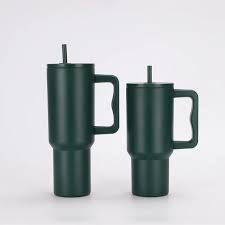
Custom drinkware has become an important product category for businesses looking to strengthen brand identity, meet specific customer preferences, and create distinctive merchandise. From personalized water bottles and branded tumblers to customized travel mugs and reusable cups, businesses can develop products that combine practical functionality with unique designs.
However, producing custom drinkware involves more than adding a company logo to an existing product. It requires careful planning, material selection, design development, prototyping, manufacturing, and quality inspection. Working with an experienced Drinkware Manufacturer can help businesses understand these stages and turn their product ideas into finished items that meet their technical and commercial requirements.
1. Understanding the Concept of Custom Drinkware Manufacturing
Custom drinkware manufacturing involves developing beverage containers according to specific design, branding, material, and functional requirements.
Unlike standard products, customized drinkware can be adjusted to suit a particular business identity or target market. Companies may request unique shapes, colors, capacities, surface finishes, printing methods, or packaging designs.
Common custom drinkware products include:
- Personalized stainless steel water bottles
- Branded insulated tumblers
- Custom travel mugs
- Promotional drinking cups
- Customized glass bottles
- Reusable plastic drinkware
- Corporate gift drinkware sets
These products are commonly used by retailers, hospitality businesses, promotional merchandise companies, event organizers, and corporate gifting providers.
2. Identifying Product Requirements and Target Customers
The first stage of custom drinkware development is defining the purpose of the product. Businesses should identify who will use the drinkware, where it will be used, and which features are most important.
For example, a company developing promotional water bottles for outdoor events may prioritize lightweight construction, portability, and secure lids. A retailer creating a premium tumbler collection may focus more on insulation, appearance, and finishing quality.
Important planning considerations include:
- Target customer demographics and preferences
- Intended product application
- Required capacity and dimensions
- Material and durability expectations
- Functional features and accessories
- Target production budget
- Expected order quantities
Clearly defined requirements reduce confusion during design development and help manufacturers provide more accurate quotations.
3. Selecting the Right Drinkware Material
Material selection has a major influence on the appearance, performance, production cost, and durability of customized drinkware.
Different materials offer different advantages, so businesses should select them according to the intended product and market.
Stainless Steel
Stainless steel is commonly used for custom bottles, insulated tumblers, and travel mugs. It offers durability, corrosion resistance, and compatibility with double-wall vacuum insulation designs.
Glass
Glass is suitable for customized drinking cups and bottles where transparency and appearance are important. It also provides opportunities for decorative printing and other finishing techniques.
Plastic
Plastic drinkware supports lightweight designs and flexible shapes. Different suitable plastic types can be used for reusable bottles, cups, and lids.
Silicone
Silicone is frequently used for protective sleeves, sealing rings, grips, and flexible accessories. It can improve product handling and sealing performance.
Before approving a material, businesses should verify its suitability for the intended beverage-contact application and relevant market regulations.
4. Developing the Product Design
After defining the requirements and selecting a suitable material, the next stage is product design.
Designers translate the initial concept into technical specifications that can be used during manufacturing. Computer-aided design (CAD) software is often used to create digital models and detailed drawings.
These designs may include:
- Product dimensions and capacity
- Body shape and wall thickness
- Lid and handle configuration
- Surface texture and finish
- Logo placement and artwork
- Component connections
- Packaging dimensions
Design development must balance appearance with practical functionality. A bottle may look attractive, but its opening, grip, weight, and lid design must also support comfortable everyday use.
Manufacturing limitations should be considered at this stage to avoid unnecessary production complications.
5. Choosing Customization and Branding Techniques
Branding is one of the main reasons businesses invest in custom drinkware. The right customization method can help products communicate a consistent brand identity while maintaining an attractive appearance.
Several techniques are commonly used in drinkware manufacturing.
Screen Printing
Screen printing is suitable for many logos, text designs, and relatively simple graphics. It can be applied to selected surfaces depending on the material and coating.
Laser Engraving
Laser engraving creates designs by marking the surface of compatible materials. It is often used on stainless steel products because it can produce precise and durable branding.
UV Printing
UV printing uses ultraviolet-curable inks to create detailed graphics and colorful designs on suitable surfaces.
Heat Transfer Printing
Heat transfer methods use heat to transfer printed designs onto compatible drinkware surfaces. The technique depends on the material and product coating.
Powder Coating
Powder coating is commonly used to create colored and textured finishes on suitable metal products. It provides additional design possibilities beyond standard polished surfaces.
The best technique depends on the material, artwork complexity, expected durability, production quantity, and budget.
6. Creating Prototypes and Product Samples
Prototype development is an important stage because it allows businesses to examine a customized product before mass production begins.
A prototype helps verify whether the design can be manufactured successfully and whether it meets the intended requirements.
During sample evaluation, businesses should examine:
- Overall dimensions and product capacity
- Material quality and construction
- Logo position and printing accuracy
- Surface finish and color consistency
- Lid fitting and leakage resistance
- Comfort and ease of handling
- Packaging appearance
For complex products, several prototype revisions may be necessary. Adjustments can be made to dimensions, components, colors, or manufacturing details before the final design is approved.
Approving a representative sample also provides a useful reference for maintaining consistency during bulk production.
7. Planning Tooling and Manufacturing Preparation
Some customized drinkware products can be developed using existing molds and production equipment. Others require specialized tooling to achieve unique shapes or dimensions.
Tooling requirements depend on the product design, material, and selected manufacturing process.
For example, customized plastic drinkware may require injection molds, while certain metal products may need specialized forming tools.
Before production begins, manufacturers prepare the necessary equipment and confirm technical specifications.
Businesses should discuss tooling costs, ownership arrangements, mold maintenance, and future reuse requirements when developing products with custom shapes.
8. The Main Manufacturing and Production Stage
Once the design and sample have been approved, the product moves into manufacturing.
The production process varies according to the material and product structure.
Stainless Steel Drinkware Production
Stainless steel products may undergo several operations, including cutting, forming, welding, polishing, and assembly.
For insulated bottles and tumblers, manufacturers may use double-wall construction with vacuum insulation. The process requires careful control to maintain the intended thermal performance.
Plastic Drinkware Production
Plastic products are often produced through injection molding or blow molding.
In injection molding, heated material is injected into a mold and cooled into the desired shape. Blow molding is commonly used to create hollow containers.
Glass Drinkware Production
Glass manufacturing involves preparing and melting raw materials before shaping the molten glass into the required form. Controlled cooling or annealing helps reduce internal stresses.
Each process requires suitable equipment, trained operators, and production monitoring to achieve consistent results.
9. Surface Finishing and Decorative Treatments
After the main product structure has been manufactured, surface finishing gives custom drinkware its final appearance.
Finishing methods may include polishing, brushing, powder coating, painting, and other decorative treatments.
The selected finish should complement the product design and intended market.
For example, a premium stainless steel tumbler may use a matte coating, while a promotional bottle may feature bright colors and printed branding.
Manufacturers should monitor coating adhesion, color consistency, surface smoothness, and finishing quality to avoid defects.
10. Assembly of Lids, Seals, and Accessories
Many customized drinkware products contain multiple components that must be assembled before final inspection.
These may include:
- Screw-on or flip-top lids
- Silicone sealing rings
- Drinking straws
- Handles and grips
- Protective bases
- Removable accessories
Proper component assembly is essential for functionality and user convenience.
Manufacturers should check that lids fit correctly, seals are positioned properly, and accessories operate as intended. Poor assembly can affect product performance even when the main body is manufactured to a high standard.
11. Quality Control and Product Testing
Quality assurance is essential in custom drinkware manufacturing because businesses expect customized products to meet both functional and branding requirements.
Inspections should take place throughout production rather than only at the end.
Important quality checks may include:
Material inspection: Verifying that raw materials meet approved specifications.
Dimensional inspection: Checking product capacity, dimensions, and component measurements.
Leakage testing: Evaluating the performance of lids and sealing systems.
Insulation testing: Measuring thermal performance for products designed to maintain beverage temperatures.
Printing inspection: Checking logo placement, color accuracy, and finish quality.
Durability assessment: Evaluating resistance to expected wear and handling conditions.
Food-contact safety documentation should also be reviewed to confirm that the materials are suitable for their intended applications.
12. Customized Packaging and Presentation
Packaging is another important part of a custom drinkware project. It protects products during transportation while contributing to the overall presentation.
Businesses may choose packaging based on their distribution model and branding strategy.
Common packaging options include:
- Individual product boxes
- Custom printed cartons
- Protective sleeves and inserts
- Retail display packaging
- Gift boxes and presentation sets
- Branded labels and product information cards
For fragile products such as glass drinkware, protective inserts and cushioning are particularly important.
Packaging requirements should be confirmed before production to ensure that the final products are ready for retail distribution or corporate gifting.
13. Factors That Influence Custom Drinkware Manufacturing Costs
The total cost of customized drinkware depends on several factors. Businesses should understand these variables before finalizing their product specifications.
Material Selection
Different materials have different purchase prices and processing requirements. Stainless steel, glass, plastic, and silicone each contribute differently to production costs.
Design Complexity
Unique shapes, specialized components, and complex construction may require additional engineering and tooling.
Customization Requirements
Printing, engraving, special colors, and decorative finishes can increase manufacturing expenses.
Order Quantity
Production volume influences material purchasing, machine setup, and per-unit manufacturing costs. Minimum order quantities also vary between suppliers.
Packaging
Customized packaging, protective inserts, and premium gift boxes add to the overall project budget.
Quality Testing
Additional product testing and compliance requirements may influence the final quotation.
Businesses should request a detailed cost breakdown rather than comparing suppliers based only on the quoted unit price.
14. Production Lead Times and Order Management
Custom drinkware projects generally require more coordination than standard product purchases. Design approval, prototype revisions, tooling preparation, production, inspection, and packaging can all affect the delivery schedule.
Businesses should discuss the expected timeline with their manufacturing partner before confirming an order.
A typical project may involve:
- Initial product consultation and requirement confirmation.
- Design development and specification approval.
- Prototype production and sample evaluation.
- Tooling preparation, if required.
- Mass manufacturing.
- Quality inspection and packaging.
- Shipment and delivery.
The actual timeline depends on product complexity, order size, material availability, customization methods, and production capacity.
Clear communication at each stage helps reduce misunderstandings and unexpected delays.
15. Benefits of Working with an Experienced Manufacturing Partner
Custom drinkware projects involve multiple technical and operational decisions. An experienced manufacturing partner can help businesses manage these requirements more effectively.
Potential benefits include:
- Guidance on suitable materials and product designs
- Better understanding of manufacturing limitations
- Support with customization and branding methods
- More organized production planning
- Consistent quality inspection procedures
- Assistance with packaging and product specifications
- Improved coordination for repeat orders
Businesses should still verify a manufacturer’s actual capabilities through samples, documentation, and clear discussions before committing to large-scale production.
Conclusion
Custom drinkware manufacturing involves a complete development process, beginning with concept planning and continuing through material selection, product design, customization, prototyping, mass production, and final inspection. Each stage contributes to the finished product’s appearance, functionality, durability, and commercial value.
For businesses planning customized drinkware collections, careful preparation is essential. Defining product requirements, choosing appropriate materials, approving prototypes, and establishing clear quality standards can help prevent production problems and unnecessary expenses.
By understanding the complete journey from concept development to finished products, businesses can make more informed manufacturing decisions and create drinkware that reflects their brand identity while meeting customer expectations.