Introduction
Choosing the right countertop material is an important decision in residential and commercial interior design. Countertops are exposed to daily use, moisture, spills, cleaning products, and occasional impacts. Their appearance also influences the overall style of kitchens, bathrooms, offices, and hospitality spaces. For this reason, buyers need to consider more than just color and price when comparing available materials.
Traditional options such as natural stone, quartz, laminate, and solid wood each offer different advantages and limitations. Engineered solid surface materials provide another choice, combining design flexibility with practical maintenance features. When evaluating KingKonree Solid Surface against traditional countertop materials, it is useful to examine durability, appearance, installation, repair requirements, and long-term value.
1. Understanding Different Countertop Materials
Before comparing performance, it is important to understand how common countertop materials are made and where they are typically used.
Solid Surface
Solid surface countertops are manufactured using a combination of mineral fillers and resin-based materials. Depending on the formulation, they can offer a consistent appearance, non-porous construction, and flexibility for customized fabrication.
They are commonly used in kitchens, bathrooms, reception areas, healthcare facilities, and commercial interiors.
Natural Stone
Granite and marble are popular natural stone countertop choices. Each slab has distinctive patterns and variations, making natural stone attractive to buyers who prefer organic textures.
Granite is generally known for its hardness and durability, while marble is valued for its distinctive veining. Some natural stones require periodic sealing and careful maintenance.
Quartz
Engineered quartz countertops are produced using natural quartz particles combined with resins, pigments, and other materials. They are available in numerous colors and patterns, including designs that imitate natural stone.
Quartz is generally durable and relatively easy to maintain, although its heat resistance and repair requirements depend on the specific product.
Laminate
Laminate countertops consist of decorative surface layers bonded to a supporting substrate. They are often selected for projects with limited budgets because they offer a wide range of colors and patterns at relatively accessible prices.
However, damaged laminate surfaces can be difficult to repair, particularly when moisture reaches the underlying substrate.
Solid Wood
Wood countertops provide a warm, natural appearance that suits traditional, rustic, and contemporary interiors. They can be refinished, but they require appropriate sealing and maintenance to manage moisture, stains, and scratches.
2. Solid Surface vs. Natural Stone Countertops
Natural stone and solid surface materials serve different design preferences and practical requirements. Comparing their characteristics helps buyers determine which option is more appropriate for a particular space.
Appearance and Design Options
Natural stone offers unique patterns created by geological processes. No two slabs are exactly alike, which makes granite and marble attractive for projects seeking natural variation.
Solid surface materials provide more consistent colors and patterns. They can also be manufactured in different finishes and fabricated into customized shapes, making them useful for interiors that require coordinated surfaces.
Maintenance Requirements
Granite and marble may require sealing depending on their specific properties and the manufacturer’s recommendations. Marble is also vulnerable to etching from acidic substances.
Many solid surface products have non-porous surfaces that do not require routine sealing. Regular cleaning with compatible products is generally sufficient for everyday maintenance.
Repair and Restoration
Natural stone is hard and durable, but chips, cracks, and other damage may require specialist repair. Matching the original pattern can also be challenging.
Solid surface countertops can often be sanded and refinished to address minor scratches and surface imperfections. This repairability can be useful in busy commercial environments.
Overall Suitability
Natural stone may be preferable when unique geological patterns and high surface hardness are priorities. Solid surface can be a better fit when seamless fabrication, integrated sinks, and consistent design are more important.
3. Solid Surface vs. Quartz Countertops
Quartz and solid surface countertops are both engineered materials, but their compositions and fabrication characteristics differ.
Material Composition
Quartz countertops typically contain a high proportion of natural quartz combined with resin and pigments. Solid surface products generally use mineral fillers with acrylic, polyester, or blended resin systems.
These differences influence their appearance, fabrication methods, maintenance needs, and performance characteristics.
Seamless Appearance
Quartz slabs can be joined during installation, but seams may remain visible depending on the color, pattern, and workmanship.
Solid surface materials can often be joined using specialized adhesive techniques that create nearly invisible seams. This makes them suitable for long counters and integrated designs.
Heat and Scratch Resistance
Quartz is generally resistant to everyday scratches, although it can still be damaged by sharp objects. High temperatures may affect the resin content, so hot cookware should not be placed directly on the surface.
Solid surface countertops can also be scratched and are generally less tolerant of direct heat than some stone-based alternatives. Using cutting boards and heat protection is recommended for both materials.
Repairability
Minor surface damage on solid surface countertops can often be repaired through sanding and refinishing.
Quartz repairs may be more complicated because of the material’s hardness and composition. Chips and cracks commonly require professional attention.
4. Solid Surface vs. Laminate Countertops
Laminate is often considered when affordability is the main priority, while solid surface is selected for projects that require greater fabrication flexibility and a more integrated appearance.
Initial Cost
Laminate countertops are generally less expensive to purchase and install. This makes them suitable for budget-conscious renovations, rental properties, and projects where decorative requirements are relatively simple.
Solid surface usually involves a higher initial investment because of its material composition and fabrication process.
Moisture Performance
Many solid surface products have non-porous construction, which helps limit liquid absorption.
Laminate surfaces can resist everyday spills, but damaged edges and seams may allow moisture to reach the substrate. This can cause swelling or deterioration if the problem is not addressed.
Appearance and Customization
Laminate is available in many decorative patterns, including stone-inspired and wood-inspired finishes. However, its construction may reveal visible edges or seams.
Solid surface can support curved designs, integrated basins, and coordinated components. These options provide greater flexibility for customized interior projects.
Long-Term Maintenance
Laminate is relatively easy to clean but may be difficult to restore after deep scratches, burns, or surface peeling.
Solid surface can often be refinished when minor damage occurs, potentially extending its useful appearance when properly maintained.
5. Solid Surface vs. Solid Wood Countertops
Wood and solid surface materials create very different visual effects, making the choice largely dependent on design preferences and maintenance expectations.
Visual Character
Wood offers natural grain patterns and warm tones that create a distinctive interior atmosphere. It is particularly suitable for rustic kitchens, traditional spaces, and designs that emphasize natural materials.
Solid surface provides a more uniform and contemporary appearance. It is available in a wide selection of colors and patterns, allowing designers to coordinate countertops with other interior features.
Water and Stain Management
Wood is sensitive to moisture if it is not properly sealed and maintained. Prolonged exposure to water can cause staining, swelling, or other forms of damage.
Solid surface products generally have non-porous construction, making them suitable for many areas exposed to everyday moisture. Nevertheless, spills should still be cleaned promptly.
Maintenance and Repair
Wood countertops may require periodic oiling, sealing, or refinishing depending on their finish and usage.
Solid surface countertops usually require routine cleaning and can often be refinished to address minor scratches. Both materials benefit from appropriate care.
6. Comparison of Common Countertop Characteristics
The following table summarizes general differences among popular countertop materials. Actual performance varies according to product formulation, quality, installation, and maintenance.
| Characteristic | Solid Surface | Natural Stone | Quartz | Laminate | Solid Wood |
|---|---|---|---|---|---|
| Appearance | Consistent and customizable | Natural patterns | Engineered patterns | Wide decorative range | Natural grain |
| Porosity | Generally non-porous | Varies by stone | Generally low porosity | Surface is sealed, but substrate can be vulnerable | Depends on finish |
| Seam visibility | Can be very low | Often visible | Depends on installation | Often visible | Depends on construction |
| Scratch resistance | Moderate | Generally high, varies | Generally high | Surface can scratch | Can scratch or dent |
| Heat resistance | Limited | Generally high, varies | Requires heat protection | Limited | Requires heat protection |
| Repairability | Minor damage can often be refinished | Specialist repair may be needed | Repairs can be difficult | Damaged areas are difficult to restore | Can often be sanded and refinished |
| Maintenance | Relatively simple | May require sealing | Generally simple | Simple routine cleaning | Requires regular care |
7. Which Countertop Material Is Best for Different Applications?
The most suitable countertop depends on the environment, expected usage, budget, and design requirements.
Residential Kitchens
Natural stone and quartz are popular kitchen choices because of their durability and appearance. Solid surface is another option for homeowners who value integrated sinks, seamless designs, and repairability.
However, users should avoid placing hot cookware directly on solid surface countertops and should use cutting boards to prevent scratches.
Bathroom Vanities
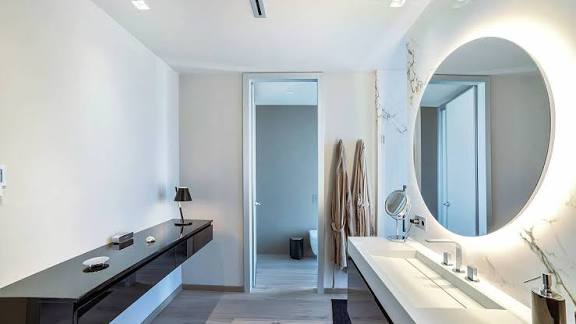
Solid surface is particularly useful for bathroom vanities because it can be fabricated with integrated washbasins and smooth transitions between connected components.
Natural stone and quartz are also suitable options, depending on the desired appearance and maintenance expectations.
Hotels and Commercial Buildings
Hotels, offices, and retail facilities often require customized counters that match specific architectural designs.
Solid surface can be useful for reception desks, service counters, and bathroom installations because of its fabrication flexibility and relatively straightforward maintenance.
Budget-Conscious Projects
Laminate is often a practical choice when initial cost is the primary concern. It provides numerous decorative options without the higher material and fabrication costs associated with some engineered or natural surfaces.
8. Factors to Consider Before Choosing a Countertop
A careful evaluation of project requirements can help prevent unnecessary expenses and material-related problems.
Budget: Compare material prices alongside fabrication, transportation, installation, and long-term maintenance costs.
Intended Use: Consider whether the countertop will be exposed to heavy equipment, frequent spills, heat, chemicals, or sharp objects.
Design Requirements: Determine whether the project needs natural patterns, consistent colors, curved edges, integrated sinks, or customized dimensions.
Maintenance Expectations: Some materials require sealing or periodic refinishing, while others mainly need routine cleaning.
Installation Quality: Even a high-quality countertop can perform poorly if measurements, support structures, joints, or installation procedures are inadequate.
Manufacturer Specifications: Review technical documentation to understand heat tolerance, chemical resistance, recommended cleaning products, and repair procedures.
9. Evaluating Long-Term Value
The lowest purchase price does not always represent the best overall value. A countertop should be evaluated according to its expected service life, maintenance requirements, repair options, and suitability for its environment.
For example, laminate may provide excellent value for a low-budget renovation, while natural stone may appeal to homeowners who prioritize distinctive patterns and hardness. Quartz can offer a balance of engineered consistency and durability.
Solid surface may be worth considering when seamless fabrication, integrated components, and repairability are important project requirements. Its value depends on selecting the correct formulation and ensuring professional fabrication and installation.
Conclusion
Solid surface, natural stone, quartz, laminate, and solid wood each offer different benefits for countertop applications. Natural stone provides distinctive patterns and generally high hardness, quartz offers an engineered alternative with consistent performance, laminate is often more affordable, and wood creates a warm natural appearance.
Solid surface stands out for its seamless fabrication possibilities, customization options, non-porous construction, and ability to integrate features such as washbasins. These characteristics make it suitable for many residential and commercial interiors.
Ultimately, the right choice depends on budget, design preferences, expected usage, and maintenance requirements. Comparing these factors alongside manufacturer specifications allows homeowners, architects, and contractors to select a countertop material that meets both practical needs and long-term design goals.