Green sand mixing is an important stage in the foundry process because the quality of the molding material directly affects mold performance and casting results. A consistent mixture of sand, clay, water, and additives is necessary to achieve suitable strength, permeability, and workability.
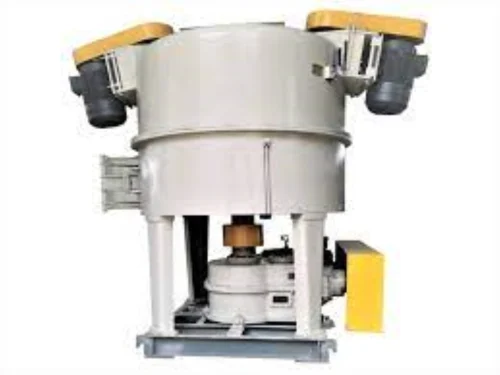
Intensive Green Sand Mixers are designed to provide thorough and controlled mixing of these materials. By using intensive mechanical action, they help distribute moisture and additives throughout the sand while producing a more uniform molding mixture.
What Is Green Sand?
Green sand is a commonly used molding material in metal casting. Despite its name, it does not refer to the color of the sand. The term generally describes a moist molding mixture that can be reused under suitable process conditions.
A typical green sand formulation may contain:
- Silica or other foundry sand
- Bentonite or clay
- Water
- Carbonaceous additives
- Other conditioning materials
The proportions of these ingredients depend on the casting process and the required mold properties.
How Intensive Green Sand Mixers Work
An intensive green sand mixer uses mechanical energy to combine and condition the different components of the molding mixture. The mixing tools create strong movement within the mixing chamber, helping distribute water, clay, and additives around the sand particles.
During operation, the materials are repeatedly circulated and exposed to the mixing action. This promotes more consistent moisture distribution and helps activate the bonding properties of the clay.
The mixer can be operated according to defined mixing cycles to achieve repeatable results.
Key Benefits of Intensive Mixing
Improved Moisture Distribution
Water must be distributed evenly throughout green sand. Uneven moisture can cause differences in mold strength and permeability, which may contribute to casting defects.
Intensive mixing helps spread moisture more consistently across the sand particles, supporting more stable molding conditions.
Better Binder Activation
Clay-based binders require effective mixing with water to develop their bonding properties. Intensive mechanical action helps expose the binder to moisture and sand more thoroughly.
This can improve the consistency of the molding material and help achieve the required mold strength.
Greater Batch Consistency
Repeatable mixing conditions can reduce variation between batches. Consistent sand properties make it easier for foundries to maintain stable molding parameters.
Better batch consistency can also support more predictable casting quality.
Efficient Additive Distribution
Additives are often used to modify specific properties of green sand. These materials need to be distributed throughout the mixture rather than concentrated in isolated areas.
Intensive mixing promotes more uniform distribution, allowing the additives to perform more consistently.
Applications in Foundry Production
Intensive green sand mixers are used in different types of metal casting operations where controlled molding sand preparation is required.
Typical applications include:
- Iron casting
- Steel casting
- Non-ferrous metal casting
- Automotive component production
- Machine component manufacturing
- General industrial castings
The appropriate mixer configuration depends on the production volume, sand formulation, and required mixing performance.
Factors Affecting Mixing Performance
Several variables influence the final quality of green sand. The mixer itself is important, but operating conditions must also be controlled.
Important factors include the moisture level, sand temperature, binder content, mixing time, and material loading. Reclaimed sand can also have different characteristics from new sand and may require adjustments to the mixing process.
Monitoring these variables helps maintain more consistent molding properties.
The Importance of Mixing Time
Mixing time needs to be long enough for the materials to reach the required degree of uniformity. However, excessive mixing may consume additional energy without providing proportional improvements.
The ideal cycle depends on the composition of the green sand and the characteristics of the equipment. Foundries should establish mixing parameters based on actual material behavior and production requirements.
Consistent cycle control is particularly useful when large quantities of molding sand are prepared repeatedly.
Intensive Mixers and Sand Reclamation
Modern foundries often reuse molding sand through reclamation systems. Reclaimed sand can contain residual binder, additives, and other materials from previous casting cycles.
An intensive mixer can help incorporate reclaimed sand with new materials and conditioning agents. Proper mixing supports more uniform properties before the sand returns to the molding process.
Effective integration between reclamation and mixing can contribute to more efficient use of foundry materials.
Maintenance Considerations
Green sand contains abrasive particles that can cause wear on internal mixer components. Regular inspection is therefore important for maintaining consistent performance.
Common areas requiring attention include mixing tools, liners, seals, bearings, and drive components. Worn mixing components can alter material movement and reduce mixing effectiveness.
Preventive maintenance can help identify wear early and reduce unexpected production interruptions.
Choosing the Right Mixer
When selecting an intensive green sand mixer, foundries should consider the complete production process rather than focusing only on mixer capacity.
Important considerations include:
- Required batch capacity
- Type and composition of molding sand
- Desired mixing cycle time
- Moisture and binder requirements
- Wear resistance of internal components
- Ease of maintenance
- Integration with existing equipment
- Automation and process control capabilities
The selected system should be compatible with the foundry’s production volume and quality requirements.
Conclusion
Intensive green sand mixers play an important role in preparing consistent molding material for metal casting. Their mechanical mixing action helps distribute moisture, activate clay binders, and blend additives throughout the sand.
When properly selected and operated, these mixers can support consistent mold properties, efficient material use, and stable casting production. Understanding the working principles, operating factors, and maintenance requirements can help foundries make better decisions about their sand preparation systems.