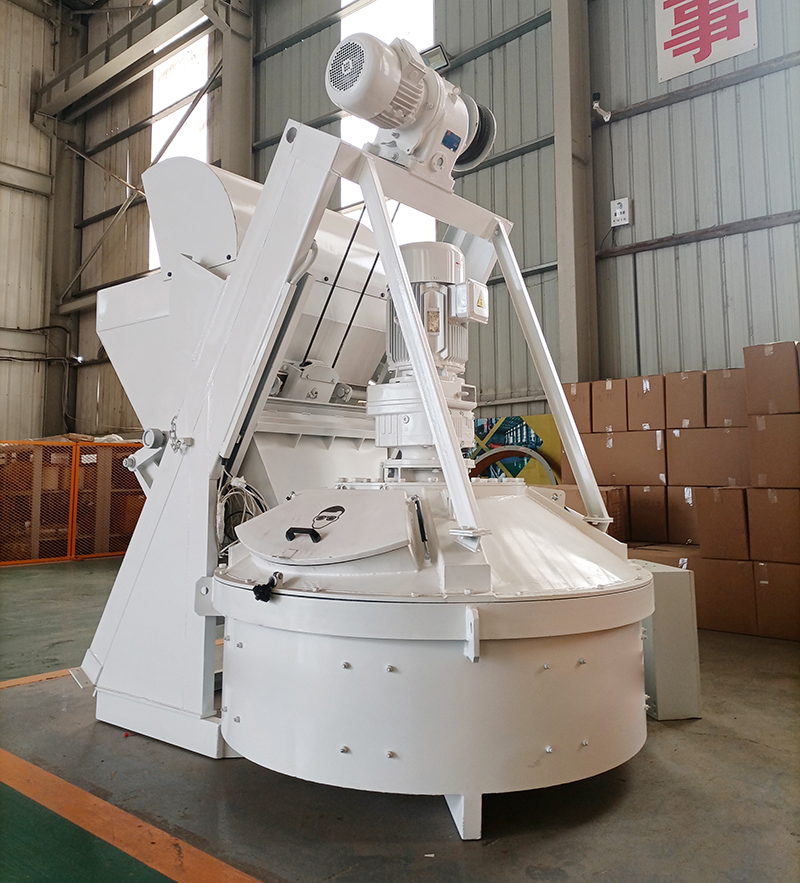
Ultra-high-performance concrete (UHPC) is engineered to provide exceptional strength, durability, and long-term performance. However, its dense formulation and low water-to-binder ratio make mixing more demanding than conventional concrete production. Fine powders, cementitious materials, aggregates, fibers, and chemical admixtures must be distributed consistently to achieve the intended properties.
Selecting a suitable UHPC Mixer requires more than comparing nominal capacity or motor power. Manufacturers should consider the concrete formulation, mixing intensity, batch size, cycle time, tool configuration, wear resistance, automation, and maintenance requirements before choosing equipment.
Understand UHPC Mixing Requirements
UHPC typically contains a high proportion of cementitious and fine mineral materials. Its low water content can produce a stiff mixture that requires substantial mechanical energy to process.
The mixer must be capable of breaking up dry agglomerations, distributing liquid components, and producing a uniform mixture without unnecessarily increasing the processing time.
Understanding these requirements is the starting point for choosing the appropriate equipment.
Evaluate the UHPC Formulation
Every UHPC formulation can have different mixing characteristics. Before selecting a mixer, identify the primary components and their physical properties.
Important factors include:
- Cement and binder content
- Silica fume or other fine powders
- Aggregate type and size
- Water-to-binder ratio
- Chemical admixtures
- Fiber type and dosage
- Moisture content
A clear formulation profile helps determine the required mixing mechanism and equipment configuration.
Choose the Appropriate Mixing Intensity
UHPC requires effective mechanical action because of its dense and highly cohesive nature. The mixer should generate enough energy to distribute fine particles and liquid components throughout the batch.
However, maximum mixing intensity is not always necessary. Excessive mechanical energy can increase power consumption and may create unnecessary wear.
The ideal mixing intensity should be established according to the actual material formulation.
Consider Mixer Capacity
Capacity should be matched to the required batch size and production output. A larger mixer is not automatically better if the facility normally processes relatively small UHPC batches.
The working volume should allow sufficient space for material circulation. Overloading can restrict movement and affect mixing uniformity.
When estimating capacity, consider both current production and potential future expansion.
Examine Mixing Tool Design
The mixing tools directly influence how UHPC moves inside the chamber. Their geometry, arrangement, rotational speed, and material construction can affect mixing performance.
For abrasive formulations, tool durability is particularly important.
Ask the equipment supplier about:
- Tool configuration
- Tool material
- Wear resistance
- Replacement procedures
- Expected service life
These factors can influence both mixing quality and long-term operating costs.
Assess Mixing Cycle Time
UHPC mixing often involves several stages, such as dry blending followed by controlled liquid and admixture addition.
The total cycle should be long enough to achieve the desired consistency and uniformity. At the same time, excessively long mixing periods can reduce production efficiency.
Material trials can help establish a practical cycle time for the selected formulation.
Consider Ingredient Addition Sequence
The sequence in which UHPC ingredients enter the mixer can significantly influence the mixing process.
Dry components may need to be blended before water or chemical admixtures are introduced. The appropriate procedure depends on the formulation and equipment.
A mixer with suitable liquid-addition capabilities can make it easier to control the process.
Evaluate Fiber Dispersion
Some UHPC formulations include steel, synthetic, or other fibers. Fiber addition can create additional mixing challenges because fibers may clump or distribute unevenly.
The mixer should provide enough material movement to disperse fibers throughout the batch without damaging them or causing excessive entanglement.
Fiber dosage and geometry should be discussed with the mixer manufacturer during equipment selection.
Check Material and Wear Resistance
UHPC formulations can contain abrasive mineral components. Continuous processing may cause wear on mixing tools, liners, scrapers, and other internal parts.
Select equipment constructed from materials appropriate for the intended application.
Wear-resistant components can help maintain mixing performance and reduce the frequency of replacement.
Review Discharge Performance
An efficient discharge system helps complete the mixing cycle and transfer the finished UHPC to the next production stage.
The design should minimize residual material inside the mixer while being suitable for the mixture’s relatively stiff consistency.
Easy discharge can also simplify cleaning and reduce material waste.
Consider Automation
UHPC production benefits from accurate dosing and repeatable process conditions. Automated systems can control material quantities, mixing speed, cycle time, liquid addition, and discharge.
When selecting a mixer, determine whether its control system can integrate with existing batching and production equipment.
Automation can also reduce operator-dependent variation.
Evaluate Maintenance Requirements
Maintenance is an important part of mixer selection, particularly for intensive UHPC processing.
Inspect how easily operators can access mixing tools, liners, bearings, seals, and other components. Ask about lubrication requirements and recommended inspection intervals.
Understanding routine maintenance requirements before purchase can help estimate long-term operating costs.
Assess Cleaning Requirements
UHPC can adhere to equipment surfaces, particularly when the formulation contains large quantities of fine binders.
The mixer should be designed to allow practical cleaning between batches. This is especially important when multiple formulations are processed using the same equipment.
Efficient cleaning can reduce cross-contamination and unnecessary downtime.
Compare Energy Consumption
UHPC mixing requires substantial mechanical energy, but energy efficiency should be evaluated in relation to actual production performance.
Consider energy use per batch, mixing cycle duration, production capacity, and the level of uniformity achieved.
A well-matched mixer can help avoid unnecessary energy consumption caused by oversized equipment or excessively long cycles.
Test Before Making a Final Decision
For specialized UHPC formulations, material testing can be highly valuable. A trial using representative raw materials can provide information about mixing time, speed, ingredient sequence, and final consistency.
Testing can also reveal whether fibers disperse effectively and whether the mixer can handle the intended batch size.
This practical information can be more useful than relying solely on general equipment specifications.
Evaluate the Manufacturer
The equipment supplier should also be assessed carefully. Relevant experience with concrete and other high-performance materials can be valuable.
Consider the manufacturer’s:
- Engineering capabilities
- Manufacturing experience
- Quality-control procedures
- Testing resources
- Customization options
- Technical documentation
- Spare-parts availability
- After-sales support
A supplier capable of discussing the formulation in technical detail is often better positioned to recommend a suitable mixer configuration.
Compare Total Ownership Costs
The initial purchase price should not be the only factor in the final decision.
Long-term costs may include energy, maintenance, replacement wear parts, installation, cleaning, labor, and production downtime.
A mixer with a higher initial investment may provide better value if it offers reliable operation, durable components, and consistent mixing performance.
UHPC Mixer Selection Checklist
Before placing an order, verify that the proposed equipment meets the following requirements:
- Suitable working capacity
- Appropriate mixing intensity
- Compatible mixing tools
- Effective liquid and admixture addition
- Suitable fiber dispersion
- Adequate wear resistance
- Efficient discharge
- Practical cleaning access
- Required automation
- Available technical support and spare parts
This checklist can help manufacturers compare different equipment options more objectively.
Conclusion
Choosing the right UHPC mixer requires careful analysis of the concrete formulation, production capacity, mixing intensity, cycle time, ingredient sequence, and equipment construction. Special attention should also be given to fiber dispersion, wear resistance, discharge performance, automation, and maintenance.
Material testing can help confirm whether a proposed mixer is suitable for the actual UHPC formulation. By evaluating both technical performance and long-term ownership costs, manufacturers can select mixing equipment that supports consistent quality, efficient production, and reliable operation.