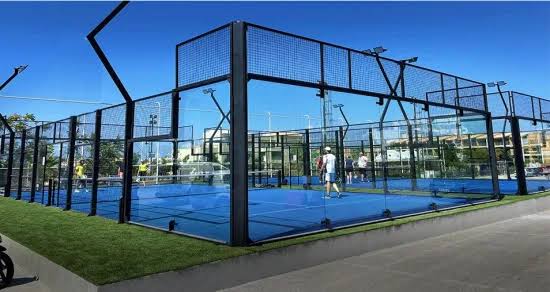
The international padel market has expanded rapidly, creating demand for courts among sports clubs, gyms, hotels, resorts, property developers, and independent operators. As buyers compare suppliers from different regions, manufacturers in China have become an option for businesses looking for court systems, customized designs, and production capabilities for projects of different sizes. However, choosing an overseas supplier requires more than comparing catalogue photographs and quoted prices.
A China Padel Court Manufacturer may provide complete court solutions that include structural frames, tempered glass, mesh fencing, artificial turf, lighting, doors, and associated hardware. Buyers should still evaluate specifications, manufacturing processes, quality-control procedures, packaging, shipping arrangements, installation support, and after-sales service before committing to an order.
Why Manufacturer Selection Matters
A padel court is a long-term investment. Once installed, the court will be exposed to repeated ball impacts, player movement, weather conditions, and regular cleaning and maintenance.
The quality of individual components can affect the court’s appearance, stability, playing experience, and maintenance requirements. This makes supplier selection an important part of the planning process.
Rather than choosing a manufacturer solely because its quotation is inexpensive, buyers should look at what is included in the complete package and whether the supplier can meet the project’s technical requirements.
Understand the Complete Court System
A padel court consists of several major components that need to work together.
These commonly include:
- Structural steel framework
- Tempered glass panels
- Metal mesh fencing
- Artificial turf
- Access doors
- Lighting equipment
- Fasteners and connection hardware
- Foundation and anchoring components
Some suppliers offer complete systems, while others may provide only selected components.
Before requesting quotations, determine whether you need a complete court package or specific parts. This makes supplier comparisons much more straightforward.
Check the Manufacturer’s Production Experience
Experience can provide useful insight into a manufacturer’s capabilities. Buyers should investigate how long a company has been producing padel courts and whether it has experience with international projects.
Ask for information about previous installations, production facilities, available models, and customization capabilities.
It can also be useful to ask whether the manufacturer has experience supplying courts to climates similar to the intended installation location.
Experience alone does not establish product quality, but it can help buyers understand whether a supplier is familiar with the practical requirements of international padel projects.
Review Technical Specifications
Technical specifications are more useful than marketing descriptions when comparing manufacturers.
Instead of relying on phrases such as “premium quality” or “heavy duty,” ask for measurable information about the court components.
For example, request details about the structural steel, glass specifications, surface treatments, turf characteristics, mesh construction, lighting system, and anchoring method.
Technical documentation can also help local contractors understand how the court should be prepared and assembled.
Pay Attention to Steel Protection
The structural framework needs to remain stable throughout the court’s service life. For outdoor installations, corrosion protection is particularly important.
Humidity, rainfall, sunlight, and coastal conditions can gradually affect exposed metal components.
Ask the manufacturer about the steel grade, welding process, surface preparation, coating system, and corrosion-protection measures.
If the court will be installed near the sea, make sure the manufacturer is aware of the environment before production begins. This information may influence material and coating recommendations.
Evaluate Tempered Glass
Glass panels form a major part of a padel court and require careful attention.
Ask about glass thickness, tempering, dimensions, processing, and safety characteristics. The manufacturer should also explain how the panels are packaged for international transportation.
Because glass can be damaged if handled incorrectly, packaging and logistics should be considered part of the purchasing process.
Buyers should also understand whether replacement glass can be ordered later if a panel is damaged during operation.
Look at the Artificial Turf
The playing surface affects traction, movement, ball behavior, and overall player comfort.
Artificial turf products can differ in fiber construction, density, color, drainage characteristics, and durability. The appropriate selection may depend on whether the court will be installed indoors or outdoors.
For commercial venues, expected usage should also be considered. A court that receives continuous bookings may experience considerably more wear than one used occasionally.
Ask the manufacturer about maintenance requirements and expected performance under your planned operating conditions.
Consider Climate and Location
A court designed for one environment may require different considerations in another.
For example, an outdoor court in a hot region can experience intense sunlight and high temperatures, while a rainy location may require careful drainage planning.
Cold climates can introduce their own challenges, including temperature fluctuations and seasonal weather.
Provide the manufacturer with accurate information about the installation location. This allows technical recommendations to be made with the actual environment in mind.
Investigate Customization Options
Customization can be useful for commercial sports facilities that want their courts to reflect a particular brand.
Depending on the supplier, buyers may be able to choose frame colors, branding, entrance designs, fencing configurations, lighting arrangements, and other visual features.
Hotels and resorts may prefer designs that complement their architecture, while dedicated padel centers may want consistent branding across multiple courts.
When requesting customization, ask whether it affects production time or cost.
Ask About Quality Control
Quality control is particularly important when purchasing products internationally.
A manufacturer should have procedures for inspecting components before they are packed and shipped. These checks may cover structural dimensions, welds, coatings, glass, hardware, turf, and accessories.
Buyers can ask whether inspection reports, photographs, videos, or other production documentation are available before shipment.
Clear quality-control procedures can reduce the risk of discovering missing or incorrectly manufactured components after the shipment reaches its destination.
Understand International Shipping
International transportation introduces additional considerations compared with purchasing from a local supplier.
The court may be shipped in multiple packages or containers containing steel components, glass, turf, lighting, and hardware.
Ask how the products are packaged and protected during transportation. Glass deserves particular attention because damage can cause delays and replacement costs.
The purchase agreement should also clearly define shipping responsibilities, delivery terms, and any documentation required for importation.
Clarify Installation Responsibilities
Not every manufacturer handles installation in the same way.
Some suppliers may provide installation teams, while others may supply technical drawings and instructions for local contractors.
Before ordering, establish exactly who is responsible for:
- Site preparation
- Foundation work
- Unloading
- Court assembly
- Glass installation
- Turf installation
- Lighting installation
- Final inspection
Having these responsibilities defined in advance can prevent confusion once the equipment reaches the site.
Review Warranty Coverage
Warranty terms should be reviewed carefully before payment and production.
Find out which components are covered, how long the warranty lasts, what conditions apply, and how claims are handled.
International buyers should also ask how warranty issues are resolved when the manufacturer and customer are located in different countries.
It is useful to understand whether replacement components can be shipped separately and what documentation is required when requesting support.
Consider Spare Parts Availability
A commercial padel facility cannot always afford extended downtime.
A damaged glass panel, lighting component, mesh section, or hardware part may need to be replaced quickly.
Ask the manufacturer whether spare parts are available and how replacement orders are handled. For larger projects, keeping commonly needed parts in reserve may be worth considering.
This is particularly useful for facilities with several courts operating every day.
Compare the Complete Cost
The initial quotation does not necessarily represent the total project cost.
Buyers should consider manufacturing, customization, packaging, international freight, customs-related expenses, local transportation, foundation work, installation, electrical work, and future maintenance.
A detailed cost breakdown makes supplier comparisons more meaningful.
Two manufacturers with different initial prices may provide very different levels of equipment and support, so comparing the complete package is more useful than comparing one headline number.
Communication Is Part of the Buying Process
International projects require clear communication.
A manufacturer should be able to provide understandable specifications, respond to technical questions, confirm production details, and communicate shipping updates.
Before placing an order, pay attention to how effectively the supplier handles questions. If specifications are unclear or important details repeatedly require clarification, that may create challenges later during production or installation.
Good documentation and communication can make international procurement considerably smoother.
Think About Long-Term Maintenance
The purchasing process should not end with installation.
A padel court needs routine inspection and maintenance. Operators may need to clean glass, maintain turf, inspect fasteners, check fencing, monitor corrosion, and service lighting.
Ask the manufacturer for recommended maintenance procedures and information about replacement components.
Understanding maintenance requirements before purchasing can help you estimate long-term operating needs.
Final Thoughts
Working with an overseas padel court supplier can be a practical option for businesses developing new facilities, but careful evaluation is essential. Product specifications, structural materials, glass, turf, corrosion protection, customization, quality control, shipping, installation, warranty, and spare parts all deserve attention.
A well-organized purchasing process starts by defining the project’s requirements and then comparing manufacturers according to their complete offerings. Instead of focusing exclusively on price, examine the technical details and support included with the court system.
For international buyers, clear communication is equally important. When specifications, responsibilities, shipping arrangements, and warranty terms are established before production begins, the project has a clearer foundation from the start.
Ultimately, the right manufacturer should be evaluated according to how well its products and services match the specific requirements of the facility. Careful research before ordering can help buyers manage expectations, prepare the installation site properly, and establish a reliable basis for long-term court operation.
Frequently Asked Questions
What should I ask a China padel court manufacturer before ordering?
Ask about court specifications, structural materials, glass, turf, coatings, customization, production time, quality control, packaging, shipping, installation support, warranty, and spare parts.
Can a Chinese manufacturer customize padel courts?
Many manufacturers offer customization options, which may include colors, branding, fencing, lighting, entrance designs, and other components. Available options and additional costs vary by supplier.
How can international buyers reduce shipping problems?
Buyers should confirm packaging methods, especially for glass, establish shipping responsibilities in writing, verify the complete packing list, and coordinate delivery with the local installation team.
Is after-sales support important when buying internationally?
Yes. Access to technical assistance, replacement components, warranty support, and maintenance guidance can be particularly useful when the manufacturer and installation site are in different countries.