Hydraulic motors are critical components in systems that require reliable rotary power, particularly in industrial and mobile equipment. Their performance can influence machine efficiency, operating stability, maintenance needs, and overall service life.
When selecting a hydraulic motor manufacturer, buyers should look beyond basic product specifications. Manufacturing precision, material quality, testing procedures, design consistency, and application support can all affect how a motor performs in real operating conditions.
What Determines Hydraulic Motor Quality?
The quality of a hydraulic motor depends on several interconnected factors. Precision manufacturing is important because internal components must work together with appropriate clearances and alignment.
Poor dimensional control can contribute to internal leakage, increased friction, excessive noise, or premature component wear. Consistent production processes help reduce these risks.
Motor Design and Performance
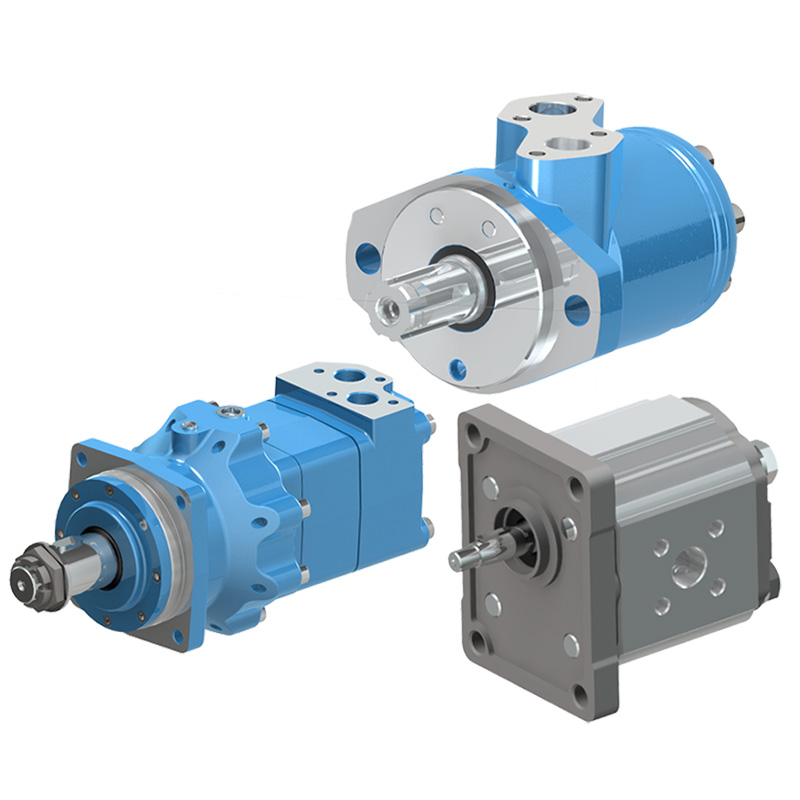
Hydraulic motors are available in different designs, including gear, vane, orbital, and piston configurations. Each design has different characteristics related to torque, speed, pressure capability, efficiency, and durability.
Choosing the correct design requires an understanding of the machine’s hydraulic circuit and operating conditions. A motor that performs well in one application may not be suitable for another.
Torque and Speed
Torque determines the motor’s ability to produce rotational force, while speed describes how quickly the output shaft rotates. Hydraulic pressure, flow rate, and motor displacement all influence these characteristics.
Manufacturers should provide performance information that allows engineers to determine whether a motor can meet the application’s continuous and peak requirements.
Pressure and Flow
Operating pressure and hydraulic flow must remain within the motor’s specified limits. Excessive pressure can place additional stress on internal components, while insufficient or excessive flow can affect output speed and operating efficiency.
For this reason, motor selection should be based on actual system conditions rather than nominal specifications alone.
Importance of Material Selection
The materials used for housings, shafts, gears, pistons, bearings, and other components affect durability and resistance to wear.
Material selection should reflect the motor’s expected loads, operating temperature, pressure, and environment. Applications exposed to moisture, dust, chemicals, or extreme temperatures may require additional material or sealing considerations.
Manufacturing Precision
Hydraulic motors contain components that often require accurate machining and controlled tolerances. Precision affects how effectively the motor controls hydraulic fluid and transfers mechanical power.
Manufacturing processes such as CNC machining, controlled assembly, dimensional inspection, and component testing can help maintain product consistency.
Quality Control and Testing
Quality assurance should cover the manufacturing process from incoming materials to finished motor inspection. Testing procedures vary according to product type and application, but may include:
- Dimensional inspection
- Pressure testing
- Leakage testing
- Rotational performance testing
- Torque verification
- Noise and vibration checks
- Final assembly inspection
Testing helps verify that motors meet established specifications before they are supplied to customers.
Efficiency and Operating Performance
Motor efficiency is another important consideration. Hydraulic motors experience various forms of energy loss, including internal leakage, friction, and mechanical resistance.
A properly selected and manufactured motor can help convert hydraulic energy into useful mechanical output more effectively. System design, fluid condition, operating pressure, and maintenance also influence actual efficiency.
Consistency Between Production Batches
For equipment manufacturers and large industrial users, consistency can be just as important as the performance of an individual motor.
If motors from different production batches have significant variations in dimensions or performance, equipment calibration and maintenance can become more complicated. Controlled manufacturing and inspection procedures help maintain consistency over time.
Technical Support Matters
Quality does not end with manufacturing. Technical information and support can help users install, operate, and maintain hydraulic motors correctly.
Useful resources may include product drawings, specifications, performance curves, installation guidance, operating limits, and maintenance recommendations. Access to this information can reduce installation errors and help operators avoid conditions that could shorten motor life.
Matching Quality With the Application
A high-quality motor is only effective when it is appropriate for its intended application. Buyers should consider the complete operating environment before making a decision.
Important factors include required torque, rotational speed, pressure, flow, duty cycle, temperature, contamination levels, mounting configuration, and available installation space.
How to Assess a Manufacturer
When comparing manufacturers, evaluate both measurable product characteristics and the company’s ability to support the project.
Look for:
- Clearly defined technical specifications
- Consistent quality-control procedures
- Appropriate product testing
- Relevant manufacturing capabilities
- Customization or engineering support when required
- Reliable product documentation
- Replacement-part availability
- Responsive technical assistance
These factors provide a more complete picture than price alone.
Conclusion
Understanding the relationship between quality and performance is essential when selecting hydraulic motors. Precision manufacturing, suitable materials, accurate design, effective testing, and consistent quality control can all contribute to dependable operation.
A careful evaluation of the manufacturer and the motor’s technical suitability can help reduce maintenance problems, improve equipment reliability, and support longer service life. The most effective choice is one that matches the motor’s design and quality characteristics to the actual demands of the hydraulic system.