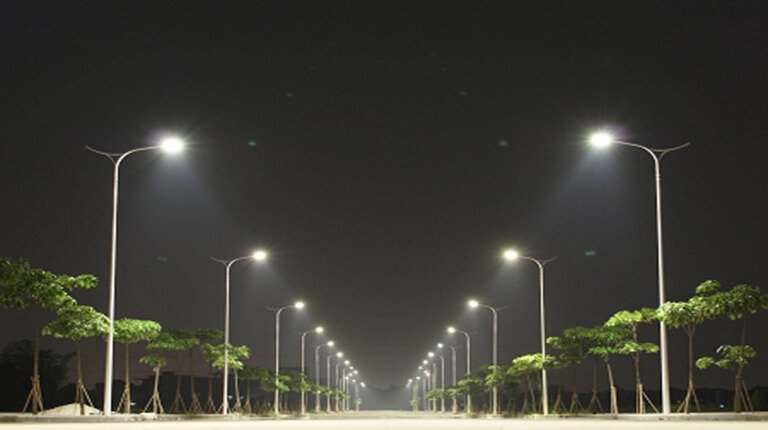
Street lighting plays an essential role in creating safer roads, improving nighttime visibility, and supporting the development of modern cities. As urban areas expand and infrastructure projects become more demanding, the need for reliable and energy-efficient street lighting continues to grow. LED technology has become a preferred option because it offers efficient illumination, long service life, and flexible design possibilities for different road environments.
Behind every finished street light is a manufacturing process involving product design, component selection, precision assembly, and quality inspection. Understanding how an LED Street Light Factory operates provides useful insight into the engineering and production standards that influence the performance of modern street lighting products. From the initial design stage to final packaging, each manufacturing step contributes to the reliability and functionality of the finished fixture.
1. Product Design and Engineering
Manufacturing begins with product planning and engineering. Before production starts, designers and engineers determine the technical requirements of a street light based on its intended application.
Important design considerations include road width, pole height, required illumination, environmental conditions, and installation requirements. A street light intended for a residential road may have different specifications from one designed for a highway or large industrial area.
Computer-aided design (CAD) software is commonly used to develop fixture structures, examine component placement, and evaluate heat dissipation. Optical design also plays an important role in determining how light is distributed across the road surface.
The engineering stage helps establish the specifications that guide the rest of the manufacturing process.
2. Selecting High-Quality Raw Materials and Components
The performance of a street light depends heavily on the materials and electronic components used in its construction.
Manufacturers must select components that meet the required electrical, mechanical, and environmental specifications.
Common materials and components include:
- Aluminum housing: Often used because it is lightweight, durable, and suitable for heat dissipation.
- LED chips: Generate the light and influence brightness, efficiency, and color characteristics.
- LED drivers: Regulate electrical power supplied to the LED modules.
- Optical lenses: Direct and distribute light toward the intended areas.
- Protective glass or covers: Help shield internal components from environmental exposure.
- Sealing materials: Support protection against dust and moisture.
- Electrical connectors and cables: Provide safe and reliable electrical connections.
Incoming materials and components should be checked for compatibility and quality before entering the production line.
3. Manufacturing the Street Light Housing
The outer housing protects the electrical and optical components while providing the structural foundation of the fixture.
Aluminum is commonly used in street light housings because it combines strength with effective thermal conductivity. Depending on the product design, the housing may be produced through die casting, extrusion, machining, or other metal-forming processes.
After forming, the housing may undergo additional operations such as trimming, drilling, surface treatment, and finishing.
The design often incorporates cooling fins or other heat-dissipation features. These structures help transfer heat away from the LED modules, supporting stable operation and helping maintain component life.
Surface treatments, such as powder coating, may also be applied to improve appearance and provide additional protection against corrosion and weather exposure.
4. LED Module and Optical System Assembly
Once the housing is prepared, production moves to the installation of the lighting components.
LED chips are mounted on suitable circuit boards, often made with materials designed to support thermal management. The LED modules are then positioned within the fixture according to the product’s electrical and optical design.
Optical lenses are installed to control the direction and distribution of light. Street lighting optics are particularly important because they help illuminate road surfaces while limiting unnecessary light spill and glare.
The arrangement of LED modules, lenses, and reflectors varies according to the intended application and lighting requirements.
5. LED Driver Installation and Electrical Assembly
The LED driver is a critical component because it converts and regulates electrical power for the lighting system.
During assembly, technicians install the driver in its designated compartment and connect it to the LED modules. Wiring, terminals, connectors, and protective components must be arranged according to the product’s electrical design.
Manufacturers may also incorporate surge protection to help protect the fixture from voltage disturbances, depending on the product specification.
Electrical assembly requires careful attention to connection quality, insulation, component compatibility, and safe wiring practices.
6. Thermal Management and Weatherproofing
Outdoor street lights operate in changing environmental conditions. They may be exposed to rain, dust, heat, humidity, and temperature fluctuations.
For this reason, thermal management and weather protection are important parts of the manufacturing process.
Thermal design helps prevent excessive heat from accumulating around sensitive electronic components. Proper contact between LED modules and heat-dissipating surfaces can improve heat transfer.
Weatherproofing involves installing seals, gaskets, and protective covers at appropriate locations. The fixture’s design and construction determine its ability to resist dust and water ingress.
Manufacturers commonly evaluate Ingress Protection (IP) ratings to describe the level of protection provided by an enclosure. The required rating depends on the installation environment and applicable project specifications.
7. Quality Control and Product Testing
Quality inspection takes place at different stages of manufacturing. Testing helps identify defects, verify product specifications, and assess whether finished fixtures meet the required performance standards.
Typical inspection and testing activities may include:
Electrical Safety Testing
Electrical checks help identify wiring problems, insulation issues, and other potential faults. Depending on the applicable standards, testing may include dielectric strength and grounding-related assessments.
Lighting Performance Testing
Photometric testing measures lighting characteristics such as luminous flux, light distribution, and other optical performance parameters.
These measurements help determine whether a fixture can provide the intended illumination pattern.
Thermal Testing
Thermal evaluations examine operating temperatures under specified conditions. They help assess whether the housing and heat-dissipation system can manage the heat produced during operation.
Environmental Protection Testing
Dust and water ingress tests may be conducted to verify the enclosure’s protection level. Other environmental evaluations can examine resistance to vibration, corrosion, and temperature changes.
Aging and Burn-In Tests
Some production processes include extended operating tests to identify early component failures or inconsistent performance before products are shipped.
The specific tests performed depend on the product design, target market, and relevant certification requirements.
8. Final Assembly, Inspection, and Packaging
After the main components have been assembled and tested, the street light moves through final inspection.
Technicians check the housing, fasteners, seals, electrical connections, labels, and external finish. Any identified defects should be addressed before the fixture is approved for shipment.
The finished products are then packaged using protective materials designed to reduce the risk of damage during handling and transportation.
Packaging may include product labels, installation instructions, technical documents, and accessories required for the intended installation.
Proper packaging is especially important for large infrastructure orders involving long-distance transportation and multiple delivery locations.
9. Technology and Automation in Modern Street Light Manufacturing
Modern manufacturing facilities increasingly use automated equipment and digital systems to improve production consistency.
Automated assembly equipment can support repeatable manufacturing operations, while precision machinery helps maintain component dimensions and product tolerances.
Digital inspection tools may assist with checking dimensions, identifying visible defects, and recording production information. Manufacturing management systems can also help track materials, production batches, and quality records.
These technologies do not eliminate the need for skilled technicians. Instead, they support more controlled production processes and help manufacturers maintain consistent standards as production volumes increase.
10. What to Consider When Evaluating a Street Light Manufacturer
Understanding the manufacturing process can help buyers make better decisions when sourcing LED street lights for infrastructure and commercial projects.
Several factors deserve attention:
- Product specifications: Review wattage, lumen output, luminous efficacy, color temperature, and optical distribution.
- Material quality: Examine housing materials, surface treatment, and the construction of important components.
- Driver performance: Check electrical specifications, protection features, and compatibility with the installation.
- Environmental protection: Confirm the IP rating and suitability for local weather conditions.
- Testing procedures: Ask about photometric, electrical, thermal, and environmental testing.
- Compliance documentation: Verify applicable certifications and standards for the intended market.
- Customization options: Determine whether mounting arrangements, optics, controls, and other specifications can be adapted to project requirements.
- Warranty and support: Review warranty terms, technical documentation, and the availability of replacement components.
Comparing these factors helps project managers, contractors, and distributors assess whether a product is suitable for its intended application.
11. The Future of LED Street Light Manufacturing
Street lighting manufacturing continues to develop alongside improvements in LED technology and urban infrastructure.
Smart street lights are becoming increasingly relevant to connected-city projects. They can incorporate dimming controls, motion sensors, remote monitoring, and communication systems that allow lighting to respond to changing conditions.
Solar-powered street lights are another area of development. By combining photovoltaic panels, batteries, controllers, and LED fixtures, these systems can provide illumination in locations where conventional electrical infrastructure is limited.
Manufacturers are also exploring improved optical designs, more efficient electronic components, durable materials, and modular product structures. These developments can make street lighting systems easier to maintain and more adaptable to different infrastructure requirements.
Conclusion
The manufacturing of modern LED street lights involves much more than assembling a housing and installing a light source. It is a coordinated process that includes engineering, material selection, metal fabrication, LED module assembly, electrical integration, thermal management, weatherproofing, and comprehensive quality testing.
Each stage influences the performance, durability, and reliability of the finished product. For municipalities, contractors, distributors, and infrastructure developers, understanding these processes makes it easier to evaluate manufacturers and select street lighting solutions that meet project requirements.
As LED technology and intelligent lighting systems continue to advance, manufacturing innovation will remain an important factor in delivering efficient, dependable, and adaptable street lighting for modern roads and urban environments.