Philodendrons are among the most diverse and attractive groups of tropical ornamental plants. Their distinctive foliage, varied growth habits, and colorful patterns make them popular with indoor gardeners, plant collectors, and commercial nurseries. From deep green climbing varieties to rare cultivars with pink, cream, or silver markings, there is a Philodendron to suit many different preferences.
Tissue culture has expanded the availability of these plants by allowing growers to propagate selected varieties under controlled laboratory conditions. Buyers exploring Philodendron Tissue Culture for Sale can find different cultivars suited to personal collections, retail nurseries, and wholesale production. Understanding the characteristics of popular varieties makes it easier to select plants that match market demand, growing conditions, and collection goals.
Why Philodendrons Are Popular in Tissue Culture Production
Philodendrons are valued for their ornamental leaves and wide range of appearances. Some varieties develop large, dramatic foliage, while others remain compact or produce climbing stems suitable for vertical displays.
Tissue culture is particularly useful for commercial propagation because it can produce multiple plants from selected parent material in a controlled environment. When appropriate techniques are used, this method can support consistent production and help nurseries maintain a regular supply of desirable cultivars.
Several factors contribute to the popularity of tissue culture Philodendrons:
- Variety availability: Different species and cultivars can be propagated according to market demand.
- Space-efficient production: Laboratory propagation requires less growing space during early development than conventional methods.
- Scalable multiplication: Suitable plant material can be multiplied in larger quantities.
- Consistent identification: Controlled production and labeling can help nurseries organize different cultivars.
- Commercial flexibility: Suppliers can prepare plants for different customer requirements and growing stages.
The final appearance and quality of each plant still depend on its genetic characteristics, propagation process, and care after leaving the laboratory.
Popular Variegated Philodendron Varieties
Variegated Philodendrons are especially attractive to collectors because their leaves display contrasting colors and patterns. Their appearance can vary between individual plants, making accurate cultivar identification important.
1. Philodendron Pink Princess
<AsyncImage query=”Philodendron Pink Princess plant dark green leaves bright pink variegation” aspectRatio=”16:9″ width=”100%”/>
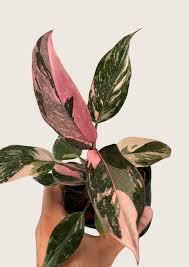
Philodendron Pink Princess is one of the most recognizable variegated varieties. Its dark green, sometimes nearly black foliage develops pink patches, splashes, or sections that create a striking contrast.
The amount and distribution of pink coloration can differ between leaves. Adequate indirect light helps support healthy growth, although variegation patterns are influenced by the plant’s genetics and are not completely controlled by lighting.
Pink Princess is popular among collectors and indoor plant retailers because of its distinctive appearance.
2. Philodendron White Princess
<AsyncImage query=”Philodendron White Princess white cream variegated green leaves houseplant” aspectRatio=”16:9″ width=”100%”/>
White Princess features green foliage with white or cream-colored variegation. Some plants may also display subtle pink markings on their stems.
Its balanced color combination makes it suitable for decorative indoor collections. Buyers should check plant labels carefully because White Princess can be confused with other white-variegated Philodendron cultivars.
3. Philodendron White Knight
<AsyncImage query=”Philodendron White Knight dark green white variegated leaves burgundy stems” aspectRatio=”16:9″ width=”100%”/>
White Knight is known for its dark green foliage, white variegation, and reddish stems. The contrast between its leaf colors and stem appearance makes it a desirable ornamental variety.
It is often discussed alongside White Princess and White Wizard, but these cultivars have distinguishing features. Accurate labeling is important when sourcing young plants through tissue culture.
4. Philodendron White Wizard
<AsyncImage query=”Philodendron White Wizard white variegated green foliage green stems” aspectRatio=”16:9″ width=”100%”/>
White Wizard is appreciated for its broad green leaves with white or cream-colored markings. Its stems are generally green, which helps distinguish it from some similar variegated varieties.
Collectors often select this cultivar for its bright foliage and elegant appearance. As with other variegated Philodendrons, the pattern may vary between leaves.
5. Philodendron Florida Beauty
<AsyncImage query=”Philodendron Florida Beauty variegated lobed leaves yellow cream green” aspectRatio=”16:9″ width=”100%”/>
Florida Beauty is recognized for its uniquely shaped, lobed leaves and attractive variegation. Depending on the plant, the foliage may display combinations of green, yellow, and cream.
Its unusual leaf structure makes it stand out from many common heart-shaped Philodendrons. Buyers should confirm the cultivar identity and variegation characteristics before ordering.
Popular Green and Foliage-Focused Philodendron Varieties
Not every popular Philodendron has variegated leaves. Many collectors and growers prefer green varieties because of their distinctive shapes, textures, and growth habits.
6. Philodendron Gloriosum
<AsyncImage query=”Philodendron Gloriosum large heart shaped velvety green leaves white veins” aspectRatio=”16:9″ width=”100%”/>
Philodendron Gloriosum is a terrestrial, creeping variety with large, heart-shaped leaves. Its velvety green foliage and prominent pale veins give it a distinctive appearance.
Unlike climbing Philodendrons, Gloriosum grows horizontally along the soil surface. It is popular among collectors who appreciate large tropical leaves and unusual growth habits.
7. Philodendron Melanochrysum
<AsyncImage query=”Philodendron Melanochrysum elongated velvety dark green leaves golden veins” aspectRatio=”16:9″ width=”100%”/>
Melanochrysum is known for its elongated, velvety leaves and striking light-colored veins. Mature foliage can become particularly large when the plant receives suitable support and growing conditions.
It is a climbing Philodendron that benefits from a structure such as a moss pole. Its dramatic foliage makes it attractive for specialist plant collections.
8. Philodendron Verrucosum
<AsyncImage query=”Philodendron Verrucosum velvety heart shaped leaves prominent pale veins red petioles” aspectRatio=”16:9″ width=”100%”/>
Verrucosum features velvety, heart-shaped leaves with contrasting veins and often reddish petioles. Its foliage can display different shades of green depending on the cultivar and growing conditions.
This variety is valued for its decorative appearance, although it generally benefits from stable humidity and careful watering.
9. Philodendron Micans
<AsyncImage query=”Philodendron Micans trailing heart shaped velvety bronze green leaves” aspectRatio=”16:9″ width=”100%”/>
Micans is a trailing Philodendron with soft, heart-shaped leaves. Its foliage can show green, bronze, and copper tones depending on the light and leaf maturity.
Its trailing growth makes it suitable for hanging baskets, shelves, and indoor plant displays. It is also a useful option for growers looking for varieties with a different growth habit from upright or climbing types.
10. Philodendron Birkin
<AsyncImage query=”Philodendron Birkin compact plant dark green leaves white pinstripe variegation” aspectRatio=”16:9″ width=”100%”/>
Birkin is recognized for its compact growth and dark green leaves marked with fine white or cream-colored stripes.
It is frequently selected for indoor decoration because of its relatively upright form and distinctive foliage. The amount of striping may differ between leaves, and some plants can produce leaves with different patterns.
How to Choose the Right Philodendron Variety
Selecting a variety should involve more than considering its appearance. Buyers should think about the intended market, growing environment, and level of care required.
Consider Leaf Appearance
Collectors may prefer rare variegated varieties, while general plant retailers may focus on cultivars with broad appeal and recognizable foliage.
Compare leaf shapes, color combinations, texture, and mature plant appearance before deciding which varieties to purchase.
Understand Growth Habits
Philodendrons have different growth patterns. Some climb, others trail, and certain varieties grow horizontally.
This distinction affects how plants are displayed, packaged, supported, and maintained. Buyers should select varieties that suit their available growing space.
Evaluate Care Requirements
Some Philodendrons tolerate a wider range of indoor conditions, while others require more careful humidity and watering management.
If purchasing plants for resale, consider whether customers can maintain the selected varieties successfully.
Check Variety Authenticity
The names of similar cultivars can sometimes be confused during sourcing. Ask suppliers for clear labeling, botanical identification, and recent photographs of the available batch.
For wholesale orders, accurate identification is particularly important because incorrect labeling can create problems with inventory management and customer expectations.
How Tissue Culture Supports the Production of Popular Varieties
Tissue culture provides a controlled method for multiplying selected Philodendron varieties. The process generally begins with suitable plant material, which is prepared under sterile conditions and introduced into a nutrient medium.
Selection of Starting Material
The process begins with plant material selected from an identified source. Its health and genetic characteristics are important because they influence the quality of subsequent production.
Establishment in Culture
Small tissue samples are introduced into sterile containers containing a suitable growth medium. Environmental conditions are controlled to support development while reducing contamination risks.
Shoot Multiplication
Under suitable conditions, the culture material develops shoots that can be separated and transferred to fresh media for further multiplication.
Root Development
Developing shoots are encouraged to form roots before being prepared for transfer to growing conditions outside the laboratory.
Acclimatization
Plantlets are gradually adapted to normal humidity, airflow, and light levels. This stage is important because laboratory-grown plants are accustomed to a more controlled environment.
Successful tissue culture production requires appropriate techniques and careful monitoring at every stage.
What Buyers Should Check When Purchasing Tissue Culture Philodendrons
Before placing an order, buyers should evaluate the supplier and the condition of the plants.
| Factor | What to Examine |
|---|---|
| Variety identification | Correct botanical name and cultivar |
| Plant development | Shoot and root growth appropriate to the stage |
| Leaf condition | Healthy appearance without extensive damage |
| Culture quality | Clean containers and no visible contamination |
| Acclimatization | Whether plants are in-vitro or nursery-grown |
| Quantity | Available stock and minimum order requirements |
| Packaging | Protection against movement and temperature changes |
| Documentation | Applicable plant health and shipping documents |
Requesting recent photographs or a sample batch can help buyers assess whether the products match their requirements.
Wholesale Opportunities for Tissue Culture Philodendrons
Tissue culture Philodendrons can be useful for commercial nurseries, plant retailers, distributors, and other horticultural businesses.
Wholesale buyers may choose a combination of popular and specialist varieties to create a balanced product range. Common cultivars can appeal to a broader customer base, while distinctive variegated varieties may attract collectors.
When planning wholesale purchases, consider:
- Market demand for each cultivar.
- Availability throughout the production season.
- Minimum order quantities.
- Plant size and development stage.
- Packaging and transportation costs.
- Import requirements for international shipments.
- Supplier capacity for repeat orders.
Businesses such as Young Plants are part of the wider tissue culture plant supply market, where product selection and propagation capabilities are important considerations for buyers.
Care Tips for Newly Received Tissue Culture Philodendrons
Proper care after delivery helps young plants adjust to their new environment.
Provide Gradual Acclimatization
Avoid exposing laboratory-grown plantlets to dry air immediately. Introduce them gradually to normal humidity and airflow to reduce transplant stress.
Use an Airy Growing Medium
A well-draining mixture containing materials such as coco coir, perlite, and orchid bark can support moisture balance and root aeration.
Maintain Suitable Light
Bright, indirect light is generally appropriate for many Philodendron varieties. Strong direct sunlight can damage delicate leaves, particularly during early acclimatization.
Water Carefully
Keep the growing medium appropriately moist without allowing it to become waterlogged. Young roots can be sensitive to excessive moisture.
Monitor New Growth
Check the plants regularly for new leaves, root development, discoloration, or signs of stress. Avoid heavy fertilization until the plants have adjusted and begun growing actively.
Conclusion
Philodendrons offer a wide selection of ornamental characteristics, from the pink and white patterns of variegated cultivars to the velvety leaves and unusual growth habits of specialist varieties. Tissue culture has helped expand the availability of these plants by supporting controlled propagation and larger-scale production.
Popular options include Pink Princess, White Princess, White Knight, White Wizard, Florida Beauty, Gloriosum, Melanochrysum, Verrucosum, Micans, and Birkin. Each has its own appearance and growing requirements, making accurate identification and careful selection important.
By evaluating variety authenticity, plant development, supplier quality, and acclimatization needs, buyers can choose tissue culture Philodendrons that better match their collections or commercial goals.