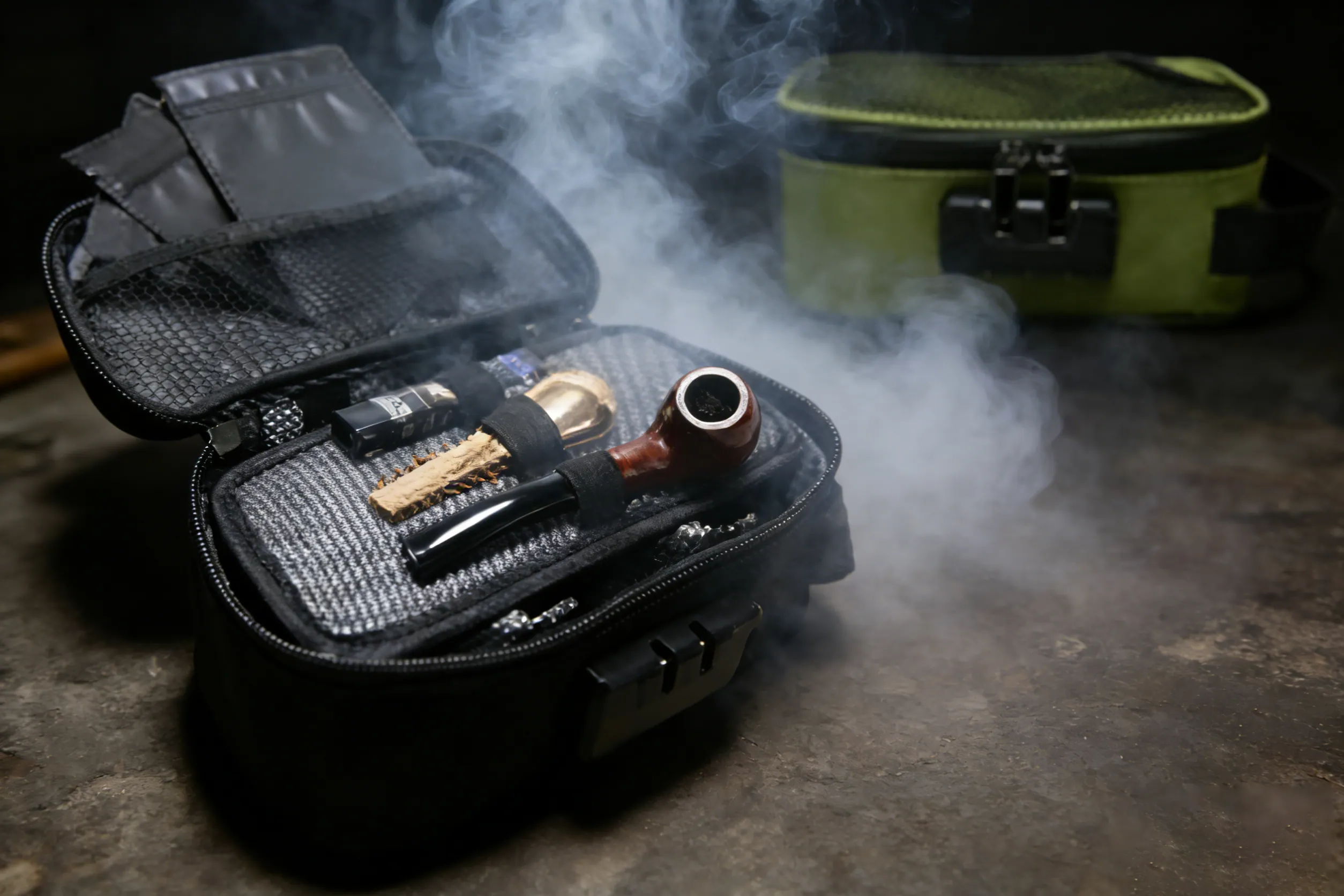
Selecting the right factory is an important step for businesses developing custom bags designed to help contain odors. The manufacturing partner can influence product quality, material selection, customization, production costs, and delivery schedules.
A suitable Smell Proof Bag Factory should be able to understand detailed product specifications and translate them into consistent finished products. Before choosing a supplier, businesses should assess manufacturing capabilities, materials, quality control, customization options, and long-term reliability.
Define Your Custom Bag Requirements
Start by creating clear specifications for the product. The intended use will determine many design decisions, including size, structure, materials, closures, and internal features.
Important considerations may include:
- Required dimensions and capacity
- Intended application
- Odor-containment expectations
- Material and lining preferences
- Closure system
- Branding requirements
- Packaging specifications
- Expected production quantity
Clear requirements help factories understand the project and provide more accurate recommendations and quotations.
Evaluate Manufacturing Capabilities
Not every factory has the same equipment or production experience. Some specialize in particular bag constructions, while others offer broader customization capabilities.
Ask potential suppliers whether they have experience producing multi-layer or specialized barrier bags. Their equipment, production methods, and technical expertise should be appropriate for the complexity of your design.
Examine Material Options
Material selection is an important part of custom production. A smell proof bag may use multiple layers or specialized materials intended to create a stronger barrier against odors.
Discuss available outer fabrics, inner layers, barrier materials, and lining options with the factory. Consider durability, flexibility, moisture resistance, ease of cleaning, and other characteristics relevant to the product’s intended use.
Assess Closure Design
The closure system can have a significant effect on how effectively a bag contains odors. Zippers, sealing systems, and other fastening methods may provide different levels of convenience and containment.
Discuss the available closure options and how they are incorporated into the overall construction. If the bag will be opened frequently, the closure should also be practical for repeated use.
Review Customization Capabilities
Custom production often involves more than changing the bag’s color. Businesses may require specific dimensions, compartments, labels, logos, hardware, materials, or packaging.
Confirm which customization services the factory can provide and whether particular features affect minimum order quantities or production costs.
Consider Branding and Finishing
Branding details should be defined before production begins. Logo placement, printing methods, labels, colors, and other finishing elements should match the approved design.
A physical sample can help verify that branding appears correctly on the selected material and that the final appearance meets expectations.
Check Product Quality and Construction
Durability is another important consideration when selecting a manufacturing partner. Examine stitching, seams, zippers, handles, attachment points, and other areas that may experience repeated stress.
If samples are available, inspect them carefully. A well-constructed product should balance its specialized function with practical durability and everyday usability.
Review Quality Control Procedures
Quality control should cover both raw materials and finished products. Ask how the factory checks dimensions, stitching, closures, materials, branding, and overall construction during production.
A structured inspection process can help identify defects before products are packaged and shipped. This becomes especially important when producing large quantities under a specific brand.
Request a Prototype or Sample
A prototype allows businesses to evaluate a design before committing to mass production. It can reveal issues that are difficult to identify from drawings or digital mockups.
Review the sample for:
- Overall size and capacity
- Material quality
- Closure performance
- Stitching and construction
- Interior organization
- Branding and finishing
- General usability
If odor-containment performance is a key requirement, establish appropriate testing criteria with the factory before production.
Compare Minimum Order Quantities
Custom products often have minimum order requirements because specialized materials and production setups may involve additional preparation.
Compare the factory’s MOQ with your expected demand and available storage capacity. A supplier with a suitable production quantity may be more practical than one offering a lower unit price but requiring a much larger order.
Understand Total Production Costs
The quoted unit price is only part of the overall cost. Sampling, custom materials, specialized components, printing, packaging, tooling, and shipping may create additional expenses.
Request a detailed quotation that identifies what is included. This allows you to compare factories more accurately and prepare a realistic production budget.
Ask About Production Lead Times
Lead times should align with your inventory requirements, product launches, promotional campaigns, or seasonal demand.
Ask about the expected timeline for sampling, material sourcing, production, quality inspection, packaging, and shipping. It is also useful to understand how the factory communicates and manages unexpected delays.
Evaluate Production Capacity
A factory should be capable of meeting your current requirements while offering enough capacity to support potential growth.
Ask about typical production volumes and whether the supplier can increase order quantities without compromising material consistency or quality standards. Scalability can be particularly valuable for businesses planning recurring orders.
Assess Communication and Responsiveness
Clear communication is essential when developing a customized product. Specifications may involve precise measurements, materials, artwork, construction details, and packaging instructions.
Pay attention to how the factory responds during the initial discussions. Detailed answers and clear explanations can help reduce misunderstandings during product development and production.
Consider Long-Term Reliability
If your business expects to reorder the same product, reliability should be considered alongside the initial quotation. Consistency between production runs can be important for maintaining product quality and brand presentation.
A dependable factory can make repeat orders easier by maintaining agreed specifications, materials, construction methods, and finishing standards.
Conclusion
Selecting a smell proof bag factory for custom production requires careful evaluation of manufacturing capabilities, materials, closures, customization, quality control, sampling, pricing, production capacity, and communication.
Rather than choosing a factory based solely on cost, businesses should consider overall value and reliability. A manufacturing partner that understands the product requirements and consistently meets agreed specifications can provide a stronger foundation for successful custom bag production.