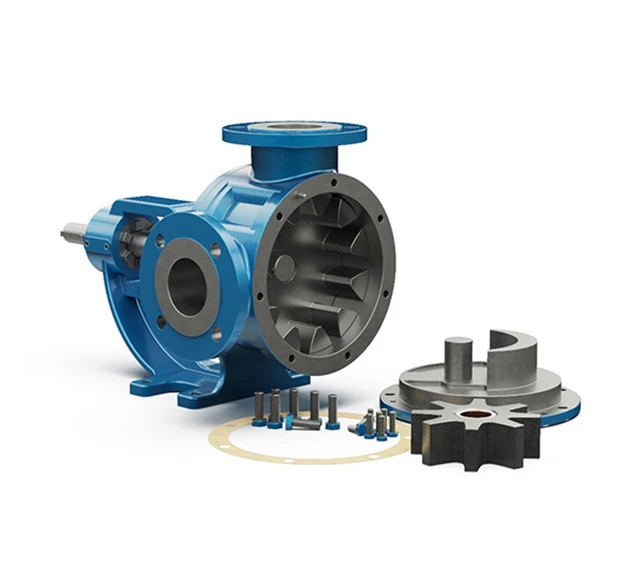
Selecting a gear pump supplier is an important decision for businesses that depend on reliable fluid-handling equipment. Product quality, technical compatibility, delivery reliability, and after-sales support can all influence the performance of the final system.
When comparing options, an experienced gear pump manufacturer should be evaluated on more than its product catalog or quoted price. A detailed comparison of engineering capabilities, manufacturing processes, testing standards, customization options, and customer support can help identify the supplier that best fits a particular application.
Start With Product Requirements
Before comparing manufacturers, define the technical requirements of the pump. Without clear specifications, it can be difficult to determine whether one supplier offers a genuinely better solution than another.
Consider factors such as:
- Required flow rate
- Operating and maximum pressure
- Fluid viscosity
- Operating temperature
- Fluid composition
- Pump speed
- Installation dimensions
- Expected operating hours
Having these details available makes it easier to request comparable quotations and technical information from different manufacturers.
Compare the Product Range
Manufacturers may specialize in different types of gear pumps. Some focus primarily on hydraulic applications, while others provide equipment for chemical processing, lubrication, fuel transfer, or high-viscosity fluids.
Review whether each supplier offers products suitable for the intended application. A broad product range can be useful, but technical suitability should remain the primary consideration.
It is also worth checking whether the manufacturer provides both standard and customized configurations when special requirements arise.
Examine Manufacturing Capabilities
Manufacturing capability can have a direct effect on pump consistency and reliability. Precision machining is particularly important because gear pumps depend on accurately manufactured gears, shafts, housings, and internal clearances.
When comparing suppliers, look for information about their production equipment, quality control procedures, component inspection, and assembly processes.
A manufacturer with effective control over its production process may be better positioned to maintain consistent quality across different production batches.
Review Quality Control and Testing
Quality claims should be supported by practical testing procedures. A manufacturer should have processes for checking whether finished pumps meet their specified performance requirements.
Depending on the product, testing may involve:
- Dimensional inspection
- Pressure testing
- Leakage testing
- Flow verification
- Material inspection
- Operational testing
Ask what testing is performed before shipment and whether relevant documentation can be provided. This is particularly important for pumps used in critical or continuous-duty applications.
Assess Engineering and Customization Support
A manufacturer may have a technically impressive catalog but still be unsuitable if it cannot support specialized applications.
Evaluate how well each supplier handles custom requirements. This could include modified mounting dimensions, shaft configurations, port arrangements, materials, seals, or performance specifications.
Good engineering support should begin with an understanding of the application rather than simply recommending the nearest standard model.
Consider Material Options
The materials used in a gear pump should be compatible with the fluid and operating environment. This is especially important when pumping corrosive, abrasive, high-temperature, or chemically sensitive liquids.
Compare the material options offered by different manufacturers and ask how those materials are selected for particular applications.
Seals and other wetted components should also be considered because incompatibility in a relatively small component can result in leakage or premature failure.
Compare Technical Documentation
Clear documentation makes pump selection, installation, and maintenance easier. When comparing manufacturers, review the quality and completeness of the technical information they provide.
Useful documentation may include:
- Product specifications
- Performance curves
- Installation instructions
- Operating guidelines
- Maintenance recommendations
- Dimensional drawings
- Replacement part information
A supplier that provides accurate and accessible technical information can make the entire purchasing and maintenance process more efficient.
Look at Delivery and Production Capacity
Product availability and lead times can be important considerations, especially when pumps are needed for production equipment or scheduled maintenance.
Ask manufacturers about standard lead times, production capacity, and their ability to handle repeat orders. If a project requires multiple units, consistency between batches may also be important.
A competitive product is less useful if unpredictable delivery schedules cause installation or production delays.
Evaluate After-Sales Support
The relationship with a manufacturer does not necessarily end when the pump is delivered. Technical assistance can be valuable during installation, commissioning, troubleshooting, and maintenance.
Compare the level of support available after purchase. Consider whether the supplier provides technical consultation, replacement components, maintenance information, and assistance with application-related questions.
Reliable support can reduce downtime and make it easier to resolve unexpected operating issues.
Compare Total Cost of Ownership
Purchase price is an obvious comparison point, but it should not be the only one. A less expensive pump may become more costly if it requires frequent maintenance or has a shorter operating life.
Consider the total cost over the expected service period, including:
- Initial purchase price
- Installation costs
- Maintenance requirements
- Replacement parts
- Energy consumption
- Expected service life
- Potential downtime
This approach gives a more realistic view of the value offered by each manufacturer.
Check Industry Experience
Experience with similar applications can be a useful indicator when comparing suppliers. A manufacturer familiar with the specific industry may have a better understanding of common operating challenges.
For example, a supplier experienced in hydraulic equipment may understand different requirements from one that primarily serves chemical processing or high-viscosity fluid applications.
Relevant experience can also help manufacturers provide more practical recommendations during pump selection.
Ask for References or Application Examples
Where appropriate, ask potential suppliers for examples of applications similar to yours. Case studies, technical references, or documented installations can provide additional context about their capabilities.
The most useful examples are those involving comparable fluids, pressures, temperatures, flow rates, or operating environments.
However, references should be considered alongside technical evidence rather than used as the sole basis for a purchasing decision.
Create a Practical Comparison
After collecting information, organize manufacturers according to the factors that matter most to the application. A simple comparison can include product suitability, quality controls, customization, technical support, lead time, and total ownership cost.
Not every factor needs to have equal importance. For a critical industrial application, testing and reliability may matter more than a small difference in purchase price.
The best supplier is generally the one that provides the strongest overall fit rather than simply the lowest quotation.
Conclusion
Comparing gear pump manufacturers requires a broader assessment than reviewing prices and basic specifications. Product range, manufacturing quality, engineering expertise, material options, testing, documentation, delivery capabilities, and after-sales support can all influence the long-term success of a pump installation.
By defining application requirements first and then evaluating manufacturers against consistent criteria, buyers can make a more informed decision. A careful comparison helps ensure that the selected supplier can provide equipment that meets current requirements while also supporting reliable operation over the long term.