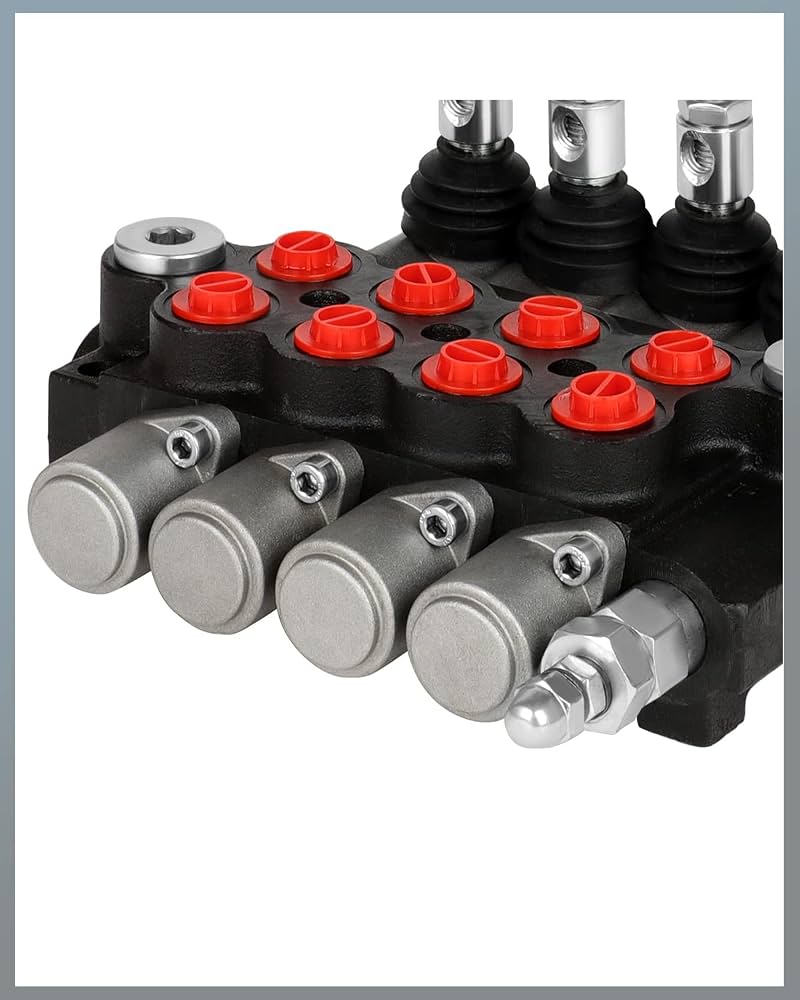
Hydraulic control valves determine how fluid moves through a hydraulic circuit and directly influence the operation of cylinders, motors, and other actuators. Pressure and flow are two of the most important variables to consider because they affect force, speed, stability, and overall system behavior.
When a standard valve does not provide the required operating characteristics, a customized hydraulic control valve can be designed around the hydraulic circuit. This allows engineers to consider application-specific pressure levels, flow requirements, response characteristics, connection configurations, and installation constraints rather than relying solely on predefined specifications.
Understanding Hydraulic Pressure
Hydraulic pressure represents the force applied by the fluid within the system. In practical terms, pressure is closely associated with the force that a hydraulic actuator can produce.
A valve must be capable of operating safely at the system’s normal working pressure while also accounting for pressure fluctuations and temporary peaks. Selecting a valve with an appropriate pressure rating is essential for reliable operation.
How Pressure Affects Valve Performance
Pressure influences several aspects of valve behavior. Excessive pressure can place additional stress on valve bodies, seals, and internal components, while insufficient pressure may prevent the hydraulic system from achieving its intended output.
Pressure losses across the valve should also be considered. A valve that creates excessive resistance can reduce system efficiency and generate unwanted heat.
For this reason, pressure ratings should not be evaluated independently from flow requirements.
Understanding Hydraulic Flow
Flow refers to the volume of hydraulic fluid moving through the system over a given period. It has a direct relationship with actuator speed.
Higher flow can generally increase the speed of a hydraulic cylinder or motor, provided the actuator and other components are capable of handling the increased flow. Conversely, restricted flow can slow actuator movement.
Valve sizing must therefore reflect the expected flow range rather than only the maximum value.
Flow Capacity and Valve Sizing
A valve that is too small for the application may create excessive pressure drops and restrict hydraulic performance. An oversized valve, however, may not always provide the desired control characteristics.
The appropriate valve size depends on factors such as required flow rate, pressure differential, fluid properties, internal design, and the function being controlled.
Engineers should evaluate normal, minimum, and peak flow conditions when determining the appropriate configuration.
The Relationship Between Pressure and Flow
Pressure and flow are closely connected but represent different aspects of hydraulic performance. Pressure is associated primarily with force, while flow is associated with actuator speed.
A hydraulic system can therefore have high pressure without requiring high flow, or high flow without operating at its maximum pressure. The valve must accommodate the relationship between these variables throughout the machine’s operating cycle.
Understanding this distinction is important when specifying a custom valve.
Controlling Actuator Speed
For many hydraulic applications, predictable actuator movement is a key performance requirement. The valve controls the amount of fluid reaching the actuator, which affects how quickly it moves.
Flow control characteristics, valve geometry, pressure compensation, and load conditions can all influence speed stability.
In applications where precise movement is important, the valve should be selected or designed according to the required operating profile rather than simply its nominal flow rating.
Pressure Control Functions
Different hydraulic applications require different methods of pressure management. Depending on the system, valves may be used to limit, reduce, maintain, or sequence pressure.
Common pressure-control functions include:
- Pressure relief
- Pressure reduction
- Counterbalance control
- Sequence control
- Load holding
The required function should be clearly defined before developing the valve configuration.
Response and Control Performance
Pressure and flow capacity alone do not completely describe valve performance. Response behavior is also important, particularly in automated machinery and equipment requiring repeatable movement.
Response time can be affected by the valve’s internal geometry, actuation method, hydraulic conditions, and control signals. A valve designed for a fast-response application may have different characteristics from one intended for gradual or heavily damped movement.
Internal Valve Design
Internal components determine how hydraulic fluid is directed and controlled. Spools, poppets, seats, springs, or other mechanisms can be configured according to the intended function.
Clearances and surface conditions are especially important in precision valve components. Excessive internal leakage or inconsistent movement can affect pressure control and overall system efficiency.
Managing Pressure Loss
Every hydraulic valve introduces some resistance to fluid flow. This resistance results in a pressure drop across the valve.
Some pressure loss is unavoidable, but excessive losses can reduce system efficiency and contribute to heat generation. Valve passages, flow paths, orifices, and internal geometry should therefore be evaluated in relation to the required flow rate.
Hydraulic Fluid Considerations
The hydraulic fluid used by the system can influence valve performance. Different fluids have different viscosity, temperature, lubrication, and compatibility characteristics.
Seal materials and internal components should be compatible with the selected fluid. Operating temperature can also change fluid viscosity, which may affect flow behavior and valve response.
Temperature and Performance
Temperature can affect both hydraulic fluid properties and valve materials. At low temperatures, increased viscosity can make fluid movement more difficult. At high temperatures, reduced viscosity and material expansion can affect leakage and component behavior.
A custom valve should therefore be evaluated across the expected operating temperature range rather than under a single nominal condition.
Testing Pressure and Flow Performance
Testing is necessary to determine whether a valve performs according to its specifications. The exact testing program depends on the application and valve design.
Common evaluations include:
- Pressure resistance testing
- Internal and external leakage testing
- Flow measurement
- Pressure-drop evaluation
- Actuation testing
- Response testing
- Endurance testing
Testing under representative conditions provides a more useful indication of real-world performance.
Performance in Complex Hydraulic Systems
Complex machinery may have several hydraulic functions operating simultaneously. Changes in one part of the circuit can affect pressure and flow elsewhere.
A valve should therefore be evaluated as part of the complete system. Pump capacity, actuator requirements, piping, fittings, accumulators, and other valves can all influence the final operating characteristics.
System-level analysis can help prevent problems caused by treating the valve as an isolated component.
Choosing the Right Specifications
Before selecting or designing a custom valve, engineers should establish the system’s operating requirements.
Important specifications include:
- Normal operating pressure
- Maximum pressure
- Minimum and maximum flow
- Hydraulic fluid type
- Operating temperature
- Required actuator speed
- Pressure-control requirements
- Response characteristics
- Port and mounting configuration
- Expected operating cycle
Accurate specifications help ensure that the valve is matched to actual operating conditions.
Avoiding Over-Specification
Choosing the highest possible pressure or flow rating is not always the best solution. Over-specification can increase component size, cost, or manufacturing complexity without providing a practical benefit.
The objective should be to establish suitable performance margins while keeping the design appropriate for the actual application.
Conclusion
Pressure, flow, and performance are closely connected when evaluating hydraulic control valves. Pressure influences the force available from hydraulic actuators, while flow affects their operating speed. Valve design determines how effectively these variables are controlled within the hydraulic circuit.
A customized hydraulic control valve can be tailored to specific pressure and flow requirements when standard configurations are unsuitable. By considering valve sizing, internal design, pressure loss, fluid properties, temperature, response, and system interactions, engineers can develop a solution that supports stable and predictable hydraulic performance.