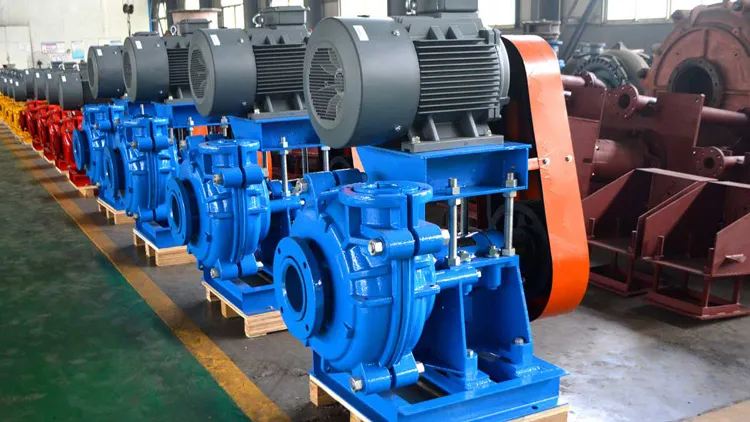
Slurry pumps operate in environments where abrasive particles, high solids concentrations, and continuous workloads can accelerate component wear. While pump design and material selection are important, maintenance requirements also have a major influence on long-term operating costs and equipment reliability.
For this reason, maintenance should be considered when choosing a Slurry Pump Manufacturer. A suitable manufacturer should provide equipment that is not only capable of handling the intended slurry but also practical to inspect, service, and maintain throughout its operating life.
Consider Expected Wear
Slurry pumps naturally experience wear because solid particles pass through the hydraulic components. Impellers, liners, casings, seals, and other parts may require periodic inspection or replacement.
When evaluating manufacturers, consider whether the proposed pump design accounts for the expected level of abrasion. Materials and components should be selected according to particle size, hardness, concentration, and slurry velocity.
Check Wear-Part Availability
Wear parts are among the most important maintenance considerations for slurry pumping equipment. Even a durable pump will eventually require replacement components.
Before selecting a manufacturer, ask about the availability of commonly replaced parts such as:
- Impellers
- Liners
- Mechanical seals
- Shafts
- Bearings
- Gaskets and other sealing components
Reliable access to replacement parts can help reduce downtime when maintenance is required.
Evaluate Ease of Component Replacement
A pump may be well engineered but still create unnecessary maintenance costs if critical components are difficult to access. Maintenance-friendly designs can make inspections and replacements faster.
Features such as replaceable liners, accessible wear components, and practical assembly arrangements can simplify routine servicing. This can be particularly valuable in facilities where equipment downtime directly affects production.
Consider Maintenance Intervals
Different slurry applications can require different maintenance schedules. Highly abrasive slurries may require more frequent inspections than less aggressive applications.
A manufacturer should be able to provide guidance on recommended inspection intervals and common maintenance tasks. This information can help operators develop a preventive maintenance program based on actual operating conditions.
Assess Material Selection
The materials used in the pump can have a significant effect on maintenance frequency. Components that are poorly matched to the slurry may wear quickly and require frequent replacement.
Manufacturers may use materials such as high-chrome alloys, rubber, stainless steel, or other specialized options depending on the application. The appropriate choice should be based on slurry characteristics rather than general assumptions.
Review Pump Design
Pump design affects both operating performance and maintenance requirements. Hydraulic components should be designed to handle the expected solids without creating unnecessary wear or blockages.
Mechanical components also need to withstand operating loads and maintain proper alignment. A well-engineered design can help reduce vibration, premature component failure, and unexpected service requirements.
Ask About Technical Documentation
Clear documentation can make maintenance activities more consistent and efficient. Useful documents may include installation instructions, operating guidelines, assembly drawings, parts lists, maintenance schedules, and troubleshooting information.
Before purchasing equipment, confirm that the manufacturer can provide sufficient technical documentation for the pump and its major components.
Look at Technical Support
Maintenance teams may occasionally need assistance with troubleshooting, component selection, or unusual operating conditions. Technical support can therefore be an important part of the manufacturer selection process.
A manufacturer with knowledgeable technical personnel can help operators understand wear patterns, identify potential problems, and determine appropriate maintenance actions.
Consider Pump Accessibility
The physical installation of the pump can influence how easily maintenance can be performed. However, the pump design itself can also affect accessibility.
Before installation, consider whether inspection points, bearings, seals, liners, and other serviceable components can be reached without excessive disassembly. Planning for accessibility can reduce maintenance time and improve workplace efficiency.
Evaluate Sealing Requirements
Seals can be particularly important in slurry applications. Abrasive particles may damage sealing surfaces, while incorrect sealing arrangements can lead to leakage and additional maintenance.
The appropriate sealing system depends on slurry properties, pressure, temperature, and other operating conditions. Manufacturers should be able to explain the expected maintenance requirements of the proposed sealing arrangement.
Consider Bearing Maintenance
Bearings support rotating components and must operate under the mechanical loads generated by the pump. Poor alignment, contamination, excessive vibration, or inadequate lubrication can shorten bearing life.
When comparing pump designs, consider bearing arrangements, lubrication requirements, inspection procedures, and expected service intervals. Proper bearing maintenance can help protect other components from unnecessary mechanical stress.
Examine Lifecycle Costs
Initial purchase price does not provide a complete picture of pump economics. Maintenance labor, replacement parts, energy consumption, and production downtime can represent significant costs over the equipment’s service life.
A pump that costs slightly more initially may provide better value if its components last longer and maintenance can be performed more efficiently.
Ask About Maintenance Training
For complex pumping systems, maintenance personnel may benefit from manufacturer-provided training or technical guidance. Proper knowledge of assembly, inspection, alignment, and wear-part replacement can help prevent avoidable problems.
When evaluating manufacturers, ask whether maintenance instructions or training resources are available for operators and service personnel.
Plan for Preventive Maintenance
Preventive maintenance is generally more effective than waiting for a major component to fail. Regular inspections can identify developing wear, vibration, leakage, or alignment problems before they lead to unexpected downtime.
A practical maintenance program may include:
- Routine visual inspections.
- Monitoring vibration and operating conditions.
- Checking wear components at planned intervals.
- Inspecting seals and bearings.
- Replacing components before critical wear limits are exceeded.
- Recording maintenance findings for future planning.
The specific schedule should be adjusted according to the pump design and actual operating conditions.
Final Thoughts
Maintenance should be an important part of the process when selecting slurry pumping equipment. Wear resistance, component accessibility, spare-parts availability, sealing arrangements, technical documentation, and manufacturer support can all influence long-term reliability.
Choosing equipment with maintenance requirements that match the site’s capabilities can help reduce downtime and control lifecycle costs. By considering maintenance alongside hydraulic performance, material selection, and manufacturing quality, businesses can make a more informed decision when selecting slurry pumping equipment.