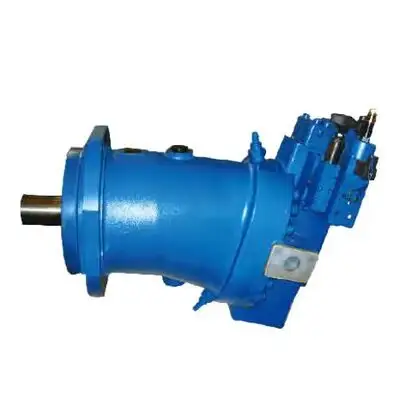
Choosing a manufacturing partner for industrial pumping equipment is an important decision. The right supplier can influence product reliability, production efficiency, maintenance requirements, and the overall performance of a fluid-handling system.
When evaluating a piston pump manufacturer, businesses should look beyond basic product availability. Manufacturing experience, engineering resources, quality control, customization capabilities, communication, and long-term support all deserve careful consideration.
Understand the Manufacturer’s Capabilities
A suitable manufacturing partner should have the equipment, knowledge, and production resources needed to meet your requirements. Start by reviewing its product range and determining whether its capabilities align with your application.
Consider the types of piston pumps produced, available pressure and flow ranges, materials of construction, and the industries served. This initial assessment can help determine whether the supplier is technically relevant to your project.
Evaluate Engineering Expertise
Engineering support can be especially important when pumping requirements are complex. A knowledgeable manufacturer should be able to discuss application conditions and explain how different pump configurations affect performance.
Ask whether the engineering team can assist with pump selection, sizing, material compatibility, sealing arrangements, and system integration. Practical technical guidance can reduce the risk of choosing equipment that does not suit the operating environment.
Examine Manufacturing Processes
Production methods have a direct effect on equipment consistency and reliability. Investigate how the manufacturer controls machining, assembly, component inspection, and final production stages.
A well-organized manufacturing process should include defined quality procedures and appropriate inspections. Consistency is particularly important when pumps are expected to operate continuously or under high-pressure conditions.
Check Quality-Control Procedures
Quality assurance should be considered throughout the manufacturing process, not only during final inspection. Ask how incoming materials and critical components are checked before assembly.
It is also useful to understand how finished pumps are inspected and tested. Documented procedures can provide greater confidence that products meet their stated specifications.
Look at Customization Options
Industrial applications often have requirements that differ from standard catalog specifications. A capable manufacturing partner should have a clear process for handling reasonable customization requests.
Depending on the application, customization may involve:
- Pump dimensions and mounting arrangements
- Materials and wetted components
- Seal and valve configurations
- Flow and pressure requirements
- Connection types
- Drive and operating configurations
Customization should be based on actual system needs and supported by appropriate engineering analysis.
Consider Material Selection
The fluid being pumped can have a major influence on component selection. Corrosive chemicals, abrasive particles, high temperatures, and unusual fluid viscosities can create additional demands on pump construction.
A knowledgeable manufacturer should be able to explain material options and identify components that are compatible with the intended fluid and operating conditions.
Review Testing Capabilities
Testing is an important part of manufacturing quality. Before choosing a supplier, ask what types of tests are performed on completed pumps.
Depending on the product, testing may include pressure verification, flow measurement, leakage inspection, dimensional checks, and mechanical performance testing. The manufacturer should be able to explain which tests apply to the selected equipment.
Assess Documentation
Clear technical documentation can make installation, operation, and maintenance significantly easier. Review whether the manufacturer provides accurate and useful information with its equipment.
Important documents may include product specifications, technical drawings, operating instructions, maintenance recommendations, and parts information. Good documentation can also support communication between the manufacturer, installers, and maintenance teams.
Check Spare-Parts Availability
A manufacturing partner should be able to support the pump beyond the initial sale. Replacement parts are particularly important for components subject to normal wear.
Before committing to a supplier, ask about the availability of pistons, seals, valves, bearings, and other service components. Easy access to compatible parts can help reduce maintenance delays and unplanned downtime.
Evaluate Communication
Effective communication is often overlooked when selecting a manufacturing partner. However, unclear specifications or delayed responses can create problems during design, production, and installation.
Pay attention to how the supplier handles technical questions, provides specifications, discusses modifications, and communicates production requirements. Clear and timely communication is a useful indicator of how the partnership may function over time.
Compare Lead Times and Production Planning
Delivery schedules matter when pumps are required for new installations, upgrades, or replacement projects. Ask manufacturers about typical production timelines and how they handle custom orders.
It is also worth discussing how changes to specifications may affect production schedules. Realistic planning can help businesses coordinate pump delivery with installation and other project activities.
Consider Long-Term Support
A manufacturing partner should ideally remain useful after the equipment has been delivered. Technical assistance, maintenance guidance, troubleshooting support, and replacement parts can all contribute to reliable long-term operation.
Instead of evaluating a supplier only as a product source, consider how well it can support the complete life cycle of the pumping equipment.
Compare Overall Value
Price is an important consideration, but it should not be the only factor. A lower initial cost may become less attractive if the pump requires frequent maintenance, has limited parts availability, or does not perform efficiently in the intended application.
Compare the complete value of each manufacturing partner, including product quality, service life, support, operating costs, and expected maintenance requirements.
Conclusion
Finding the right piston pump manufacturing partner involves evaluating much more than product specifications. Engineering expertise, production capabilities, quality control, customization, testing, documentation, spare-parts availability, communication, and long-term support should all be considered.
A structured evaluation can help businesses identify a supplier that is capable of meeting both current requirements and future service needs. By focusing on technical compatibility and long-term value, buyers can build a stronger foundation for reliable industrial pumping operations.