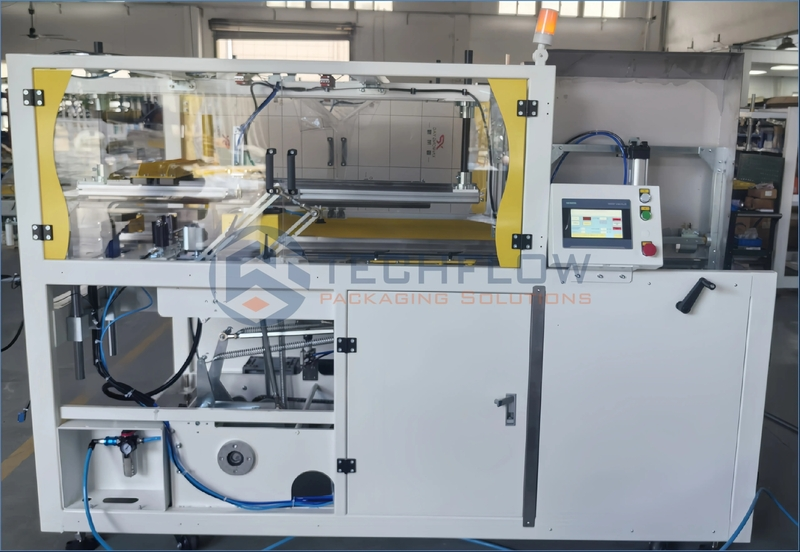
In modern manufacturing, packaging speed and consistency are essential for maintaining efficient production operations. As businesses handle increasing order volumes and tighter delivery schedules, preparing cartons manually can become a challenge. Repetitive box assembly requires time and labor, and differences in manual handling may lead to uneven carton formation. These issues can affect the performance of the entire packaging line.
An Automatic Case Erector helps manufacturers overcome these challenges by automating the process of opening flat carton blanks, folding their flaps, and securing the bottom. This allows packaging facilities to prepare cases more efficiently while maintaining uniform results. Understanding how this equipment works and the improvements it offers can help businesses make informed decisions about packaging automation.
Understanding the Role of Automatic Case Erectors
An automatic case erector is a packaging machine designed to convert flat corrugated cardboard blanks into fully formed cartons. It performs several operations through a coordinated mechanical process, preparing boxes for product loading and transportation.
The typical operating sequence includes:
- Loading flat carton blanks into the machine magazine.
- Automatically picking and separating individual blanks.
- Opening the blanks into their required box shape.
- Folding the bottom flaps into position.
- Securing the carton bottom with tape or adhesive.
- Discharging the completed case for the next packaging stage.
By combining these operations into an automated cycle, the machine reduces the time and manual effort required for carton preparation.
How an Automatic Case Erector Improves Packaging Speed
Packaging speed depends on how efficiently individual production stages operate together. When carton preparation cannot keep pace with product output, delays may occur at filling and sealing stations.
An automatic case erector helps maintain a continuous supply of prepared cartons, supporting better coordination throughout the packaging line.
1. Automates Repetitive Carton Assembly
Manual box assembly requires employees to repeatedly open cardboard blanks, fold panels, and secure carton bottoms. These activities take time, particularly when large quantities of boxes are needed.
Automated equipment performs these repetitive operations through programmed mechanical movements. Once the carton magazine is loaded and the machine is properly configured, it can prepare cases according to its operating capacity.
This reduces the time spent on individual carton assembly and allows employees to focus on other production activities.
2. Maintains a Steady Supply of Cartons
A consistent supply of empty cartons is necessary for uninterrupted packaging operations. If employees cannot prepare boxes quickly enough, product loading equipment may have to wait.
An automatic case erector helps reduce this dependency on manual preparation by supplying formed cartons at a controlled rate.
When properly synchronized with downstream equipment, it supports a smoother transition between carton formation and product packing.
3. Reduces Production Bottlenecks
Packaging lines often contain multiple interconnected machines. A delay at one stage can affect the performance of the entire system.
Automated carton preparation helps reduce the possibility of bottlenecks caused by slow manual assembly. It also makes it easier for manufacturers to coordinate carton supply with case packing and sealing operations.
However, overall production speed still depends on the capacity of every machine in the line.
4. Supports High-Volume Manufacturing
Facilities handling large production volumes often need to prepare hundreds or thousands of cartons during a production shift.
Manual assembly becomes increasingly difficult to manage as packaging requirements grow. Automatic case erectors provide a more repeatable preparation process that can support higher carton volumes, depending on machine specifications.
This makes them useful for manufacturing businesses that require reliable carton preparation across extended production periods.
How an Automatic Case Erector Improves Packaging Consistency
Speed is only one part of packaging efficiency. Cartons must also be formed correctly to support product protection, smooth filling operations, and reliable transportation.
Automatic case erection equipment improves consistency through controlled mechanical operations.
1. Uniform Carton Dimensions
Manual carton preparation may produce variations in box shape when employees fold or position panels differently.
Automatic case erectors use forming guides and mechanical components to open blanks into their intended dimensions. This helps maintain uniform carton shapes and improves compatibility with automated filling equipment.
2. Accurate Bottom Flap Folding
Properly folded bottom flaps are important for carton stability. Incorrect folding can result in uneven bases or problems during sealing.
Automated folding mechanisms position the carton flaps through a repeatable sequence. This helps reduce variations and creates a more consistent foundation for product loading.
3. Reliable Carton Sealing
The bottom sealing stage ensures that cartons remain closed during filling and subsequent handling.
Depending on the machine configuration, tape or hot-melt adhesive is applied to secure the folded flaps. Controlled application helps maintain more uniform closures when the carton material and sealing settings are suitable.
4. Fewer Manual Handling Errors
Human involvement in repetitive assembly tasks can introduce inconsistencies, especially during long production shifts.
Automating carton preparation reduces the number of manual steps involved in forming each box. This helps minimize errors related to incorrect folding, misalignment, and incomplete preparation.
Additional Operational Benefits
Besides improving speed and consistency, automatic case erectors can provide several other advantages for manufacturing facilities.
Reduced Labor Requirements: Employees spend less time assembling individual cartons and can perform other production-related responsibilities.
Better Workplace Ergonomics: Automation reduces repetitive bending, folding, and handling activities associated with manual box preparation.
Improved Material Management: Flat carton blanks can be stored efficiently and converted into usable boxes when required.
Better Production Planning: A more predictable carton preparation process makes it easier to coordinate packaging activities and manage production schedules.
Improved Line Integration: Formed cartons can be transferred directly to conveyors and downstream packaging machines, reducing unnecessary manual movement.
Industries That Benefit from Automated Carton Preparation
Automatic case erectors are used across industries where products are packed into corrugated shipping cartons.
Food and Beverage
Food and beverage manufacturers use formed cartons for bottled drinks, canned products, packaged foods, and other consumer goods. Consistent carton preparation supports organized product loading and distribution.
Pharmaceutical Manufacturing
Pharmaceutical packaging facilities use cartons to prepare shipping cases for packaged medicines and other healthcare products. Accurate carton formation helps maintain an organized packaging process.
Electronics Manufacturing
Electronic devices and accessories often require suitable outer cartons for storage and transportation. Automated case erection supports consistent preparation for different product packaging operations.
Household and Personal Care Products
Manufacturers of cleaning products, cosmetics, and personal care items use corrugated cases to organize products for distribution. Automated carton preparation can support the packaging requirements of these high-volume operations.
Factors That Influence Packaging Speed and Consistency
Although automatic case erectors offer important advantages, their performance depends on proper equipment selection, setup, and operating conditions.
Several factors should be considered:
- Machine capacity: The rated carton output should match the production requirements of the facility.
- Carton quality: Consistent blank dimensions and suitable cardboard materials help improve feeding and forming performance.
- Machine adjustments: Incorrect guide positioning or folding settings can affect carton accuracy.
- Sealing materials: Tape and adhesive quality influence the reliability of carton closure.
- Equipment synchronization: The erector should operate at a compatible speed with downstream packaging machines.
- Preventive maintenance: Regular inspections help maintain reliable feeding, folding, and sealing operations.
Manufacturers should evaluate these factors to achieve the best possible results from their equipment.
Best Practices for Maintaining Consistent Performance
Routine maintenance and proper operating procedures are essential for keeping carton erection equipment productive.
Operators should regularly inspect the carton feeding mechanism, vacuum suction cups, folding guides, and sealing components. Cardboard dust and adhesive residue should be removed to prevent interference with machine operation.
It is also important to monitor carton alignment and verify that the machine settings match the packaging materials being processed.
Training employees to identify common feeding and sealing issues can further reduce unnecessary interruptions and support consistent production.
Conclusion
An automatic case erector improves packaging speed and consistency by automating the repetitive operations involved in carton preparation. Its ability to feed, open, fold, and seal carton blanks through a controlled process helps manufacturers reduce manual effort and maintain a steady supply of ready-to-use cases.
Beyond faster carton assembly, the equipment supports uniform box formation, reliable bottom sealing, and better integration with other packaging machinery. These advantages make it a valuable solution for manufacturing facilities that handle regular or high-volume packaging operations.
By selecting equipment that matches their carton specifications and production requirements, businesses can establish a more efficient packaging workflow while maintaining consistent preparation standards.