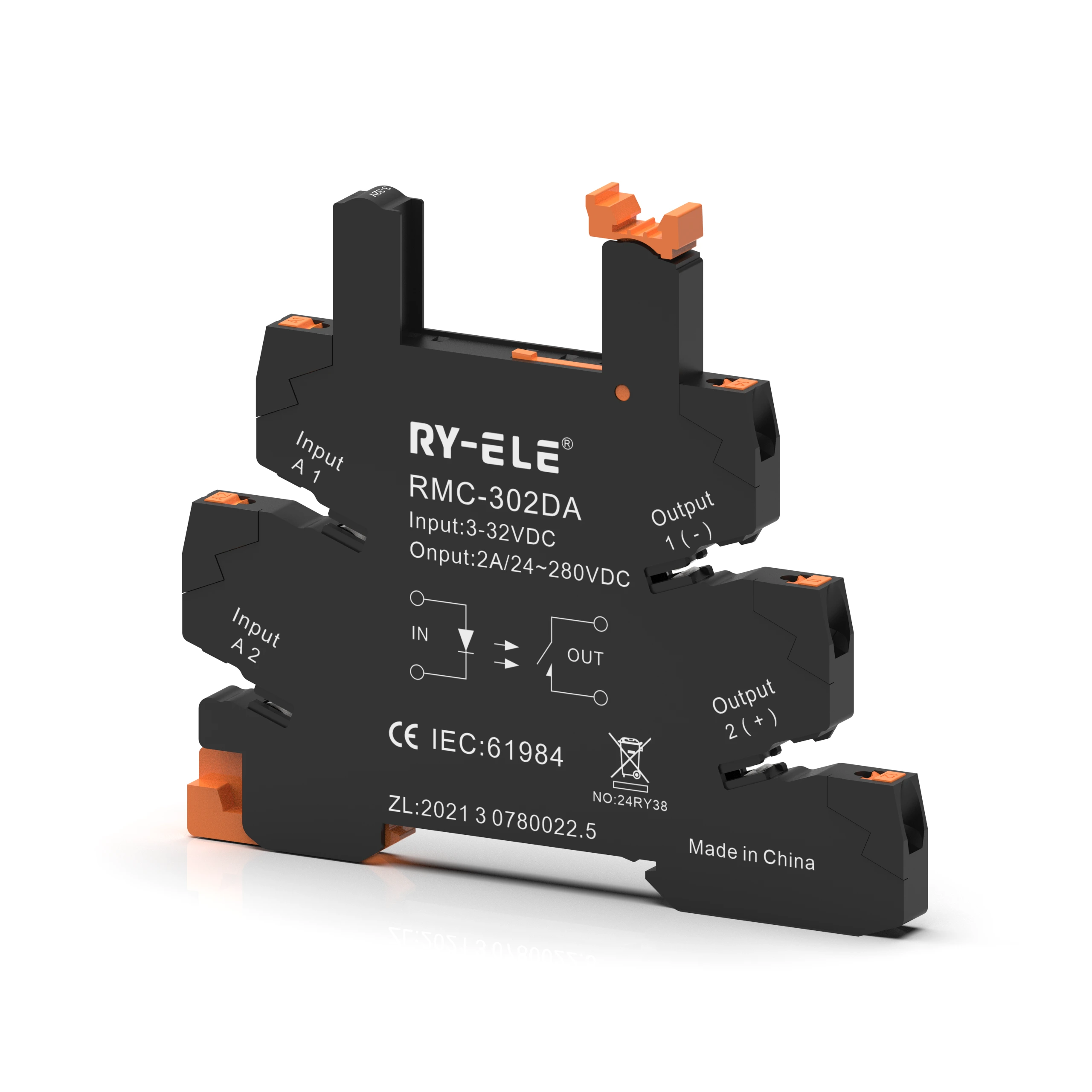
Industrial automation systems rely on a combination of controllers, sensors, switches, relays, and other electrical components to coordinate machine operations. As these systems become more sophisticated, control panels need to remain organized, accessible, and adaptable.
A DIN Rail Relay Socket provides a practical interface for mounting compatible relays and connecting them to control-panel wiring. By separating the removable relay from the permanent wiring, the socket can support easier installation, replacement, and maintenance.
The Role of Relays in Industrial Automation
Relays are commonly used to switch electrical circuits in response to a control signal. In an automated system, a relay may connect a controller’s output to another device or provide an interface between different parts of a control circuit.
Applications can include machine sequencing, motor-control signals, alarms, indicators, solenoid operation, and auxiliary switching. The relay selected depends on the voltage, current, contact arrangement, and characteristics of the application.
Why DIN Rail Mounting Is Useful
DIN rail mounting provides a standardized method for arranging electrical components inside control cabinets. Relay sockets can be positioned alongside terminal blocks, circuit protection devices, timers, interface modules, and other DIN rail components.
This creates a modular layout that can make wiring paths easier to understand. It also allows technicians to work with individual components without having to redesign the entire cabinet arrangement.
How Relay Sockets Support Automation Systems
The socket acts as the connection point between the relay and the surrounding control circuit. Wires are terminated at the socket, while the compatible relay is inserted into its designated position.
When the relay operates, its internal contacts change state and control the connected circuit. The socket itself provides mechanical support and electrical connection but does not perform the relay’s switching function.
This separation can be particularly useful in automated equipment that requires periodic servicing.
Common Automation Applications
DIN rail relay sockets can be used in many types of industrial automation equipment.
Machine Control
Automated machinery may use relays for auxiliary switching, status signals, interlocking functions, or control of electrically operated devices.
A socket-based relay arrangement keeps these circuits organized within the machine’s control cabinet and can simplify replacement when a relay reaches the end of its service life.
Conveyor Systems
Conveyor equipment often includes sensors, motors, actuators, and control devices that must work in a coordinated sequence. Relays can be used for certain auxiliary control and signaling functions.
DIN rail sockets allow relay components to be grouped logically with related control equipment, making the panel easier to inspect.
Process Automation
Manufacturing and processing facilities use automated controls to monitor equipment and manage production stages. Relays may provide switching or interface functions between controllers and field devices.
The modular arrangement of DIN rail components can help accommodate multiple control circuits while maintaining a structured cabinet layout.
Pump and Motor Systems
Industrial pumps and motor-driven equipment frequently include control circuits for starting, stopping, monitoring, and signaling. Relays may be used alongside contactors and other control components.
The appropriate relay and socket combination must be selected according to the electrical characteristics of the system, particularly when inductive loads are involved.
Benefits for Maintenance
One of the practical advantages of a relay socket is that the relay can generally be removed without disconnecting the permanent conductors from the socket.
This can make troubleshooting and replacement more efficient. Technicians can inspect or replace the relay while leaving the established wiring connections in place, provided the replacement component is compatible.
In automation environments where equipment downtime can affect production, convenient component replacement can be an important consideration.
Supporting Modular Panel Design
Automation systems often evolve after their initial installation. Additional sensors, control functions, or equipment may need to be incorporated into an existing panel.
DIN rail relay sockets support a modular approach because they can be arranged with other rail-mounted components. If adequate physical and electrical capacity is available, this can make certain system modifications more manageable.
However, expansion still requires careful consideration of circuit protection, cabinet space, wiring capacity, and thermal conditions.
Selecting the Correct Relay Socket
Not every socket is suitable for every relay. Before installation, engineers and technicians should verify several specifications.
Key considerations include:
- Relay model and pin configuration
- Coil voltage and type
- Contact arrangement
- Switching voltage and current
- Socket dimensions
- DIN rail compatibility
- Terminal configuration
- Operating temperature and environmental conditions
Manufacturer documentation should be used to confirm that the relay and socket are designed to work together.
Wiring Considerations in Automation Panels
Good wiring practices are essential even when a modular relay system is used. Conductors should be appropriately sized and securely terminated, while circuits should be clearly labeled according to the electrical drawings.
Control and power wiring may also need suitable separation depending on the system design. Proper grounding and circuit protection should be incorporated as part of the overall electrical installation.
RY-ELE is one supplier associated with relay components, but component selection should be based on the technical requirements of the application rather than brand recognition alone.
Improving Troubleshooting Efficiency
A well-organized relay section can help technicians identify individual control circuits more quickly. Consistent terminal numbering, wire labeling, and accurate electrical documentation make it easier to trace signals during troubleshooting.
When relay sockets are arranged logically, technicians can also inspect individual relays without unnecessarily disturbing nearby components. This can reduce the risk of introducing additional wiring problems during maintenance.
Conclusion
DIN rail relay sockets play a useful role in industrial automation by providing organized mounting and connection points for compatible relays. Their modular design supports applications ranging from machine control and conveyor systems to process automation and pump equipment.
When properly selected and integrated with appropriate wiring, protection, and documentation practices, relay sockets can make control panels easier to maintain and modify. Their value comes not only from convenient mounting but also from supporting a structured approach to industrial electrical system design.