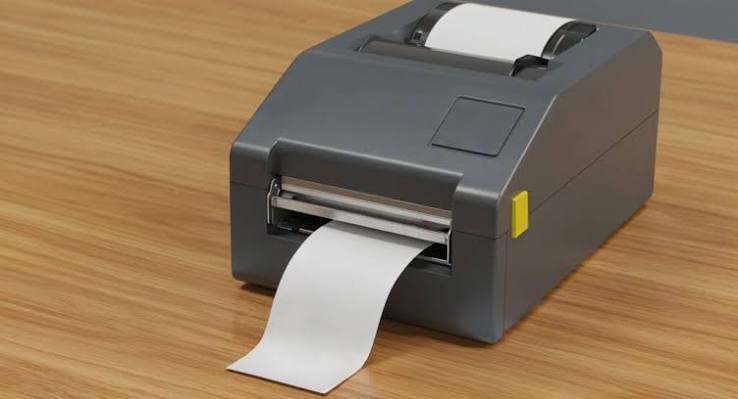
Thermal printing technology has become an important part of modern business operations. Retail stores use thermal printers for receipts, warehouses rely on them for inventory labels, and logistics companies depend on barcode printing to manage shipments. As businesses expand across different regions, their printing requirements continue to change. Factors such as digital transformation, international trade, automation, customer expectations, and industry regulations are influencing the development of thermal printing equipment.
To remain competitive, manufacturers must understand these changes and adapt their products, production processes, and customer services. A reliable Thermal Printer Manufacturer needs to consider differences in market requirements, technical standards, connectivity preferences, and operating environments. By responding to these demands, manufacturers can provide printing solutions that support businesses across different industries and geographic regions.
1. Understanding Regional Market Requirements
Global markets do not have identical printing needs. Businesses in different countries may use different point-of-sale systems, label formats, software platforms, and operating procedures.
For example, a retail business may prioritize compact receipt printers, while a logistics company may require high-speed barcode label printing equipment. Some markets place greater emphasis on mobile printing, whereas others need fixed printers integrated into larger business systems.
Manufacturers study these differences through customer feedback, market research, distributor relationships, and industry analysis. This information helps them develop product ranges that address specific regional requirements rather than offering a single solution for every application.
2. Developing Products for Different Industries
Thermal printers serve a wide variety of industries, each with its own operational demands.
Manufacturers respond by developing different printer categories and configurations for specific applications.
Common examples include:
- Retail: Receipt printers for checkout counters and payment terminals.
- Hospitality: Compact printers for restaurant orders, kitchen tickets, and customer receipts.
- Logistics: Barcode and shipping label printers for package identification.
- Warehousing: Label printers for inventory tracking and storage management.
- Healthcare: Printers for patient identification, specimen labels, and administrative documentation.
- Manufacturing: Industrial label printers for product identification and production tracking.
Understanding these applications allows manufacturers to select suitable printing mechanisms, interfaces, housing designs, and performance specifications.
3. Supporting Digital Transformation
Businesses around the world are adopting digital systems to improve efficiency and reduce manual processes. Thermal printers must work effectively within these connected environments.
Manufacturers increasingly focus on compatibility with point-of-sale software, inventory platforms, warehouse management systems, and enterprise applications.
This involves developing suitable communication interfaces, software development kits, printer drivers, and configuration tools.
When printers integrate smoothly with existing systems, businesses can automate routine printing tasks and reduce the possibility of manual errors. Compatibility is therefore an important consideration in product development and international market expansion.
4. Expanding Connectivity Options
Connectivity requirements vary depending on how and where printers are used.
Traditional USB connections remain common in fixed business installations, while Ethernet is useful in networked environments. Bluetooth and Wi-Fi are important for mobile and wireless printing applications.
Manufacturers respond to these preferences by offering different interface combinations across their product ranges.
Important connectivity options include:
- USB for direct connections to computers and POS terminals.
- Ethernet for network-based printing.
- Bluetooth for wireless connections with supported mobile devices.
- Wi-Fi for wireless network integration.
- Serial interfaces for certain legacy systems and specialized equipment.
Providing multiple options gives businesses greater flexibility when selecting printers for their existing technology infrastructure.
5. Improving Printing Speed and Performance
Business operations increasingly depend on fast information processing. Slow printing can interrupt checkout activities, delay shipping preparation, or reduce efficiency in busy service environments.
Manufacturers address these requirements by improving printhead technology, motor control, data processing, and paper-feeding mechanisms.
However, printing speed is only one part of overall performance. A suitable printer must also maintain clear output, accurate media feeding, and stable operation.
Manufacturers therefore need to balance speed with print resolution, reliability, and the intended application. A high-speed printer is not necessarily the best choice if its output quality or media compatibility does not meet business requirements.
6. Adapting to Changing Barcode and Labeling Requirements
Barcode printing is essential for product identification, inventory management, shipping, and supply chain operations.
Different industries and markets may require different barcode formats, label dimensions, and printing resolutions.
Manufacturers support these needs by developing printers that accommodate a range of label materials and barcode types. Depending on the model, equipment may support one-dimensional barcodes, two-dimensional codes such as QR codes, and specialized labeling formats.
Print quality is particularly important because poorly produced barcodes may be difficult for scanners to read.
Manufacturers must therefore consider resolution, print density, media compatibility, and software support when developing labeling equipment for global customers.
7. Offering Flexible Product Customization
Businesses sometimes require printing equipment that matches their branding, technical infrastructure, or operating environment.
Customization allows manufacturers to respond to these requirements without forcing every customer to use the same product configuration.
Common customization possibilities include:
- Custom product logos and exterior designs
- Packaging and labeling adjustments
- Interface configurations
- Firmware modifications
- Supported paper widths
- Mounting and installation options
- Customized accessories
OEM and ODM services can also help businesses develop branded printing products. Manufacturers need to evaluate technical feasibility, production costs, testing requirements, and order quantities before confirming customized specifications.
8. Maintaining Consistent Quality Across International Markets
Global customers expect printing equipment to deliver dependable performance regardless of where it is purchased or installed.
Manufacturers must establish quality management procedures that help maintain consistency across production batches.
These procedures may include incoming component inspections, assembly checks, print performance evaluations, connectivity testing, and final product inspections.
Testing can also focus on paper-feeding accuracy, cutter operation, printhead performance, and electrical stability.
For products distributed internationally, manufacturers should additionally consider relevant safety requirements and market-specific certifications. Compliance requirements vary by destination, so buyers should verify the documentation applicable to their region.
9. Responding to Demand for Compact and Portable Printers
The growth of mobile commerce, field services, delivery operations, and flexible retail environments has increased demand for portable printing equipment.
Mobile thermal printers allow employees to print receipts, tickets, and labels without remaining connected to a fixed workstation.
Manufacturers respond by developing compact designs with rechargeable batteries, wireless connectivity, and lightweight housing.
Portable printers must also balance size with battery capacity, printing performance, durability, and ease of operation.
These considerations are particularly important for delivery personnel, field technicians, mobile vendors, and businesses operating outside traditional office environments.
10. Supporting Sustainability and Resource Efficiency
Environmental considerations are becoming more important in purchasing and manufacturing decisions.
Thermal printing does not require conventional ink cartridges or toner, but the technology still involves environmental considerations such as paper consumption, electronic components, packaging, and product disposal.
Manufacturers can respond by improving energy efficiency, reducing unnecessary packaging, designing durable equipment, and supporting responsible material selection.
They may also develop products that work with suitable lower-impact media where the printer’s specifications allow it.
Businesses should consider the complete operating lifecycle of printing equipment rather than assuming that one printing technology is automatically more sustainable in every situation.
11. Improving Software Compatibility and User Experience
A printer’s usefulness depends partly on how easily employees can install, configure, and operate it.
Global customers may use different operating systems, business applications, and point-of-sale platforms. Manufacturers therefore need to consider software compatibility during product development.
Useful software features may include:
- Drivers for supported operating systems
- Printer configuration utilities
- Software development kits
- Command language compatibility
- Firmware management tools
- Clear installation documentation
A straightforward setup process can reduce installation difficulties and make it easier for businesses to deploy printers across multiple locations.
12. Managing International Supply Chains
Global demand creates challenges for manufacturers sourcing electronic components, printheads, motors, sensors, and other materials.
Supply chain disruptions can affect production schedules, inventory availability, and delivery commitments.
Manufacturers address these challenges through supplier evaluation, inventory planning, procurement coordination, and production forecasting.
Developing relationships with multiple qualified suppliers can also help reduce dependence on a single source. However, any component substitution must be evaluated carefully to ensure that it does not compromise product performance or compatibility.
Effective supply chain management supports more predictable production and helps manufacturers respond to changing order volumes.
13. Providing Scalable Solutions for Growing Businesses
Small businesses and large enterprises often have different purchasing requirements.
A small retailer may need only one or two receipt printers, while a multinational distribution company may require hundreds of labeling devices across multiple facilities.
Manufacturers respond by offering product ranges with different specifications, performance levels, and connectivity options.
Scalable solutions allow customers to select suitable equipment as their operations expand.
For larger projects, manufacturers may also need to provide consistent product configurations, bulk production planning, technical documentation, and coordinated delivery arrangements.
14. Strengthening Technical Support and After-Sales Services
International customers may experience installation, configuration, compatibility, or maintenance issues after purchasing thermal printers.
Manufacturers can improve the customer experience by providing technical documentation, driver downloads, troubleshooting guidance, warranty information, and replacement components.
Support services are particularly important for businesses that depend on continuous printing operations.
For example, a printer failure at a busy retail checkout or shipping station may interrupt important workflows. Timely technical assistance can help reduce downtime and restore normal operations.
Manufacturers serving international markets may also work with regional distributors or service partners to provide more accessible support.
15. Using Automation in Manufacturing Operations
The changing needs of global markets require manufacturers to improve production efficiency while maintaining consistent quality.
Automation can support these objectives through precision assembly, component placement, automated testing, and production monitoring.
Digital manufacturing systems may also help track production progress, manage inventory, and identify process variations.
These technologies can improve production visibility and help manufacturers respond to changing order volumes.
However, automation must be supported by appropriate equipment, trained personnel, maintenance procedures, and quality management systems to deliver consistent results.
16. Responding to Competitive Pricing Pressures
Global customers often compare products from several suppliers before making purchasing decisions.
Manufacturers must balance competitive pricing with component quality, product performance, production efficiency, and after-sales support.
Cost management may involve improving manufacturing workflows, reducing material waste, optimizing inventory, and standardizing suitable components.
However, reducing production costs should not come at the expense of essential quality requirements.
Businesses evaluating suppliers should compare the total value of a product, including reliability, warranty coverage, compatibility, and expected maintenance needs, rather than selecting equipment based only on its initial price.
17. Meeting Changing Regulatory and Documentation Requirements
International markets may have different requirements for electronic equipment, product safety, electromagnetic compatibility, labeling, and environmental responsibility.
Manufacturers must understand the requirements applicable to the countries where their products are sold.
This may involve preparing technical documentation, obtaining relevant certifications, maintaining product records, and providing accurate user instructions.
Buyers should ask manufacturers for documentation that applies to the exact model and destination market. A certification held by one product should not automatically be assumed to cover every model in a manufacturer’s range.
Clear documentation helps businesses evaluate compliance before importing or deploying equipment.
18. Following Emerging Trends in Thermal Printing
The thermal printing industry continues to develop as business technology changes.
Several trends may influence future product development:
- Cloud-based printing: Greater integration with centralized business systems and remote management platforms.
- Smart connectivity: Improved communication between printers, mobile devices, and business networks.
- Automation: More printing functions integrated into automated retail, warehouse, and logistics workflows.
- Energy efficiency: Greater attention to power consumption and efficient electronic components.
- Advanced labeling: Increased support for detailed barcodes and specialized identification requirements.
- Mobile printing: Continued development of portable equipment for field-based applications.
Manufacturers that monitor these trends can identify opportunities to improve product functionality and respond to evolving customer expectations.
19. How Businesses Can Evaluate Global Thermal Printer Suppliers
Understanding how manufacturers respond to market changes is useful, but buyers should also evaluate individual suppliers before making a purchasing decision.
A practical evaluation process includes several steps:
- Review the product range: Check whether the supplier offers models suitable for the intended application.
- Compare technical specifications: Examine print speed, resolution, media compatibility, and connectivity.
- Request samples: Test equipment with the actual software, paper, labels, and operating conditions.
- Verify quality procedures: Ask about production inspections, product testing, and relevant certifications.
- Evaluate customization services: Confirm whether the manufacturer can support specific hardware, firmware, or branding requirements.
- Check production capacity: Discuss minimum order quantities, manufacturing schedules, and bulk order arrangements.
- Review after-sales support: Understand warranty terms, technical assistance, and replacement part availability.
These steps help buyers identify suppliers that can meet both immediate equipment requirements and future operational needs.
Conclusion
Thermal printer manufacturers must continuously adapt to changing global market requirements. Industry-specific product development, improved connectivity, software compatibility, customization, quality management, and efficient supply chains all play important roles in meeting customer expectations.
As businesses adopt more connected and automated workflows, thermal printing equipment will need to support increasingly varied applications. Manufacturers that combine technical expertise with consistent production practices and responsive customer support will be better positioned to serve international markets.
For buyers, the most effective approach is to evaluate a manufacturer’s current capabilities, product quality, compliance documentation, production capacity, and service support. A careful assessment helps businesses select thermal printing solutions that remain suitable as their operations and market requirements evolve.