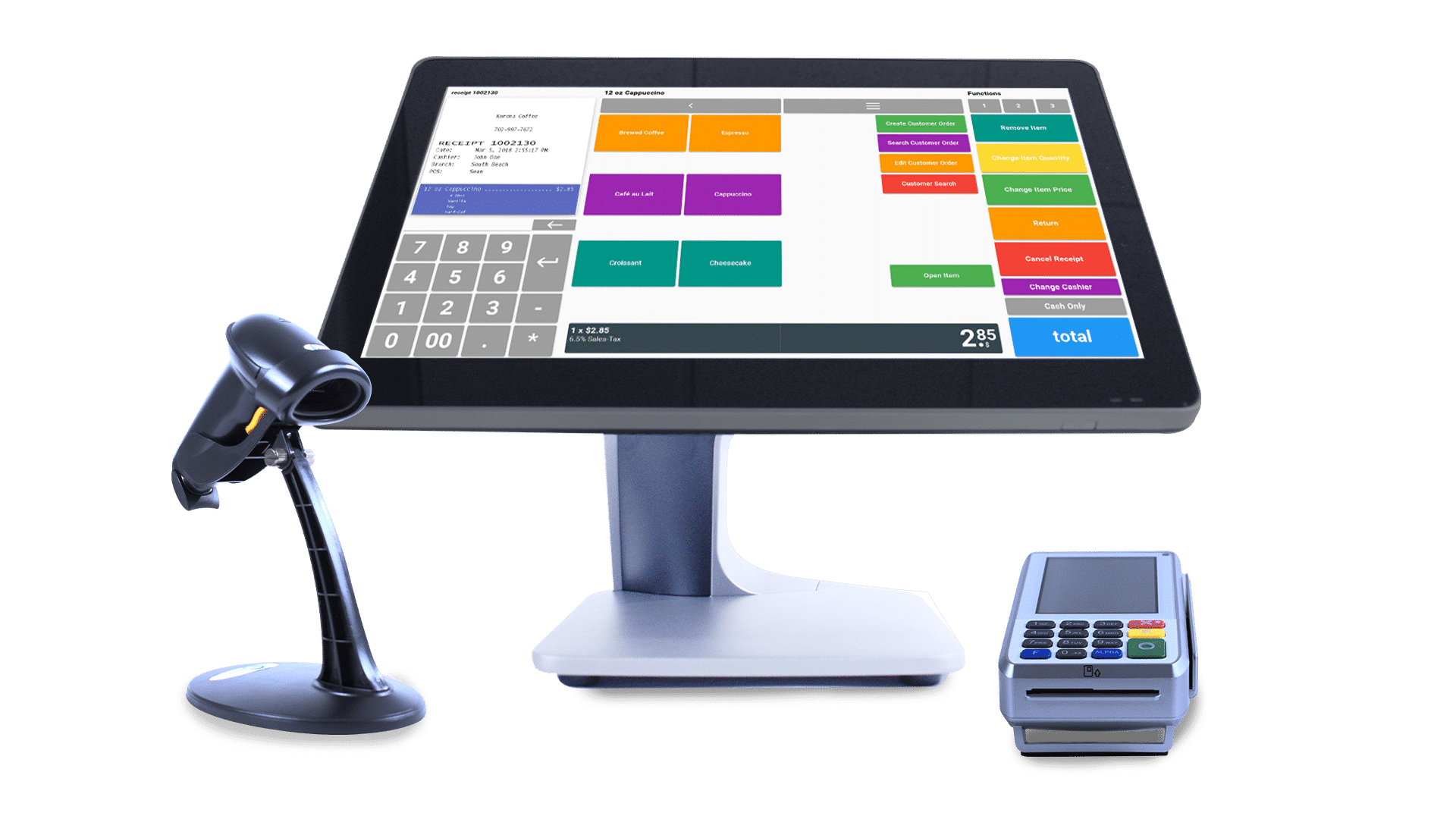
Point-of-sale hardware must perform reliably in demanding commercial environments. Retail stores, restaurants, and service businesses may depend on their POS equipment for long operating hours, frequent transactions, and continuous interaction with employees and customers.
For a POS Hardware Manufacturer, selecting suitable components is an important part of product development. Processors, memory, displays, storage, power systems, ports, and other internal parts all influence how a finished POS device performs throughout its working life.
Why Component Selection Matters
A POS system is made up of numerous components that must work together consistently. Choosing a component based only on its individual specifications may not produce the best overall system.
Manufacturers need to consider how each part interacts with the rest of the hardware. Compatibility, expected workload, operating environment, availability, and long-term support can all influence component selection.
Choosing the Right Processor
The processor affects how quickly a POS terminal can handle software and transaction-related tasks. The appropriate choice depends on the expected workload and applications the system needs to run.
A processor with suitable performance can provide responsive operation without unnecessarily increasing power consumption or system cost. Manufacturers typically balance processing capability with the requirements of the intended POS application.
Evaluating Memory Requirements
Sufficient memory helps POS systems run applications smoothly, particularly when several software processes operate at the same time.
Manufacturers need to determine how much memory is appropriate for the device’s operating system, POS software, and expected workload. Providing reasonable capacity can also help the system remain useful as software requirements evolve.
Selecting Reliable Storage
Storage components hold operating system files, applications, configurations, and other data required by the POS device.
Manufacturers consider factors such as performance, capacity, durability, power consumption, and expected operating conditions when selecting storage technology. The appropriate choice depends on how the system is designed and how it will be used.
Designing the Display Around Usability
The display is one of the most visible parts of a POS terminal. Employees may interact with it throughout their shifts, making screen quality and touch responsiveness important considerations.
Manufacturers evaluate screen size, resolution, brightness, viewing angles, touch technology, and physical durability. The goal is to create a display that is practical for the intended retail or commercial environment.
Considering Touchscreen Durability
Touch interfaces can experience substantial daily use. Repeated tapping, cleaning, and general handling can place stress on the screen and its surrounding components.
Component selection therefore needs to consider expected interaction levels and environmental conditions. A durable touch interface can contribute to the overall longevity of the POS terminal.
Choosing Appropriate Connectivity Components
POS systems often connect to barcode scanners, receipt printers, payment terminals, cash drawers, networks, and customer displays.
Manufacturers need to provide appropriate ports and communication technologies for the intended configuration. USB, Ethernet, Wi-Fi, Bluetooth, and other connectivity options may be selected according to the system’s requirements.
Paying Attention to Power Components
Power-related components are essential to stable POS operation. The power supply needs to provide appropriate and consistent power to the system’s internal hardware and connected components.
Manufacturers must consider efficiency, thermal characteristics, electrical requirements, and reliability when selecting power components. A suitable power design can help support stable operation during extended use.
Managing Heat Through Component Choices
Electronic components generate heat, particularly when systems operate for long periods. Excessive heat can affect performance and contribute to component degradation.
Manufacturers can consider the thermal characteristics of individual components when designing the complete system. Processor selection, internal layout, heat dissipation, and ventilation can all work together to manage operating temperatures.
Balancing Quality and Cost
Component selection involves more than choosing the highest-specification parts available. Overly advanced components can increase product cost without providing meaningful benefits for the intended application.
Manufacturers typically seek a balance between performance, reliability, availability, and cost. The appropriate combination depends on the target market and expected operating conditions.
Considering Component Availability
Long-term product support can become difficult if key components are discontinued or become difficult to source.
Manufacturers may therefore consider component availability and expected product lifecycles during development. Selecting parts with reasonable supply continuity can make future production, repairs, and replacement support easier to manage.
Testing Components Together
Individual components may perform well independently but still encounter compatibility problems when integrated into a complete system.
Manufacturers conduct hardware testing to identify issues involving performance, connectivity, power, thermal behavior, and software interaction. Testing the complete configuration helps ensure that selected components work together as intended.
Planning for Long-Term Reliability
Commercial POS equipment is often expected to operate for years. Component selection should therefore account for sustained usage rather than only short-term performance.
Manufacturers can evaluate expected operating temperatures, workload levels, component durability, and maintenance requirements when designing equipment for long-term commercial use.
Supporting Different POS Applications
Different businesses may require different hardware configurations. A small retail store may need basic checkout equipment, while a high-volume operation could require greater processing capacity and additional peripherals.
Manufacturers can use different component combinations to create products suited to specific workloads. This approach allows hardware to be developed around practical operational requirements instead of relying on a single configuration for every business.
Conclusion
Component selection is a fundamental part of POS hardware manufacturing. The processor, memory, storage, display, touchscreen, connectivity interfaces, power system, and thermal design all contribute to the finished product’s performance and reliability.
For businesses, understanding the role of these components can make hardware evaluation more meaningful. Instead of focusing on individual specifications alone, buyers can consider how the complete system is designed to handle their workload, environment, and expected operating lifespan.