High-volume packaging requires equipment that can maintain reliable performance over extended production runs. When manufacturers produce thousands of single-dose packages, small inconsistencies in filling, film movement, or sealing can quickly become significant sources of waste and downtime.
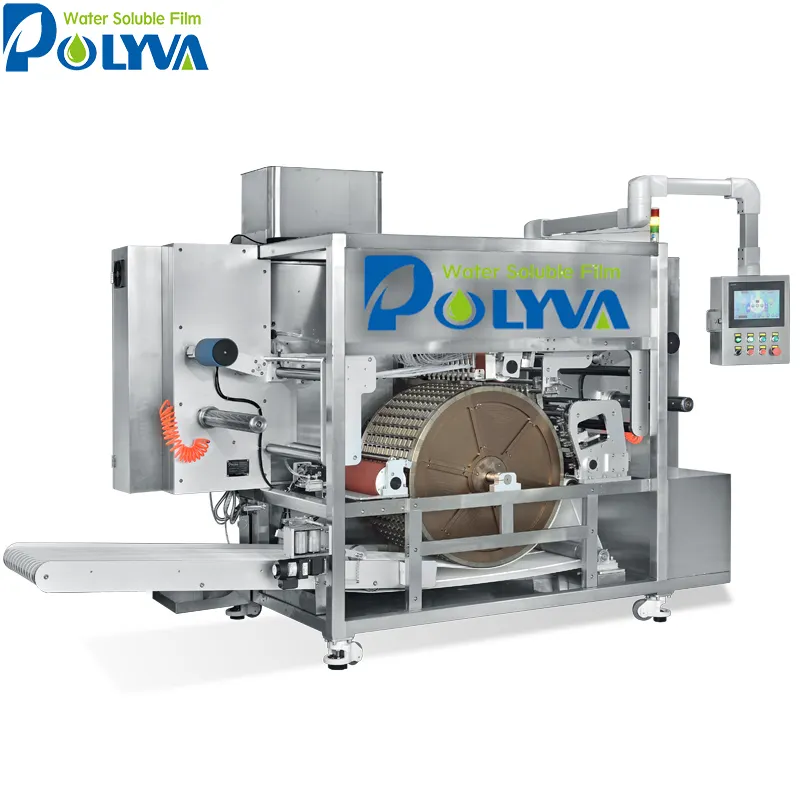
A well-configured Water Soluble Film Packaging Machine can combine film feeding, pouch forming, filling, sealing, and cutting into a coordinated production process. POLYVA systems are designed to support automated packaging workflows, allowing production teams to maintain repeatable operating conditions as output increases.
What High-Volume Production Requires
High-volume production is not simply about increasing machine speed. Equipment must maintain stable performance while handling continuous film movement and repeated filling and sealing cycles.
Important considerations include:
- Consistent film feeding
- Accurate product dosing
- Reliable pouch forming
- Stable sealing performance
- Efficient product changeovers
- Accessible maintenance
- Controlled production parameters
These factors work together to determine whether a packaging line can operate efficiently for long periods.
Continuous Film Feeding
Film feeding is fundamental to high-volume packaging. The film must move through the machine at a controlled rate without unnecessary slipping, stretching, or misalignment.
Consistent film transport helps maintain accurate pouch dimensions and reduces interruptions caused by film positioning problems. Regular inspection of rollers, guides, and tension components can further support stable operation.
Automated Pouch Forming
In high-volume production, manual pouch formation is impractical. Automated forming systems create individual pockets or pouches according to predefined dimensions.
Once the correct forming parameters have been established, the machine can repeat the same process throughout the production run. This helps maintain consistent package dimensions and reduces variation between individual units.
Maintaining Filling Accuracy
Increasing production volume also increases the importance of accurate filling. Even a small dosing variation repeated across thousands of packages can affect product usage and quality.
Automatic filling systems can be configured according to the characteristics of the material being packaged. Appropriate dosing parameters help maintain consistent fill quantities while reducing product loss.
High-Speed Sealing
Sealing must keep pace with film forming and filling. A packaging machine operating at higher output levels needs a sealing system capable of producing reliable seals across repeated cycles.
Sealing conditions should be matched to the specific water-soluble film. Consistent temperature, pressure, timing, or other relevant parameters can help maintain pouch integrity during extended operation.
Reducing Production Interruptions
Unexpected stoppages can have a significant impact on high-volume manufacturing. Interruptions may result from film problems, product feeding issues, mechanical wear, or incorrect machine settings.
Preventive maintenance and regular process monitoring can help identify potential problems before they cause prolonged downtime.
Managing Film Consumption
High production volumes naturally increase film consumption. This makes efficient material usage especially important.
Accurate pouch dimensions, stable film tension, and controlled cutting can help minimize unnecessary film waste. Reducing rejected pouches is another effective way to improve overall material efficiency.
Handling Long Production Runs
Long production runs place continuous demands on mechanical components. Parts involved in film movement, forming, filling, sealing, and cutting may experience gradual wear.
Production teams should establish maintenance intervals based on machine usage and operating conditions. Checking critical components regularly helps maintain consistent performance throughout extended runs.
Changeover Efficiency
Many manufacturers produce multiple products or package sizes on the same equipment. Efficient changeovers can help reduce the amount of production time lost between batches.
Standardized procedures for film replacement, product changes, machine adjustments, and cleaning can make changeovers more predictable and reduce setup-related waste.
Environmental Control
Water-soluble film requires appropriate storage and handling conditions. Excessive exposure to moisture can affect film behavior and may influence feeding, forming, or sealing performance.
For high-volume operations, maintaining suitable environmental conditions throughout storage and production becomes increasingly important because even minor material changes can affect a large production batch.
Monitoring Production Performance
High-volume operations benefit from tracking production data rather than relying solely on visual inspection. Useful indicators may include:
- Production output
- Reject rate
- Film consumption
- Average fill weight
- Downtime
- Changeover duration
- Maintenance frequency
Analyzing these measurements can help manufacturers identify recurring problems and improve machine settings over time.
Operator Training
Automation reduces repetitive manual tasks, but trained operators remain important. Personnel should understand basic machine controls, film handling requirements, product-specific settings, and routine inspection procedures.
Well-trained operators can respond more quickly to minor variations and follow established procedures when adjustments are required.
Scaling Production Responsibly
When demand increases, manufacturers may be tempted to increase machine speed immediately. However, maximum speed is only useful when film feeding, filling, forming, and sealing can remain stable at that rate.
A gradual approach to increasing output allows production teams to verify package quality and equipment performance at each operating level.
Choosing Equipment for High Output
When selecting packaging equipment for high-volume applications, manufacturers should evaluate the complete production process rather than focusing on speed alone.
Film compatibility, filling technology, pouch dimensions, sealing performance, automation level, maintenance access, and changeover requirements should all be considered before equipment is introduced into a large-scale operation.
Conclusion
Water-soluble film packaging machines can support high-volume production by integrating multiple packaging stages into a coordinated automated process. Stable film feeding, accurate filling, consistent forming, reliable sealing, and preventive maintenance are essential for maintaining performance at higher output levels.
With suitable equipment configuration and disciplined production management, manufacturers can increase packaging capacity while controlling film waste, product variation, downtime, and overall operating costs.