Acoustic performance has become an important consideration in modern building design. From offices and educational facilities to hotels, restaurants, and residential developments, controlling unwanted noise helps create more comfortable and functional spaces. Architects and contractors must therefore consider acoustic materials alongside appearance, durability, safety, and installation requirements when planning a project.
Choosing the right manufacturing partner can make this process easier. A dependable Acoustic Panel Factory can provide suitable products, technical guidance, and consistent production quality to support different project requirements. For architects and contractors, working with an experienced manufacturer can also improve coordination, reduce material-related complications, and help keep construction work on schedule.
1. Consistent Product Quality
Product consistency is essential when acoustic panels are used across large commercial or institutional spaces. Variations in dimensions, finishes, density, or acoustic properties can affect both the appearance and performance of an installation.
Reliable factories follow established manufacturing procedures and quality-control practices to maintain consistent product standards. This helps architects specify materials with greater confidence and allows contractors to work with products that meet the agreed project requirements.
2. Access to Different Acoustic Materials
Different buildings have different acoustic challenges. A conference room may require effective sound absorption to improve speech clarity, while a restaurant may need panels that reduce background noise without compromising its interior design.
Experienced manufacturers often offer a range of materials, finishes, thicknesses, and panel configurations. This variety gives project teams more flexibility when selecting products for particular environments.
Common options may include:
- Polyester fiber acoustic panels
- Fabric-wrapped acoustic panels
- PET acoustic panels
- Wood acoustic panels
- Decorative acoustic wall and ceiling panels
Having multiple options available makes it easier to balance acoustic performance, visual appeal, maintenance needs, and project budgets.
3. Customization for Architectural Designs
Architects frequently develop interior concepts that require materials to fit specific dimensions, color schemes, patterns, or design features. Standard products may not always meet these requirements.
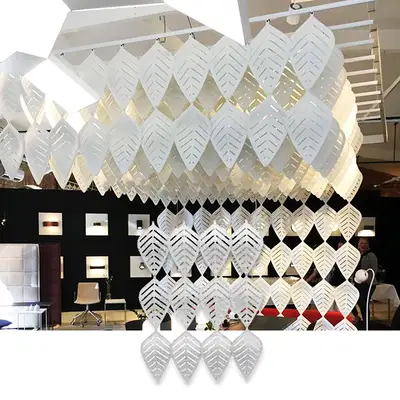
A capable factory can support customized panel sizes, shapes, colors, surface finishes, and installation configurations. Some manufacturers can also produce decorative arrangements that complement architectural features such as feature walls, ceilings, and partition systems.
This flexibility helps architects maintain their design vision while incorporating practical acoustic solutions.
4. Technical Support and Product Guidance
Selecting acoustic materials involves more than choosing a suitable appearance. Project teams may need to consider sound absorption, room dimensions, mounting methods, substrate conditions, and the intended use of each space.
A knowledgeable manufacturer can provide product specifications and guidance to help architects and contractors make informed decisions. Technical documentation may include panel dimensions, material composition, installation recommendations, and available acoustic test information.
This support is particularly useful when a project has specific performance targets or complex installation requirements.
5. Dependable Production and Delivery Schedules
Construction projects often operate according to strict schedules. Delays in material production or delivery can affect installation teams and create problems for other trades working on the same site.
Reliable factories help reduce these risks through organized production planning, order coordination, and clear communication. They can also provide information about manufacturing lead times and delivery arrangements.
For contractors managing multiple suppliers, predictable production schedules make it easier to plan installation activities and coordinate project milestones.
6. Better Coordination for Large Projects
Large commercial developments may require hundreds or even thousands of acoustic panels. Managing product specifications, quantities, finishes, and delivery requirements across different areas can become complicated.
An experienced manufacturer can help organize bulk orders and maintain consistency across production batches. Clear communication about drawings, measurements, packaging, and installation requirements can also reduce misunderstandings between manufacturers, architects, and contractors.
This coordinated approach is valuable for projects such as office buildings, hotels, schools, healthcare facilities, and public spaces.
7. Long-Term Durability and Maintenance Considerations
Acoustic panels should be selected according to the conditions in which they will be installed. Factors such as humidity, frequent contact, cleaning requirements, and general building use can influence material selection.
Reliable manufacturers can explain the characteristics and maintenance requirements of their products. This helps project teams choose panels that are appropriate for the intended environment.
Considering durability during the specification stage can reduce the likelihood of premature replacement and help building owners maintain their interiors over time.
8. Supporting Budget and Project Efficiency
Cost is an important factor in construction, but choosing materials based only on their initial purchase price can lead to additional expenses later. Poor product consistency, unsuitable materials, or installation difficulties may increase labor costs and cause project delays.
Working with a dependable factory allows project teams to compare product options based on quality, performance, customization, and delivery requirements. Bulk production and direct communication with manufacturers may also help simplify procurement.
The goal is to select acoustic solutions that provide appropriate value throughout the project’s lifecycle rather than focusing only on the lowest upfront price.
How to Evaluate an Acoustic Panel Manufacturing Partner
Before choosing a factory, architects and contractors should review several important factors:
- Manufacturing experience: Look for a company familiar with different acoustic panel applications and project requirements.
- Product range: Check whether the manufacturer offers materials and finishes suitable for the intended space.
- Quality assurance: Ask about production standards, inspection procedures, and relevant product test reports.
- Customization capabilities: Confirm whether the factory can accommodate project-specific dimensions and designs.
- Technical documentation: Request specifications and installation guidance before finalizing product selections.
- Production capacity: Ensure the manufacturer can handle the required quantities within the project timeline.
- Communication: Choose a partner that provides clear updates and responds to technical and logistical questions.
Reviewing these factors before placing an order can help prevent avoidable problems during procurement and installation.
Conclusion
Architects and contractors partner with reliable acoustic panel factories because successful acoustic design depends on more than the appearance of a finished product. Consistent quality, material variety, customization, technical support, dependable delivery, and long-term durability all contribute to better project outcomes.
By selecting an experienced manufacturing partner early in the planning process, project teams can make more informed material decisions, coordinate installation more effectively, and create interiors that balance acoustic comfort with architectural design. A reliable factory is therefore an important part of delivering functional, attractive, and well-planned spaces.