A single equipment failure can slow an entire project, increase operating costs, and put workers at unnecessary risk. Whether you’re constructing a commercial building, maintaining a warehouse, or servicing industrial facilities, reliable access equipment is essential for keeping work safe and efficient. That is why experienced businesses look beyond price when selecting lifting solutions.
Partnering with the right aerial work platforms manufacturer gives your business more than dependable machinery. It provides access to advanced engineering, consistent product quality, responsive customer support, and equipment built to perform in demanding environments. The right manufacturer becomes a long-term partner that helps improve productivity while reducing downtime and maintenance costs.
Why Aerial Work Platforms Matter More Than Ever
Modern industries operate under tighter schedules, higher safety expectations, and increasing pressure to improve efficiency. Traditional ladders and scaffolding still have their place, but they often cannot match the flexibility and stability of modern aerial work platforms.
These machines allow technicians to reach elevated work areas safely while carrying the tools and materials needed to complete the job. This combination of mobility and security helps businesses complete projects faster without compromising workplace safety.
Today, aerial work platforms are widely used across industries such as:
- Commercial construction
- Manufacturing
- Warehousing and logistics
- Facility management
- Aviation maintenance
- Telecommunications
- Utility services
- Renewable energy
- Municipal maintenance
- Property management
As businesses continue investing in safer workplaces, demand for reliable access equipment continues to grow.
Understanding the Different Types of Aerial Work Platforms
Every project has unique requirements. Selecting equipment that matches the job helps improve efficiency and reduces unnecessary operating expenses.
Scissor Lifts
Scissor lifts provide straight vertical movement through a reinforced lifting mechanism. Their spacious platforms allow workers to carry tools and materials while completing overhead tasks.
These machines are commonly used for:
- Ceiling installation
- Electrical work
- Indoor construction
- Warehouse maintenance
- Painting
- HVAC servicing
Electric scissor lifts are especially popular indoors because they operate quietly and produce zero emissions.
Boom Lifts
Boom lifts provide both vertical and horizontal reach, making them suitable for locations where direct access is blocked by obstacles.
Common applications include:
- Exterior building maintenance
- Bridge inspections
- Utility line servicing
- Steel construction
- Industrial maintenance
- Tree care
Articulating boom lifts provide additional flexibility by reaching over equipment, walls, and other obstructions.
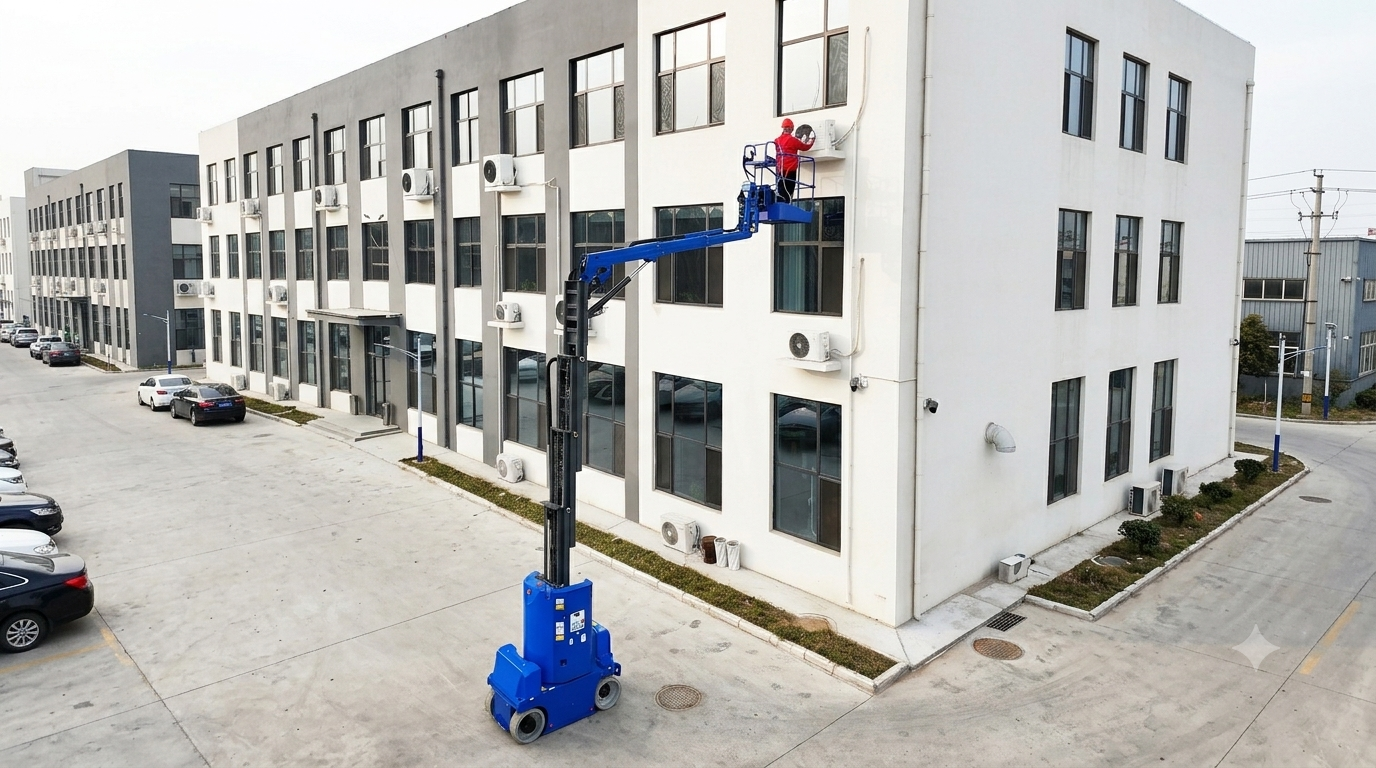
Vertical Mast Lifts
Vertical mast lifts are designed for narrow indoor spaces where maneuverability is important.
They are frequently used inside:
- Hotels
- Hospitals
- Schools
- Libraries
- Office buildings
- Shopping centers
Their compact footprint allows operators to work efficiently without occupying excessive floor space.
Order Pickers
Order pickers play an important role in warehouse operations by allowing employees to safely retrieve products stored on elevated shelving while improving inventory efficiency.
What Makes One Manufacturer Better Than Another?
Two machines may appear almost identical in specifications, yet perform very differently after several years of regular use. The difference usually comes down to engineering quality, manufacturing standards, and customer support.
Experienced manufacturers invest heavily in product development, structural design, testing procedures, and production consistency. These efforts help produce equipment that performs reliably throughout its service life.
Engineering That Supports Long-Term Performance
Quality engineering affects nearly every aspect of machine operation.
Well-designed equipment typically offers:
- Stable platform movement
- Balanced weight distribution
- Efficient hydraulic performance
- Responsive controls
- Comfortable operator experience
Good engineering also reduces mechanical stress, helping extend component life and minimize unexpected repairs.
Durable Materials Matter
The materials used during manufacturing influence reliability more than many buyers realize.
Professional manufacturers often use:
- High-strength structural steel
- Corrosion-resistant coatings
- Heavy-duty hydraulic cylinders
- Durable electrical components
- Reinforced welded joints
These materials help equipment perform consistently even in demanding working environments.
Consistent Quality Control
Reliable manufacturers inspect equipment throughout production instead of relying solely on final assembly checks.
Typical quality procedures include:
- Structural inspections
- Hydraulic pressure testing
- Electrical verification
- Platform stability evaluation
- Functional safety testing
This process helps ensure every machine meets the same performance standards before shipment.